Category Archives: Morning Report

AM Report 10/19/16-Interstitial Lung Disease

If you see ground-glass opacities on CXR/CT scan and suspect patient has ILD, make sure you consider the differential diagnosis and you look for secondary etiologies!

Limited DDX: atypical PNA, fungal pneumonia (eg: Cocci, Blasto,Histo), CHF

Secondary etiologies (not an exhaustive list)

1)Environmental agents (Asbestos, Beryllium, Silicosis, Pneumoconiosis)
2)Drug induced (long list)-Include Amiodarone, Methotrexate, Bleomycin, Nitrofurantoin , NSAIDS
3)Connective Tissue Disease related-RA. SLE, Scleroderma, MCTD, Sjogrens
4)Radiation
5)Granulomatous diseases (eg: Sarcoid)
6)Vasculitis (eg: Churg Strauss)
7)LAM (lymphangioleiomyomatosis)-Usually young women of child-bearing age with recurrent PTX and chylous effusions, associated with Tuberous Sclerosis
8)Acute eosinophilic PNA-see >25 % eosinophils on BAL
9)Langerhans cell histiocytosis

If no etiology is known, then consider IDIOPATHIC INTERSTITIAL PNEUMONIA

This includes:

  1.  Idiopathic pulmonary fibrosis (IPF, also called Usual Interstitial PNA as the pathologic description)-WORST prognosis, does not respond to steroids, AND diagnosis can be made on HRCT if typical findings, especially if honey-combing (fibrosis)
  2. Desquamative interstitial PNA (DSIP)- strong association with smoking
  3. Respiratory bronchiolitis-ILD (RB-ILD)-strong association with smoking
  4. Non-Specific Interstitial PNA (NSIP)-can be due to HIV, CTD, hypersensitivity reactions or drug related
  5. Cryptogenic Organizing PNA (COP)-classically presents with patient with persistent symptoms despite multiple antibiotic treatments, responds to steroids
  6.  Acute interstitial PNA (AIP)-very rapid onset, produces ARDS like picture
  7. Lymphocytic interstitial PNA (LIP)-increased lymphocytes on BAL

S&S:

-Most commonly, progressive DOE and dry cough. Exam reveals crackles (“velcro-like”)

Workup:

-Look for secondary etiologies based on history and drug exposure.
-Check serology for auto-immune disease
-Bronchoscopy, BAL and trans-bronchial biopsy if necessary
-PFT to evaluate for restrictive disease
-VATS (video-associated thoracoscopic surgery) may be necessary if diagnosis is not clear (remember that IPF can sometimes be diagnosed via HRCT and other etiologies may be suggested on imaging)

Remember that IPF has the worst prognosis and does NOT respond to steroids so its important to make that distinction. 

AM Report 10/17/16-Vertigo

Step 1: Determine whether patient is having Vertigo (spinning sensation) or Pre-Syncopal sensation (about to faint/fall) as the differential and workup will be different

Vertigo: is it Central vs. Peripheral?
  Remember that ALL vertigo gets worse with movement! 

Peripheral Vertigo

-BPPV
-Vestibular neuritis (remember that labrynthitis refers to involvement of the inner ear while neuritis refers to involvement of the vestibular nerve)
-Meniere disease
-Ramsay Hunt Syndrome
-Perilymphatic fistula
-Otitis media

Central Vertigo

-Cerebellar infarction
-Cerebellopontine tumor
-Multiple Sclerosis
-Vestibular migraine
-Brainstem ischemia
-Vertebrobasilar insufficiency

How can you tell the difference between Central and Peripheral Vertigo? 

vertigo-worksheet

If someone has ongoing vertigo and nystagmus, The HiNTs exam can be used to differentiate  posterior circulation syndrome (brainstem or cerebellar stroke) vs. vestibular neuritis

1)Head impulse testing-“normal” test is POSITIVE meaning no saccade/correction on head rotation
2)Nystagmus-Nystagmus that changes direction or pure vertical/torsional nytagmus
3)Test of skew –Covering and uncovering each eye and uncovered eye demonstrates quick vertical gaze corrections

1/3 POSITIVE tests indicates patient may have a posterior circulation stroke. 

Check out this EMcrit video that has a blog and video on how to do the HiNTs exam!
See original study here in Stroke Journal-on this study, the maneuver was 100 % sensitive and 96 % specific for posterior circulation stroke

AM Report 10/12/2016 – Lympocytic Pleocytosis and IIH

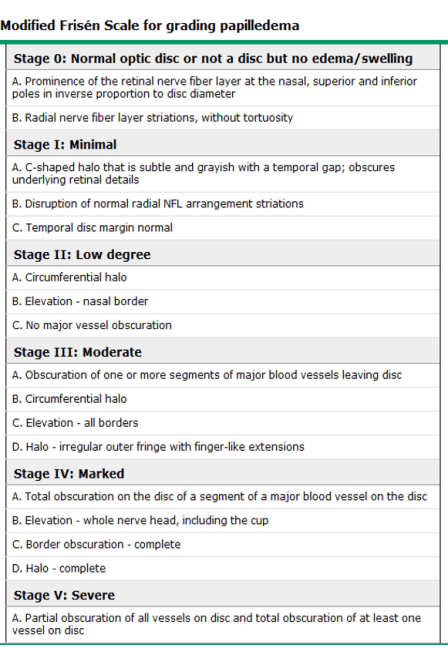
Remember that there are different grades for Papilledema on the Frisen Scale – from 0 (none) to 5 (severe)

1

Remember the typical patient with IIH – female, obese, child-bearing age

Symptoms: headache (worse with valsalva / bending over), nausea (30%), visual loss (30-60%); diplopia (30%), neck stiffness, tinnitus, ataxia, dizziness

Signs: papilledema (100%), 6th nerve palsy (~10-20%) “false localizing sign”

Diagnosis of IIH:

  1. CSF opening pressure > 20 cm H20
  2. Normal CSF composition (possible exception of low protein)
  3. Signs / Symptoms of elevated ICP
  4. Normal radiographic imaging with exception of slit ventricles and/or empty sella

Be able to interpret CSF studies:

3

Remember that there is broad differential for lymphocytic pleocytosis of CSF fluid.

2

AM Report 10/4/2016 – UGIB / H. Pylori

Remember the use of likelihood ratios in your initial evaluation of a suspected UGIB!
Suspected UGIB:
– patient reported melena (LR 5.1 – 5.9)
– melena on exam (LR 25)
– blood/coffee ground on NG lavage (LR 9.6)
– BUN/Cr > 30 (LR 7.5)

Factors associated with severe bleeding:
– red blood on NG lavage (LR 3.1)
– tachycardia (LR 4.9)
– Hgb < 8.0 (LR 4.5 – 6.2)

Physical Examination:
Signs of hypovolemia – mild to moderate resting tachycardia
15% blood loss – orthostatic hypotension
40% blood loss – supine hypotension

Medications:
Acid Suppression: when PUD suspected use IV PPI
– decrease hospital stay, rebleeding rate, and need for transfusions
– also shown to promote hemostasis with lesions other than ulcers
Prokinetics: erythromycin/metoclopramide – used 30 minutes prior to EGD for improved visualization
Somatostatin Analogs: octreotide – use in suspected variceal bleeds to lower portal pressure through splenic vasoconstriction
Antibiotics: for cirrhotic patients; studies show prophylactic antibiotics reduce complications and mortality

Risk Scores:
Rockall Score: requires endoscopy for calculation

Blatchford Score: used at presentation, range from 0-23 (higher score worse). Utilizes BUN, SBP, pulse, presence of melena, syncope, hepatic disease, and/or cardiac failure to generate number.

Testing for H. Pylori:
Endoscopic biopsy: invasive and expensive; requires EGD for diagnosis
Urea Breath Test: non-invasive and inexpensive; sensitivity 88-95%, specificity 95-100%
Serology (IgG): non-invasive; sensitivity 90-100%; specificity 76-96% – not recommended in low prevalence populations (i.e. US resident without travel); conversion of positive serology to negative suggests cure.
Stool Antigen: non-invasive and inexpensive; sensitivity 94%, specificity 86% – good for documenting eradication; false negative if patient on PPI – MUST STOP 2 WEEKS PRIOR TO TESTING!

Treatment for H. Pylori:
Triple Therapy: PPI, amoxicillin (or metronidazole for penicillin allergy), clarithromycin
Quadruple Therapy: PPI/Rantidine, Bismuth Subsalicylate, Metronidazole, Tetracycline (or Doscycline)

AM Report 10/3/2016 – CIDP

Inflammatory Neuropathies
Common Features:
1) Acquired, not inherited
2) Due to immune damage to peripheral nerves

Acute Disorders:
Acute Inflammatory Demyelenating Polyneuropathy (AIDP): incidence 1-2/100,000; 75-80% of acute fall into this category; symmetrical weakness/sensory loss over 1-4 weeks
Acute Motor Axonal Neuropathy (AMAN): AKA Chinese Paralytic Sydrome – similar to AIDP in onset, but without sensory changes
Acute Motor/Sensory Axonal Neuropathy (AMSAN): fulminate/severe form of GBS that develops over DAYS; results in paralysis and sensory loss due to severe axonal damage. More common in Central/South America due to trigger by Camtylobacter jejuni.
Miller Fisher Syndrome (variant of GBS) – 3 Features
1) Double vision from weak eye muscles
2) Wobbly/Ataxic walk or gait
3) Loss of DTRs

Chronic Disorders:
Chronic Inflammatory Demyelenating Polyneuropathy (CIDP): most common chronic inflammatory neuropathy, neurologic cousin to GBS; prevalence 8/100,000. Develops slowly over 2 months or longer with symmetric weakness or sensory changes. DTRs are lost in involved extremities. Monophasic illness over 1-3 years with relapsing/remitting course. Responsive to therapy (as oppose to GBS).
Multifocal Motor Neuropahty (MMN): RARE; asymmetric inflammatory neuropathy; slow/stepwise development of distal UE muscle weakness; sensory nerve fibers are not affected
Multifocal Acquired Demyelinating Sensory and Motor Neuropathy (MADSAM) AKA Lewis Sumner Syndrome: RARE variant of CIDP, similar to MMN with sensory changes; asymmetric weakness with sensory changes.

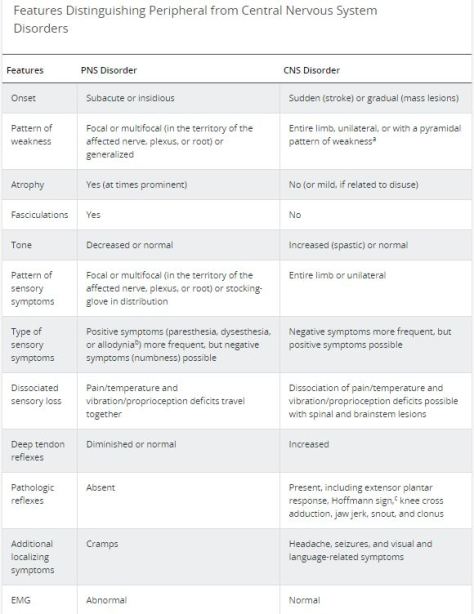
PNS versus CNS:

1

AM Report 10/11/16 Hemolytic Anemia

(Limited) Differential for MACROCYTIC anemia

1)B12 and Folate deficiency
2)Reticulocytosis (either from recent bleeding, hemolytic anemia, bone marrow recovery after chemo, HCT, Epo administration, or repletion of iron/B12/folate stores
3)Alcohol
4)Liver disease
5)Hypothyroidism
6)HIV
7)Myelodysplastic syndrome
8)Pregnancy

Labs to check if you suspect Hemolysis:

1)START with Reticulocyte Count-elevated (can also be due to blood loss)
2)Elevated LDH
3)Elevated Indirect Bilirubin
4)Low Haptoglobin
5)Spherocytes on peripheral smear

Remember if + Coombs (DAT)-
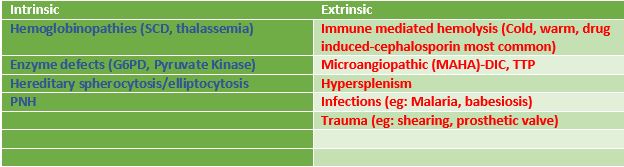
if positive, dealing with immune mediated hemolytic anemia (eg: warm, cold agglutinins, or drug induced)

ha2

ha3

AM report 10/06/16 Myasthenia Gravis

Bedside tests for Myasthenia Gravis (NOT specific enough to make the diagnosis, must check serology or electrophysiologic testing)

1)Ice-pack test: helpful if ptosis on exam. take bag/glove with ice, place on closed eyelid for 2 minutes and remove ice. Evaluate for improvement in ptosis
2)Tensilon (Erdophonium) test: Erdophonium is an acetylcholinesterase inhibitor with a rapid onset and short duration. Start with 2mg IV q60s up to 10 mg to see if response. RISK of side effects from excessive acetylcholine (caution if asthma, cardiac history)-NOT specific to make diagnosis

Serologic tests (specific enough to make diagnosis)

1)Acetylcholine receptor abx
2)Muscle specific tyrosine kinase abx (Musk-abx)-lower sensitivity for ocular MG, associated with lower frequency of thymic pathology

Electrophysiologic confirmation

1)Repetitive nerve stimulation (most common)- look for decrease in amplitude with repetitive stimulation
2)Single fiber EMG

Workup

75 % of patients have thymic abnormalities with MG (85 % Thymic hyperplasia, 15 % Thymoma) so check CT chest if new diagnosis of MG

Remember the Terrible T’s (differential for anterior mediastinal mass)

1)Thymoma
2)Terratoma/germ cell tumor
3)Terrible Lymphoma
4)Thyroid tissue

S&S

1)Ocular-ptosis/diplopia, extraocular muscle involvement, NO pupillary involvement
2)Bulbar-dysarthria, dysphagia, fatiguable chewing
3)Proximal limb weakness, neck and facial muscle weakness 
4)Respiratory muscle weakness-Myasthenia CRISIS

Treatment

1)Symptomatic treatment (anticholinesterase inhibitors): eg: Pyridostigmine (Mestinon)
2)Chronic immunomodulators (eg: steroids)
3)Rapid immunomodulators (eg: IVIG/plasmapheresis)
4)Surgical treatment (Thymectomy)


AM Report 10/05/16 Hypertriglyceridemia induced Pancreatitis

Remember that Hypercalcemia and Hypertriglyceridemia are etiologies for pancreatitis
TG>1000 usually in hypertriglyceridemia induced pancreatitis

Secondary etiologies of hypertriglyceridemia

1)HYPOTHYROIDISM
2)Diabetes with DKA
3)Alcohol
4)Medications (eg: Clomiphene, protease inhibitors, ART, propofol, olanzapine/mirtazapine)
5)Pregnancy

Clinical features (due to elevated TG)

1)Eruptive Xanthomas  (on extensor surfaces)-see picture below
2)Xanthelesmas (inner canthus of eyelid)-see picture below
3)Lipemic retinalis-see picture below
4)Hepatosplenomegaly

Treatment of HTG related pancreatitis 

1)Fibrate: eg: Gemfibrozil 600 BID-to lower TG level
2)NPO==>low fat diet
3)Isotonic fluids for hydration (avoid LR if hypercalcemia)
4)Pain control-usually IV PRN or PCA
4)Levothyroxine replacement (if due to hypothyroidism)
5)Insulin drip (especially if concomitant hyperglycemia or DKA, works by increasing lipoprotein lipase activity
6)Pheresis– controversial but recommended in severe refractory cases but expensive and invasive

Picture below from medscape (http://emedicine.medscape.com/article/1103971-clinical)

AM Report 9/27/2016 – Graves Disease

Causes of High Output Heart Failure:
– Obesity (most common ~ 31%)
– Systemic AV shunts (22.5%)
– Hepatic disease (22.5%)
– Lung disease (i.e. COPD ~ 16%)
– Myeloproliferative disorders (multiple myeloma, myelofibrosis)
– Sepsis/Fever
– Hyperthyroidism
– Anemia

Hyperthyroidism
Presentation:
Increased thyroid hormone → increased metabolism → decreased SVR → increased cardiac output → increased contractility of heart muscle → increased myocardial oxygen demand/consumption

Physical Exam:
– tachycardia / atrial fibrillation
– hyperdynamic precordium
– systolic hypertension with widened pulse pressure
– brisk carotid/peripheral arterial pulsations
– loud first heart sound
– fine tremor
– warm moist skin
– exophatalmos (occurs in 20-25% of Graves patients)
Picture1.jpg
– pretibial myxedema
Picture2.jpg

Treatment:
– return patient to euthyroid state with antithyroid medication or RAI
– caution BB use – can reduce myocardial contractility in patients with impaired LVSF

Radioiondine Uptake Scan Interpretation:

Normal/Elevated Uptake:
[Autoimmune] – Graves disease, Hashimotos thyroiditis
[Autonomous Thyroid Tissue] – Toxic adenoma, toxic multinodular goiter
[TSH-mediated] – pituitary tumor

Low/Absent Uptake:
[Thyroiditis] – de Quervain’s thyroiditis, radiation thyroiditis, amiodarone thyroiditis
[Exogenous Thyroid Hormone] – excessive replacement, factitious hyperthyroidism
[Ectopic Hyperthyroidism] – Struma ovarii, metastatic follicular thyroid cancer

AM Report 9/26/2016 – Malaria


Malaria
Transmission: Anopheles mosquito (nighttime bites)
Cause: Protozoan parasite (5 types) – P. falciparum, P. vivax, P. ovale, P. malariae, and P. knowlesi
Clinical Presentation: fever, headache, chills, vomiting – can progress to severe illness/death
Incubation Period: variable 12-14 days (early) to months
Diagnosis: Thick/Thin smear (gold standard), RDTs, PCR, serology/IFA (NOT FOR ACUTE DIAGNOSIS)
Treatment: Depends on uncomplicated vs. severe, suspected species, and drug-resistance

Picture1.png
* Remember that P. vivax and P. ovale can remain dormant for months/years in your liver (hyponozoites)
* Remember to test for G6PD before administering primaquine given the risk for hemolytic anemia
* Negative Duffy blood group is protective against P. vivax – since it requires the Duffy antigen for cell entry.

Dengue Fever
Transmission: Aedes mosquito (day and night bites)
Cause: viral infection (Dengue single-stranded RNA virus 4 serotypes)
Clinical Presentation: Maculopapular rash on face, thorax, and flexor surfaces, abdominal pain, nausea/vomiting, diarrhea, saddleback fever – fever abates for a day and returns
Incubation Period: 3-14 days; >2 weeks UNLIKELY to be dengue
Diagnosis: IgM capture ELISA – serologic assay, viral RNA, NS protein-1 antigen
Treatment: Supportive care; self-limited illness

Chikungunya
Transmission: Aedes mosquito (day and night bites)
Cause: Viral infection (Chikungunya virus – arbovirus)
Clinical Presentation: Fever, joint pain (common); headache, muscle ache, joint swelling, rash
Incubation Period: 3-7 days after infection
Diagnosis: IgM anti-chikungunya ELISA
Treatment: Supportive care; self-limited illness

Typhoid Fever
Transmission: Fecal/oral from infected humans
Cause: Bacteria: Salmonella Typhi
Clinical Presentation: High fever, weakness, abdominal pain, constipation (early) followed by diarrhea (later), salmon/rose-colored rash, HSM
Incubation Period: 8-14 days usually; can range from 3 days to 1 month
Diagnosis: Culture blood/stool/bone marrow for S. Typhi; serologic testing for S. Typhi antibodies
Treatment: Flouroquinolones (resistance growing), ceftriaxone, azithromycin