Category Archives: Morning Report

8/23/16 AM Report – Wernicke’s Encephalitis

Wernicke’s Encephalitis (WE) Triad:
1) Encephalopathy
2) Ataxia
3) Oculomotor dysfunction
* presence of all 3 symptoms is not needed in order to make the clinical diagnosis; only approximately 10% of patients will display all 3 symptoms.

Korsakoff Syndrome (additional 2 findings):
4) Selective anterograde/retrograde amnesia
5) Confabulation

WE is an under-recognized disease with a prevalence of 0.4 – 2.8% in the general population and up to 12.5% in alcohol abusers.
WE is more common in men, but women are more susceptible to development.

Caine Criteria – proposed in 1997 (article below) – only need 2 of 4 for diagnosis
1) Dietary deficiency
2) Oculomotor dysfunction
3) Cerebellar dysfunction
4) AMS or mild memory impairment
* study of 106 autopsied alcoholics found that use of the Caine criteria from the standard WE triad increased the diagnostic sensitivity from 22% (classic triad) to 85% (Caine criteria).

Remember that WE can be associated with a number of conditions/diseases (not a compelte list):
– Chronic alcoholism
– Anorexia/dieting
– GI surgery (esp. bariatric)
– Dialysis
– Prolonged IV feeds without supplementation
– Sepsis (high catabolic state)

Pathophysiology – WE is due to thiamine (vitamin B1) deficiency. Remember to WE is a clinical diagnosis and treatment should be started early to prevent irreversible damage.  Response to therapy may be diagnostic.

No lab testing is needed for diagnosis!

Treatment:
Thiamine IV 500 mg TID Days 1-2
Thiamine IV 250 mg BID Days 3-5
Thiamine PO 100 mg daily, which should be continued until the patient is no longer at risk.

* Avoid glucose before thiamine if possible – can precipitate an episode of WE.

8/23/16 AM Report-Skeletal Tb

~10-35 % of extra-pulmonary Tb is skeletal Tb, most common form is Pott’s disease (Spondylitis)

Differential for malignancy related bone involvement

-Metastatic disease much more common than primary bone cancer
Mnemonic for cancers that  go to bone: BLT + Mayo and a Kosher Pickle

B=Breast
L=Lung
T=Thyroid
Mayo=Multiple Myeloma
Kosher=Kidney
Pickle=Prostate

Don’t forget about infections!
Infection (eg: staph aureus osteomyelitis),  histoplasmosis, coccidomycosis, Tb!

Extra-pulmonary Tb-it’s not just in the lungs!

Miliary Tb=clinical disease from hematogenous spread of Mycobacterium Tb, can spread to…

Lungs- (>50 % of patients with Miliary Tb)
-Lymphatic disease-Tb lymphadenitis
Bone and joint disease- Pott’s disease, skeletal Tb
-GI disease-TB enteritis, peritonitis or hepatic disease
CNS-Tb meningitis, tuberculoma
-Genitourinary, adrenal disease-renal papillary disease, adrenal insufficiency
-CV-pericarditis
Skin-Tb Cutis Miliaris

Tb can spread everywhere, make the diagnosis by biopsy and AFB stain & culture, treatment is with RIPE therapy 

MTB Blog


8/22/2016 AM Report – Euvolemic Hyponatremia

Step 1: Make sure its really hypotonic hyponatremia
Pseudohyponatremia (lab error)=HLD, multiple myeloma
Hypertonic hyponatremia=hyperglycemia, mannitol, IVIG etc.
Confirm with serum osmolarity if not sure (normal is 280-300)

 
Step 2: What is the volume status? Use the H&P!

 
History: CHF, nephrotic syndrome, cirrhosis, ask about poor PO intake, vomiting, diarrhea, excessive water intake, and diuretic use
Physical exam: Look at JVP, skin turgor, orthostasis, vital signs

Step 3: If euvolemic, next step is checking urine osm

If LOW <100, and low urine sodium, think of two things

Primary polydipsia (eg: psychiatric patient, marathon runner, or MDMA use)
Low solute diet (eg: tea & toast diet, beer potamania)

If HIGH, >100, and urine sodium >20

SIADH
Hypothyroidism
Adrenal insufficiency
Nausea/pain/stress

Treatment
Water restriction + close monitoring of urine output, urine osm, and serum sodium if primary polydipsia
If from low solute diet, replace solute in diet (eg: NS) but watch for rapid correction
Goal is no more than 6-8 meQ/24 hour period. Highest risk of osmotic demyelination syndrome if liver disease, malnutrition, hypokalemia, or alcohol use.

What if you over-correct?
Use D5W to slow down rate of increase by matching or higher rate than urine output
If unable to keep up with urine ouput, hit the brakes by giving Desmopressin but make sure patient is fluid restricted to avoid further hyponatremia

See article below on osmotic demyelination syndrome!
Osmotic Demyelination

8/18/2016 AM Report – Acute Chest Syndrome

Leading cause of death for patients with sickle cell disease!

Etiology

Vaso-occlusion within the pulmonary microvasculature and can be from triggers for vaso-occlusion (eg: infection, asthma, hypoventilation) or consequence of vaso-occlusion (from bone marrow and fat embolism)

Diagnosis
New radiographic consolidation AND at least one of the following
Temperature ≥38.5°C
>2 percent decrease in SpO2 (O2 saturation) from steady state at RA
PaO2 <60 mmHg
Tachypnea (per age-adjusted normal)
Intercostal retractions, nasal flaring, or use of accessory muscles of respiration
Chest pain
Cough
Wheezing
Râles

DDX

Acute Coronary Syndrome vs. Pneumonia vs. PE most common differential diagnoses.

*Note that PE can be in-situ thrombosis OR thrombo-embolic from lower extremities.

Treatment

Fluid management (avoid over-resuscitation, use hypotonic fluids)
Pain control
Antibiotics to cover atypical and CAP (usually cefotaxime/azithromycin or CTX/azithromycin)
VTE prophylaxis (high risk for VTE!)
Supplemental O2 and incentive spirometry (to prevent atelectasis)
If refractory, simple transfusion to increase hemoglobin to 10 or exchange transfusion for severe cases to achieve Hemoglobin S <30 % and goal hemoglobin of 10

Prevention of ACS
Hydroxyurea (not for acute episodes)
Chronic transfusion therapy (only if refractory to above)

8/16/2016 AM Report – Prolactinoma

Remember common causes of elevated prolactin:
Physiologic: Pregnancy, Lactation
Medications: Anti-psychotic agents, metoclopramide, verapamil, methyldopa, cocaine, many more
Other: Prolactinoma, hypothyroidism, cirrhosis, CKD

Pituitary tumors:
Microadenoma: <1 cm – more common in females
Macroademona: >1 cm – more common in males
* 10% of general population have undiagnosed pituitary adenoma on autopsy
* 10-38% have incidental microadenoma and 0.2% have incidental macroadenoma on MRI brain
Most pituitary adenomas (40%) are prolactinomas

Sellar mass differential:
– Pituitary adenoma
– Metastatic disease
– Sarcoidosis
– Rathke’s cleft cyst
– Infection
– CNS lymphoma
– Craniopharyngioma
– Meningioma
– Circle of Willis aneurysm
– Hemochromatosis

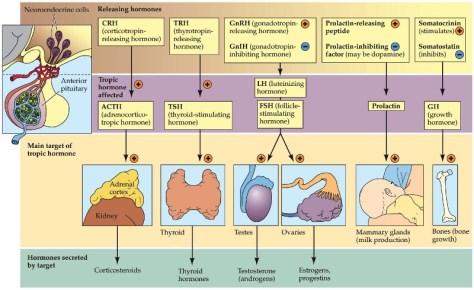
Remember the hormones of the anterior/posterior pituitary:
3

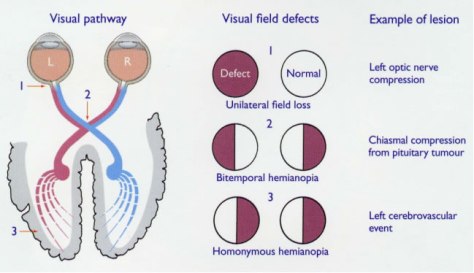
Remember the visual field deficits and their corresponding location/lesion:
2

Treatment of Prolactinoma: CAN BE TREATED MEDICALLY!
1. Dopamine agonist (bromocriptine, carbergoline)
2. Transphenoidal surgery – reserved for those who do not respond or demonstrate slow progression with medical therapy
3. Radiation – used to prevent regrowth of residual tumor

Indications for treatment:
1. Neurological symptoms
2. Evidence of hypogonadism

8/15/2016 AM Report – Fever of Unknown Origin

Definition:
Fever > 38.3 °C on several occasions
Duration of fever for > 3 weeks
Uncertain diagnosis after 1 week of inpatient investigation

Etiologies – 5 main categories:
1. Infection
2. Malignancy
3. Connective tissue disease
4. Other
5. No diagnosis

1

Common INFECTIOUS causes:
– Unrecognized abscess (abdominal, pelvic, etc.)
– Endocarditis (less common than in past)
– EBV infection
– CMV infection
– Tuberculosis
– Osteomyelitis

Common MALIGNANCIES causes:
– Lymphoma (most common cause)
– Leukemia
– Hepatocellular carcinoma
– Tumors metastatic to the liver
– RCC
* fever is due to pyrogenic cytokines or necrotic tumors leading to infection

Common CONNECTIVE TISSUE causes:
– Adult Still’s disease (fever, Salmon-colored rash, arthritis)
– Rheumatoid arthritis
– SLE
– Temporal arteritis (>50 years old, headache, symptoms of PMR, elevated ESR)
– PMR

Common OTHER causes:
– Factitious fever (fraudulent, self injury, etc.)
– Drug fever (antibiotics, antihistamines, NSAIDs, etc.)
– Familial fever syndromes (familial Mediterranean fever)
– Hemophagocytic syndrome
– IBD
– PE
– Thyroiditis
AND MANY, MANY MORE

Evaluation:
– Verify fevers and establish pattern
– Localize symptoms
– Identify potential exposures: workplace, pets, travel, sexual history
– History of connective tissue disease
– History of malignancy/immunosuppression
– Medications
– Familial syndromes

Management:
WITHHOLD THERAPY UNTIL THE CAUSE IS FOUND
Exceptions:
1. Neutropenic fever
2. Steroids in suspected temporal arteritis
3. Culture negative endocarditis
4. Unstable hospitalized patient

Nice article reviewing FUO:
Fever of Unknown Origin Evidence Based Review

8/11/2016 AM Report – Nephrotic Syndrome

Definition of Nephrotic Syndrome:

Proteinuria > 3.5 g/24 hours (spot urine/creatinine >3.5 mg/mg)
Hypoalbuminemia
Clinical evidence of edema
Hyperlipidemia
Lipiduria (maltese cross)

Nephrotic Range Proteinuria: > 3 g/24 hours without other findings

Primary Renal:
Minimal Change Disease
Focal Segmental Glomerulosclerosis
Membranous Nephropathy
Fibrillary/Immunotactoid Glomulonephritis

Secondary (Systemic) Disease:
Diabetes
Amyloid
HIV
Drug Induced
Malignancies
Others

Minimal Change Disease:
Epidemiology: most common cause of NS in children < 10 years old; can be primary or secondary
Clinical Presentation: Sudden onset of edema Thrombotic episodes more common in adults AKI may be seen in 20% at time of presentation
Diagnostic Evaluation: Presence of nephrotic syndrome on labs Renal biopsy required for diagnosis
*Remember it appears essentially normal on light microscopy – need electron microscopy.

Focal Segmental Glomerulosclerosis (FSGS)
Epidemiology: most common cause of idiopathic NS in adults, predilection for blacks, can be primary, familial, or secondary (HIV)
Clinical Presentation:
Asymptomatic proteinuria to NS
Hypertension usually seen in 30-50%
Microscopic hematuria 25-75%
Decreased GFR at presentation 20-30%
Diagnostic Evaluation:
Serologic studies negative
Renal biopsy required for diagnosis

* Remember light microscopy shows scarring/sclerosis involving some (focal) glomeruli, which are affected only in a portion of the glomerular capillary bundle (segmental)

Membranous Nephropathy (MN)
Epidemiology: second leading cause of primary nephrotic syndrome; predilection for > 50 years old; can be primary (immune complex disease) or secondary (infection, autoimmune, cancer, drugs)
Clinical Presentation:
Abrupt onset of nephrotic syndrome
50% may have microscopic hematuria
70% have normal BP and GFR at presentation
Thombotic disease more common – especially with low albumin
Diagnostic Evaluation:
Renal biopsy required for diagnosis

* Immunofluorescence microscopy reveals diffuse, granular IgG deposition along capillary walls.

Treatment – General Approach:
Proteinuria:
ACEi/ARB à reduce glomerular pressure à reduce protein excretion (independent of BP effects)
BP Control:
Goal <130/80, reduces proteinuria
Dietary sodium restriction (<2g/day)
Diuretics – usually loop diuretics:
Diuretic resistance due to low albumin / proteinuria
Reduce edema slowly to avoid acute hypovolemia
Hyperlipidemia:
Typically reverse with resolution of disease, dietary modification not helpful
Treat with stains

Funny Cartoon to help you remember the difference between Nephritic and Nephrotic Syndrome

1

8/3/2016 AM Report – Idiopathic Intracranial Hypertension

Idiopathic Intracranial Hypertension (AKA Pseudotumor Cerebri)

Define: Increased intracranial pressure without an identifiable structural pathology

Epidemiology: 90% – female, obese, child-bearing age

Risk Factors: Vitamin A toxicity, tetracycline antibiotics, isotretinoin, pregnancy, steroid use/withdrawal

Symptoms:   Headache (worse with Valsalva, bending over)
Nausea (30%)
Visual Loss (30-60%); Diplopia (30%)
Neck stiffness, tinnitus, ataxia, dizziness

Signs:  Papilledema (~100%) – can be subtle
6th Nerve Palsy (~10-20%) – “false localizing sign”

Diagnosis:
CSF opening pressure > 20 cm H20
Normal CSF composition (possible exception of low protein)
Signs / Symptoms of elevated ICP

Empty Sella (25-80%): can be seen in IIH – increased pressure causes the pituitary to compress and give the appearance of an empty sella.


Intracranial Imaging:
CT adequate for mass lesions  in acute setting
MRI/MRV preferred due to superior ability to rule out thrombosis

Lumbar Puncture:
ONLY AFTER RULING OUT INTRACRANIAL MASS    Measure opening pressure (lay patient on side), send normal studies

Treatment:

Goals with treatment:
1) Alleviation of symptoms
2) Preservation of vision

Weight Loss – recommended for all obese patients with IIH

Medications:
Carbonic Anhydrase Inhibitors – reduce the rate of CSF production (acetazolamide first line)
Loop diuretics – may be useful adjunctive therapy to acetazolamide

Serial Lumbar Punctures – not generally recommended given short term benefit and complication risk

Surgical Options: indicated only after patient’s fail medical therapy (<10% of patients)
CSF Shunt (VPS or LPS)
Optic Nerve Sheath Fenestration – incision in meninges surrounding optic nerve to relieve pressure

08/01/16 AM Report : GPA

Granulomatosis with Polyangitis

The Entity formerly known as Wegeners 

Epidemiology

-Auto-immune dz, Men ~1.5x> Women affected
-Most common in those of European descent, can occur at any age but usually age 35-55

Timing

-Sub-acute to chronic (weeks to months)

Clinical presentation

-Chronic sinusitis most common initial complaint (67 %), can see saddle nose deformity on exam

-Ophthalmic involvement (conjunctivitis, episcleritis, optic nerve vasculitis etc.)
-Pulmonary involvement (71 % pulmonary infiltrates, nodules often cavitary, cough hemoptysis, DAH, diffuse alveolar hemorrhage)
-Renal involvement: can see dysmorphic RBC, RBC casts, biopsy reveals Crescentic necrotizing GN
-Constitutional symptoms (night sweats, weight loss, lethargy)
-Also involves CNS (Mononeuritis multiplex, CN palsy), Cardiac involvement (Pericarditis, Vasculitis etc.), Skin involvement (from palpable purpura to necrotic plaques)

Diagnosis

-Patient with sinusitis + pulmonary nodules + active urinary sediment AND positive C-ANCA have ~98 % post-test probability of GPA but C-ANCA alone is NOT specific
-Lung or Kidney biopsy if diagnosis unclear

Treatment 

Induction therapy: Steroids +-Cyclophosphamide +-Rituximab
Maintenance therapy: multiple options-Azathioprine, MTX, Rituximab, Leflunomide

Comparison between the THREE small vessel Vasculitis that can cause Pauci-immune GN (minimal to no immune complex deposition on kidney biopsy)


  Eosinophilic granulomatosis (Churg-Strauss) Granulomatosis with Polyangitis Microscopic Polyangitis
Locations involved? 70 % pulm,    45 % renal

50 % GI

Upper resp.tract (sinusitis etc.), lungs, kidneys 90 % Kidney, 50 % pulm, no upper airway involvement
ANCA P-ANCA (Anti-MPO) C-ANCA (Anti-PR3) P-ANCA (Anti-MPO)
Granulomas + +
Eosinophilia +
Asthma +

7/28/16 AM Report – Hyperbilirubinemia

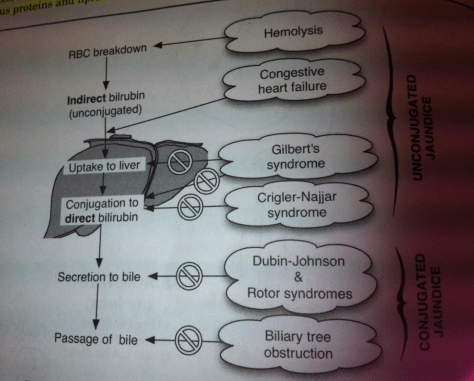
Remember to differentiate between causes of direct (conjugated) and indirect (unconjugated) hyperbilirubinemia:

Direct:
Gallstones
Intrinsic/Extrinsic Tumors (cholangiocarcinoma, pancreatic, HCC, etc.)
PSC / PBC
AIDS cholangiopathy
Strictures following invasive procedures
Parasitic infections: liver flukes
Viral hepatitis
Alcoholic hepatitis
Drugs/Toxins
Sepsis/Hypoperfusion
Infiltrative process (sarcoidosis, TB, lymphoma, amyloidosis)
Rotor syndrome
Dubin-Johnson syndrome

Indirect:
Extravascular/Intravascular hemolysis
Heart failure
Gilbert’s syndrome
Crigler-Najjar Syndrome
Hyperthyoidism

1.PNG

LFT abnormalities:

Cholestatic pattern: elevated bilirubin, high alk phos in relation to AST/ALT pattern
Hepatocellular pattern: elevation of AST/ALT in relation to alk phos and bilirubin levels.

Courvoisier’s Sign: palpable, non-tender gallbladder in a jaundice patient; cause is unlikely to be gallstone.

Cholangiocarcinoma:

Epidemiology: 8/million individuals, peak 50-70 years old; 2/3 Klatskin tumor (at bifurcation of left/right hepatic ducts), 1/3 intrahepatic
Risk Factors: PSC (1.5% per year), liver flukes
Clinical presentation: Ductal obstruction – jaundice (90%), pruritis (66%)
Ab pain (30-50%), weight loss (30-50%), fever (20%)
Treatment: Surgery – complete resection 40-60% 3 year survival; 10% operative mortality
Palliative – <18 month predicted mortality