All posts by vmcimchiefs

AM Report 1/17/17: APML

APML (Acute Promyelocytic Leukemia)M3 variant of AML

Epidemiology

ANY age but uncommon before age 10 or after age 60
-RF include exposure to cytotoxic chemotherapy or radiation (esp. Topoisomerase inhibitors)

Timing

-Sub-acute

S&S

-Related to pancytopenia (eg: pallor,fatigability,  infections, gingival bleeding, ecchymoses etc.)
-APML in particular often presents with COAGULOPATHY due to DIC with Auer Rods seen on peripheral smear (see below)

auer rods.png

How do you make the diagnosis?

Molecular genetics via FISH analysis most common method

-Most common translocation is T(15:17) creating the fusion gene PML-RARA (see image below)
-Can also use Karyotype, RT-PCR, or anti-PML antibodies.
Bone Marrow Biopsyif high suspicion for APML based on cytologic and clinical criteria, it is recommended to START treatment prior to BMB due to high rate of early mortality. 

pml-rara
Treatment

-First line treatment is ATRA (All-Trans-Retinoic Acid) 

  • Combine with either Anthracycline based chemotherapy (Idarubicin or Daunorubicin and Cytarabine) or Arsenic Trioxide (ATO)

Which one do you choose?

  • Low/Intermediate risk: ATRA + ATO Lower risk of myelosuppression, cardiac toxicity, reduced risk of secondary leukemia
  • High risk APL (Initial WBC count >10^9 and platelet<40): ATRA + Anthracycline*

90 % of patients will achieve hematologic complete remission (CR) with induction chemotherapy

Supportive Care

High risk of DIC and coagulopathy-Monitor DIC labs and transfuse to keep platelet count >20k-30k, and fibrinogen>150

Complications-ATRA Differentiation Syndrome 

25 % of patients on ATRA may develop it within 2-25 days of treatment. However, can occur in those with APL who are NOT even treated with ATRA 

Signs and Symptoms

-Fever, pulmonary infiltrates, peripheral edema, hypoxemia, AKI and pleural/pericardial effusion
-Looks like ARDS or sepsis

Treatment is with Dexamethasone (10 mg IV q12h x 3d) and often cessation of ATRA treatment.

References

Images and information from UpToDate
AM Report 1/11/17: Myxedema Coma

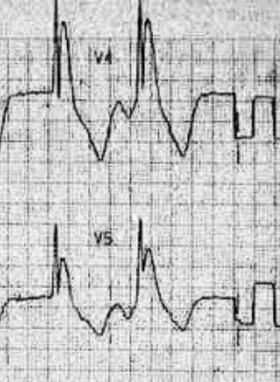
Osborn Waves (J Waves):

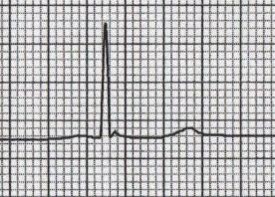
  • The Osborn wave (J wave) is a positive deflection at the J point
  • It is usually most prominent in the precordial leads
  • Typically associated with hypothermia (typically < 30 C), but they are not pathognomonic; Also seen in: hypercalcemia, neurological insults, medication side effect
  • Height of the Osborn wave is roughly proportional to the degree of hypothermia


32.5 C

picture1

30 C

picture2

<27 C

picture3

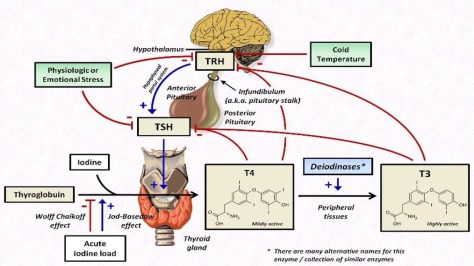
Thyroid Regulation:

  • TRH (a tripeptide amide) formed in the hypothalamus and travels to the anterior pituitary where it stimulates the release of TSH.

TSH has 3 main effects:

  • ↑ release of preformed thyroid hormone
  • ↑ formation of thyroid hormone
  • ↑ size/number of thyroid cells

Synthesis of T3 and T4 (very complicated) requires two main components thyroglobulin and iodine.

4 physiologic effects of T3 and T4:

  • ↑ basal metabolic rate (↑ heat generation, ↑ O2 consumption)
  • ↑ metabolism (↑ gluconeogenesis, ↑ glycolysis, ↑ glucose absorption, ↑ lipolysis, ↑ protein turnover)
  • Stimulates bone maturation and growth
  • ↑ cardiac output (↑ HR, ↑ contractility)

picture5

Wolff Chaikoff effect: reduced thyroid hormone following large ingestion of iodine; explains potential hypothyroidism cased by amiodarone.

Jod-Basedow effect: iodine-induced hyperthyroidism in a patient with an endemic goiter

capture

Myxedema Coma:

3 key features:

  • Altered mental status: despite the name, most patients do not present in coma, but usually with confusion/lethargy
  • Hypothermia: due to decrease in thermogenesis that accompanies the decrease in metabolism
  • Precipitating event: look for cold exposure, infection, drugs (diuretics, sedatives, analgesics), trauma, stroke, heart failure, GI bleed, etc.

Pathogenesis:

capture

Typical presenting patient: older female presenting in the wintertime (often with a history of hypothyroidism)

  • Female > Male 4:1
  • Almost exclusively > 60 years old
  • 90% of cases during the winter months

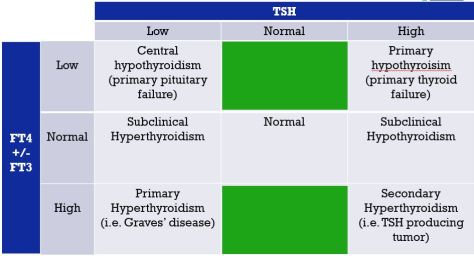
If diagnosis is suspect, labs to get include:

  • TSH
  • FT4
  • Cortisol

Pearl: without a frankly low T4 level, myxedema coma is unlikely, regardless of the TSH elevation

Myxedema coma is an endocrine emergency and should be treated aggressively – mortality rate 20-40%

Treatment:

  • Thyroid replacement – controversial about type of replacement: Levothyroxine (T4) versus Liothyronine (T3), but initially route of administration should be IV given potential for impaired GI absorption
  • Stress dose steroids – patients with secondary hypothyroidism may have associated hypopituitarism and secondary adrenal insufficiency
  • Supportive measures – ICU management, mechanical ventilation (if necessary), IVF, vasopressors, rewarming, etc.

AM Report 1/3/17: Thyrotoxicosis

EKG findings with Atrial Fibrillation:

  • Irregularly irregular rhythm (no RR repetitive pattern)
  • No distinct P waves
  • f waves (small, irregular waves indicating rapid atrial activity ~150-300 bpm)

Common etiologies of Atrial Fibrillation:

  • Ischemic heart disease
  • Hypertension
  • Thyrotoxicosis
  • Drugs (sympathomimetics)
  • PE
  • Valvular heart disease (esp. mitral stenosis / regurgitation)
  • Electrolyte abnormalities (hypokalemia, hypomagnesaemia)
  • Cardiomyopathies (dilated, hypertrophic)

Different Classifications of Atrial Fibrillation:

  • Paroxysmal: AF that terminates spontaneously or with intervention within 7 days of onset
  • Persistent: sustained AF that lasts > 7 days
  • Long-standing persistent: sustained AF that lasts > 12 months
  • Permanent: persistent AF with either treatment failure or a decision to not pursue treatment

CHADS2 versus CHA2DS2VASc:

CHADS2 = CHF (1), HTN (1), Age ≥ 75 years (1), DM (1), Stroke/TIA (2)

CHA2DS2VASc = CHF (1), HTN (1), Age ≥ 75 years (2), DM (1), Stroke/TIA (2), Vascular disease (1), Age 65-74 (1),  Female sex (1)

  • Treat with anti-coagulation is score >2
  • Treatment options include: warfarin (goal INR 2-3), dabigatran, rivaroxaban, apixaban

Rate versus Rhythm Control:

AFFIRM trial

  • In patient’s with non-valvular AF, there is no survival benefit between rate and rhythm control
  • A non-significant trend towards decreased mortaility was associated rate control

Strict versus Lenient rate control:

RACE II trail

  • Among patients with permanent atrial fibrillation, lenient rate control (HR <110 bpm) is as effective as strict rate control (HR < 80 bpm) in preventing cardiovascular events
  • Of note, the strict group met resting targets in 78% of cases (compared with 98% in lenient) and required 9 times as many visits (684 vs. 75)

Physical Exam of Thryotoxicosis:

Skin: warm/moist skin, thin/fine hair, pretibial myxedema (Grave’s disease), thyroid acropachy (digital clubbing, swelling of digits)

Eyes: stare (lid retraction), lid lag, exophthalmos, periorbital/conjunctival edema, limitation of eye movement

CV: tachycardia, atrial fibrillation, systolic hypertension, high output CHF

GI: increased appetite, hyperdefecation

Neuro: fine tremor, hyperreflexia, proximal muscle weakness

Psych: anxiety, agitation, psychosis, depression, insomnia, mania

Thyroid: diffuse thyromegaly, thyroid bruit (specific for Graves)

Graves’ Disease Toxic adenoma / TMNG Subactue Thyroiditis
Epidemiology Females between 20-50 yo TA – 40-50 yo; TMNG > 50 yo Female > Male; young > old
Pathophysiology Antibodies against TSH receptors (TSI or TRAb) stimulate autonomous production of T4/T3 Autonomous production from activating mutations in TSH receptor Leakage of hormone from gland
Clinical Course / Physical Exam Exophthalmos,

Pre-tibial myexedema, Thyroid bruit

Hyperthyroid symptoms;

Palpable nodule(s)

Often preceded by URI, painful thyroid palpation, initially hyperthyroid => hypothyroid => normalizes
Diagnosis / Tests Low TSH, High FT4/T3, TSI, TBII; RAIU with markedly increased activity TSH, FT4, RAIU, thyroid US TSH, FT4

RAI – low uptake

Thyroid US – diffuse enlargement

Treatment Thionamides (PTU, methimazole); RAIA (avoid with ocular findings), surgery Thionamides (toxic patients), surgery for compression, RAIA NSAIDs, supportive care; prednisone if poor response, BB for symptom management

AM report 1/12/17: Accelerated Hypertension

Accelerated Hypertension ( Hypertensive Emergency /Malignant Hypertension)

 BP>180/120 + End Organ Damage

What is considered end-organ damage?  *Not an exhaustive list!

Cardiac-ACS/Aortic Dissection/CHF

Neuro-Stroke/Encephalopathy/Bleeding/Retinopathy/Papilledema

Renal-AKI/hematuria/proteinuria/MAHA/preclampsia/scleroderma renal crisis

Goal of Treatment Lower MAP with IV agents (eg: Labetalol/Esmolol/NTG/Nitroprusside/Nicardipine) by 10-20 % in minutes-2 hours, and then lower additional 5-15 % in next 23 hours.

Recommendations vary including lowering DBP<110 within 2-6 hours as tolerated

Compare to hypertensive urgency (no end-organ damage) where BP is lowered with oral medications and goal is to decrease BP in hours using PO agents with goal normal BP in 1-2 days

SPECIAL INSTANCE:

1)CHF and Accelerated HTN

-Treat with Diuretics and Nitroglycerin or Nitroprusside (watch for cyanide toxicity) –Avoid drugs that decrease contractility (eg: beta blockers), or increase cardiac work (Hydralazine)

Avoid Labetalol in cases of unopposed alpha states (eg: Pheochromocytoma/cocaine/methamphetamine)

EXCEPTIONS

1)Acute ischemic stroke-generally allow permissive hypertension unless BP>220/110 and not tPA candidate or >185/110 and tPa candidate

2)Aortic dissection-goal of 100-120 SBP to decrease wall stress (especially Type B aortic dissections which are medically managed)

Secondary Hypertension Etiologies and Workup

1)Renovascular HTN-90 % of cases due to atherosclerosis, but 10 % due to FBD, MRA superior to ultrasound in diagnosis

2)CKD-Check GFR, normocytic anemia, hx of DMII, PCKD, renal ultrasound

3)Primary Hyperaldosteronism-Check Renin/Aldo levels, only 50 % have hypokalemia and metabolic alkalosis-need to confirm that patient is off anti-hypertensives and aldosterone is suppressed with saline infusion challenge

4)OSA-based on history and sleep study

5)Drugs (eg: OCP/sympathomimetics/cocaine/METH)

6)Pheochromocytoma (24 hour urine metanephrines and catecholamines-sensitive and specific, serum metanephrines easier to test but lower specificity)

7)Cushing syndrome-Dexamethasone supression test

8)Coarctation of Aorta– Associated condition (eg: Turners), Radiofemoral delay

9)Primary Hyperparathyroidism-check PTH

10)Hypo or Hyperthyroidism-Check TFT

Causes of PAINLESS loss of vision is related to either RETINA or OPTIC nerve involvement

RETINA

1)Central Retinal Artery Occlusion (CRAO)-ischemic retina, see cherry red fovea (has its own blood supply)
2)Central Retinal Vein Occlusion (CRVO)-“blood and thunder” appearance
3)Retinal detachment-new onset floaters/black dots, can be related to trauma

OPTIC NERVE involvement

1)Ischemic optic neuropathy (rule out GCA!)
2)Optic neuritis (Multiple Sclerosis commonly)-(+) RAPD but not specific
3)Papilledema (any increase in ICP)
4)Compression of optic chiasm (eg: pituitary adenoma)

See examples below (courtesy of UpToDate)


AM Report 01/10/17: Dermatomyositis

Dermatomyositis and Polymyositis- Idiopathic Inflammatory Myopathies

-Present with PROXIMAL muscle weakness (eg: difficulty climbing stairs, getting up from chair)
-Evidence of muscle inflammation (Elevated CK, Aldolase but also includes elevated LDH, AST, ALT)
Skin manifestations (Dermatomyositis)

Problem Representation for Dermatomyositis (see exception below)

-Usually female (2:1 Female:Male involvement) at any stage of life but peak incidence age 40-50, who presents with gradual onset (weeks-months) of symptoms

Making the diagnosis of Dermatomyositis

-Ask about proximal weakness
-Ask about cutaneous eruptions (see below)
-Ask about systemic involvement (dysphagia from oropharyngeal or esophageal muscle involvement or dyspnea from ILD)
-Rule out drug myopathy (Glucocorticoids, Statins, Fibrates, Alcohol, Anti-Malarial drugs, Colchicine but LONG list of drugs that can cause myopathy

(+) autoantibodies in 80 % of patients with DM and PM (ANA/Anti-Jo-1/Anti-SRP/Anti Mi-2 among others)


Clinical presentation and physical exam

-90 % of patients will have muscle weakness (proximal and symmetric)
-Pain and stiffness are NOT prominent and only about 50 % of patients will have myalgias and muscle tenderness
Crackles on exam (if ILD is present)

Skin manifestations (pictures from UptoDate)

Anti-Synthetase Syndrome (~30 % of patients with DM/PM

ACUTE onset (different than usual sub-acute presentation) + constitutional symptoms + myositis + Raynaud + non-erosive arthritis + mechanic’s hands (see picture above) and positive anti-synthetase antibody (Anti-Jo)
-Important to recognize due to higher risk of developing Interstitial Lung Disease (ILD)

Testing

EMG

-Can support diagnosis of inflammatory myopathy but not diagnostic for PM or DM and can see similar findings in viral, infectious, toxic, or metabolic myopathies

Muscle Biopsy

Can distinguish DM, PM, and inclusion body myositis

Association with Malignancy

DM and PM (DM>PM) puts you at HIGHER risk for adenocarcinoma malignancy, most commonly OVARIAN cancer but includes cancer of cervix, lung, pancreas, bladder, and stomach among others.

-Can occur before, simultaneously, OR after diagnosis of inflammatory myopathy
-All patients with newly diagnosed PM or DM should be evaluated for possible malignancy, including pelvic ultrasound and age-appropriate screening

Treatment

                    First line therapy is GLUCOCORTICOIDS 

Steroid sparing agents like Azathiprine (check that TPMT level!), Methotrexate, and Hydroxychloroquine (good for skin manifestations) are often added to primary therapy
-IVIG and other therapies used for refractory cases
-Physical therapy
-Aspiration precautions (risk of dysphagia)
-Treatment/Prevention of Osteoporosis as on high dose steroids
-PJP prophylaxis if on high dose steroids (~>20 mg Prednisone/1 month)


AM report 01/04/17: Orbital Cellulitis, Angle Closure Glaucoma, Endophtalmitis, and Hypermucoid Klebsiella

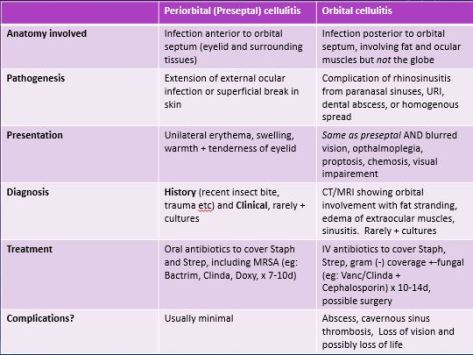
Distinguishing Pre-septal cellulitis (peri-orbital) and Orbital cellulitis  

preseptal vs orbital.JPG

Acute angle closure glaucoma

Clinical presentation 

Elevated IOP presenting as vision loss, acute SEVERE eye PAIN, frontal headache, nausea/vomiting with exam commonly showing corneal edema or cloudiness and mid-dilated pupil reacting poorly to light

                                             This is an eye emergency!

Treatment

You either want to DECREASE aqueous humor production or INCREASE OUTFLOW by constricting the eye. NEVER dilate the eye as it can decrease outflow and increase IOP

-Beta blockers, Acetazolamide, Mannitol (decrease production of aqueous humor)
-Alpha agonists, Pilocarpine (increase outflow)

Hypermucoid variant of KIebsiella Pneumoniae

Hypermucoviscosity virulence factor 
-Diagnosed in lab via STRING test and positive result is >5 mm viscous string from colony on agar plate
-Important to distinguish from non-virulent form as associated with metastatic involvement (endophthalmitis, meningitis, brain abscess but can go anywhere in the body). -Always check with the lab if not reported!

string test.jpg
KLA (Klebsiella Liver Abscess)-associated with Hypermucoid Klebsiella

-PRIMARY liver abscess in absence of hepatobiliary disease, diagnosed via ultrasound or CT scan
Risk factors include DMII, prior antibiotic use, and being of Asian descent (commonly from Taiwan) 
-Commonly presents with Fever (93 %), RUQ pain, N/V, leukocytosis, elevated alkaline phosphatase (78 %) and elevated AST/ALT (68 %)

Treatment of Hypermucoid Klebsiella

-Empiric treatment with Cephalosporin (commonly CTX) and Flagyl for empiric therapy, adjust based on sensitivities
Drainage of liver abscess if present (will not improve with antibiotics alone!)


AM report 12/27/16: ASA overdose

Management of ANY patient with suspected toxic ingestion:

-ABCs (Airway, Breathing, Circulation)
Call Poison Control! (1800 222-1222)
-Can patient get Activated Charcoal? (usually only within 1 hour of ingestion)
-Check Utox, Salicylate screen, acetaminophen screen, +- alcohol and volatile screen if suspected.
                                    You don’t want to miss a potential co-ingestion! 

ASA overdose

-Remember that ASA can be found in other compounds like topical salicyclic acid, herbal medications, bismuth subsalicyclate (part of Pepto-Bismol), and Oil of Wintergreen so don’t forget about those topical medications!
-Most sensitive vital sign abnormality in early ASA overdose is tachypnea with hyperventilation. 
-Classic acid/base abnormality is anion gap metabolic acidosis with respiratory alkalosis (see below)

How does ASA work? 

-Inhibits the COX-2 pathway, decreasing synthesis of prostaglandins, decreasing inflammation, and leading to platelet dysfunction
-Stimulates the chemoreceptor trigger zone to cause Nausea and Vomiting
-Activates the respiratory center in the medulla leading to hyperventilation and respiratory alkalosis
-Interferes with the Krebs cycle and decouples oxidative phosphorylation, leading to metabolic acidosis

Making the diagnosis

-Check Salicylate level and if elevated, check levels every two hours until two consecutive levels decrease from peak , value is less <40, and patient is asymptomatic.
-Check Serum CreatinineASA is renally excreted so significant renal failure will change management. 
-Check Potassium level-need to treat hypokalemia aggressively (see below)

Other labs that can support diagnosis but not required

-Coagulation studies (large overdose can cause hepatotoxicity and interfere with Vit K metabolism)
-Lactate (can be elevated due to uncoupling of oxidative phosphorylation)
-Anion Gap (Elevated due to ASA toxicity)
-ABG/VBG (Evaluate for resp.alkalosis/metabolic acidosis)
-CXR if concern for pulmonary edema (potential complication of ASA overdose)

TREATMENT of ASA overdose

-ABCs
-Activated Charcoal if <1 hour from ingestion
AVOID intubation if possible (remember that these patients have high minute ventilation (RR x TV) due to ASA effect on the medulla and this can be hard to reproduce on the ventilator without causing significant auto-peep)
-Volume resuscitation (be careful of pulmonary edema/cerebral edema)
-Alkalinize urine with sodium bicarbonate
Sodium Bicarbonate 1-2 meQ/kg IV bolus followed by 100-150 meQ/D5W and titrated to maintain urine pH of 7.5 to 8.0 and continued until salicyclate level <30. It is OK to continue sodium bicarbonate even with alkalemia as long as pH<7.60. Alkalinizing the urine keeps ASA in the non-acidic form (Sal-) , thus avoiding a lot of the complications of ASA overdose.  
-Treat hypokalemia aggressively to maintain alkalinization (see picture below). If hypokalemia is not corrected, the body will reabsorb potassium and acidify the urine, which is the opposite of what we want

-Consider giving glucose for neuro-glycopenic symptoms (controversial but patient can have neuro-glycopenic symptoms due to low CNS glucose even with a normal serum glucose)
-Call renal early if patient may need HEMODIALYSIS  (indications include AMS, cerebral edema/pulmonary edema, fluid overload, acute or chronic kidney injury, severe acidemia, or clinical deterioration despite aggressive care)

AM report 12/21/16: SJS/TEN

Warning symptoms for severe cutaneous reactions 

If any of these are present, consider life-threatening dermatological emergencies.

-Mucous membrane involvement!
-High fever (>38.5)
-Blisters
-Facial edema or erythema
-Lymphadenopathy

DRESS syndrome (Drug reaction with eosinophilia and systemic symptoms)

Commonly implicated drugs

-Antiepileptics
-Sulfa antibiotics (eg: Bactrim)
-Xanthine oxidase inhibitor (eg: Allopurinol)
-Sulfsalazine
-Abacavir (RTI)

-Remember that certain HLA haplotypes (eg: HLA B*58:01) are at higher risk for allopurinol related SJS or DRESS)
-Patients with HIV at >100x risk of developing DRESS compared to the general population

Timing

LONG latency period (2-8 weeks) compared to SJS/TEN

S&S 

Fever (85 %), Rash (75 %), Facial Erythema and Edema, Generalized lymphadenopathy, abnormal LFT.
Peripheral eosinophilia only seen in ~50 % and NOT required to make diagnosis

TEN/SJS 

-Extensive necrosis and detachment of the epidermis with >90 % having mucous membrane involvement, usually at two distinct sites (eg: oral, ocular, genital)
-<10 % BSA skin detachment is SJS while >30 % BSA skin detachment is TEN with SJS-TEN overlap in between

Most common implicated drugs

Same as DRESS syndrome but also includes NSAIDS!

Most common infectious trigger

Mycoplasma pneumoniae infection (more commonly in kids)

Timing

Usually 1-3 weeks after starting causative drug (note, more acute than DRESS)

S&S

-Dusky atypical targetoid skin lesions with at least two mucosal surfaces involved
-Rash is often painful, and diffusely involved.
(+) Nikolsky sign but also seen in SSSS and Pemphigus Vulgaris so not specific


Treatment

-WITHDRAWAL of culprit drug!
-Supportive care and management of complications
–Managing bacterial infections (MRSA, pseudomonas)
–Fluid and nutrition
–Wound care
–Pain control (remember that the rash can be very painful)
-Systemic steroids and IVIG controversial and NOT routinely recommmended

Management of Ocular symptoms

-Topical steroids, antibiotics
-Amniotic membrane transplanation (eg: Prokera ring) if extensive conjunctival involvement or pseudo-membrane formation.

prokera-ring
Prokera ring used as type of AMT for severe ocular inflammation in SJS/TEN

See article here by the NEJM for an excellent review of exanthematous drug eruptions 

AM Report 12/13/16: Cholangitis

Remember that Acute Cholangitis is a medical emergency that must be recognized and treated emergently!

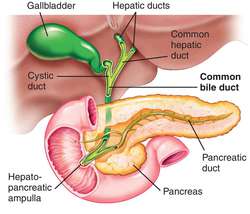
CBD diameter

Remember that CBD diameter can be a clue to biliary obstruction
-95 % of normal patients have a CBD < 6 mm
-Can increase with age, usually upper limit corresponds to decade of life (70 year old upper limit of ~ 7 mm
-Can see CBD up to 10 mm if post-cholecystectomy!

common-bile-duct

If you suspect choledocholithiasis, the ASGE guidelines can help you decide whether you should do an MRCP or an ERCP

-Remember if you have any very strong predictors (see below), you should go directly to an ERCP!

Very strong predictors of choledocholithiasis

-CBD stone seen on trans abdominal ultrasound
-Bilirubin>4 mg/dl
-Clinical ascending cholangitis

acge-choledocholithiasis

riskfactorscholangitis.JPG
MRCP vs. ERCP

MRCP=diagnostic modality, NO contrast given, excellent sensitivity to evaluate for choledocholithasisis (90-100%)
ERCP=diagnostic and therapeutic modality, invasive (have to be in prone position!), risk of post-ERCP pancreatitis

Four main etiologies of biliary obstruction

Choledocholithasis (MCC)
-Biliary strictures
-Malignancies
-Biliary stent complication (eg: migration)

Etiology
GUT FLORA

-E.Coli (most common), Klebsiella, Enterobacter, Enterococcus, and Anaerobes (less common alone)

Key Clinical manifestations and lab findings for cholangitis and which ones are most common

-Fever (95 %)
-RUQ pain (90 %)
-Jaundice (80 %)
Charcot’s Triad=>Fever, RUQ, Jaundice
(+) Hypotension, Confusion, Leukocytosis, Cholestatic jaundice.

Treatment for empiric coverage for cholangitis

-Beta Lacam/Beta Lactamase inhibitor
-Flouroquinolone + Flagyl
-Carbapenem

Management for cholangitis in addition to antibiotics

-ERCP for source control, treatment of sepsis, and cholecystectomy

AM Report 12/20/2016: Hypercalcemia

Calcium correction:

  • Corrected Calcium = (0.8 (normal albumin – patient’s albumin)) + Ca2+
  • Check an ionized (free) calcium

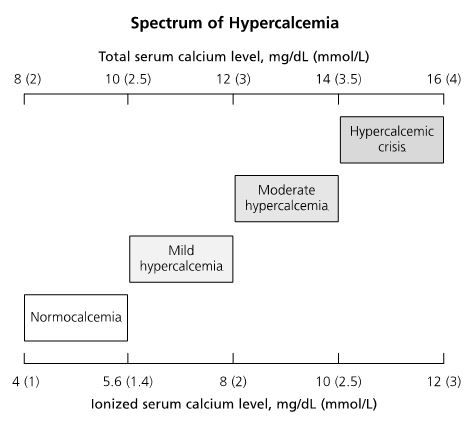
Interpreting the degree of hypercalcemia:

  • Normal (8-10 mg/dL)
  • Mild hypercalcemia (10-12 mg/dL)
  • Moderate hypercalcemia (12-14 mg/dL)
  • Hypercalcemic crisis (>14 mg/dL)

1

Remember the clinical manifestations of hypercalcemia: “stones, bones, abdominal groans, thrones, and psychiatric overtones”

2

ECG in hypercalcemia:

  • the main ECG abnormality with hypercalcemia is shortening of the QT interval
  • in severe hypercalcemia, Osborn waves (J waves) may be seen

3 Main hormones involved in calcium homeostasis:

picture8

Etiologies of Hypercalcemia:

3

Pathophysiology/ Causes Calcium Level PTH Level 1, 25-vitamin D Phosphorous
Primary Hyperparathyroidism Overproduction of PTH, 85% due to single adenoma
Secondary Hyperparathyroidism Overproduction of PTH, commonly due to chronic renal failure ↔ or ↓ ↔ or ↑
Tertiary Hyperparathyroidism Overproduction of PTH, usually by autonomous hypersecretion of PTH ↑↑

4

Treatment of Hypercalcemia:

  • Any symptomatic patient with a calcium level > 12 mg/dL
  • Any patient with calcium level > 14 mg/dL

Treatment options:

  • IVF (NS) – enhances filtration/excretion of Ca2+; tailored towards urine output ~ 200 mL/hr
  • Loop Diuretics (Furosemide) – inhibits calcium reabsorption in the distal tubule; only use one volume status restored
  • Bisphosphonate – inhibits osteoclast action/bone reabsorption; indicated in hypercalcemia of malignancy; avoid in renal failure
  • Calcitonin – inhibits bone resorption and promotes Ca2+ excretion; recommended for severe cases after IV hydration
  • Glucocorticoids – inhibits vitamin D conversion to calcitriol; used for vitamin D intoxication, hematologic malignancies, and granulomatous disease
  • Dialysis – used for cases of resistant, life-threatening hypercalcemia