Adrenal insufficiency, lupus flare, and mixed AIHA- 9/6/18

Thanks to Becky for presenting the case of a middle-aged woman with h/o SLE and Evans syndrome who presenting with subacute onset of fatigue after her prednisone dose was reduced, found to have iatrogenic adrenal insufficiency, lupus flare, and mixed autoimmune hemolytic anemia!


Clinical Pearls:

  • Evans syndrome describes AIHA + ITP, a rare condition associated with SLE and often precedes the diagnosis of SLE by a few years.
  • Hematologic manifestations of SLE are many and include the following
    • Anemia (chronic disease, iron deficiency, medication-induced, warm AIHA>>cold AIHA, pure red cell aplasia, MAHA, and pernicious anemia)
    • Leukopenia
    • Thrombocytopenia
    • Pancytopenia
    • Evans syndrome
  • Smear findings can be very helpful in diagnosing different types of hemolytic anemiasSchistocytes are a very specific for MAHA, valve disorders, AVMs, APLS whereas AIHA would result in spherocytes. 
    • The negative predictive value of spherocytes is low.  So a smear without spherocytes does not rule out AIHA!
  • Lastly, the most common cause of adrenal insufficiency (AI) is iatrogenic.
    • General rule of thumb for when risk of AI is high and you should taper steroids slowly is if someone is on prednisone > 20 mg for > 3 weeks.  Keep in mind that people with smaller BSA would be more susceptible to AI and at risk with even lower doses.

Hemolytic anemia work up

Check smear

  • Schistocytes
    • MAHA: TTP, HUS, HELLP, DIC, HTN
    • Valve disorder
    • AVMs
    • APLS
  • No schistocytes (+ spherocytes)
    • Intrinsic RBC defect
      • Enzyme deficiency (G6PD)
      • Hemoglobinopathy (sickle cell)
      • Membrane defect (hereditary spherocytosis)
    • Extrinsic RBC defect
      • Liver disease
      • Splenic sequestration
      • Infections (clostridium perfringens, babesia, malaria, bartonella)
      • Meds/toxins (dapsone, nitrites, lead, copper, snake venom)
      • AIHA (warm and cold)
    • Intravascular
      • Transfusion reaction
      • Infections
      • PNH

Lab findings in AIHA: 

  • ↑ retic
  • ↑ indirect bili
  • ↑ LDH
  • ↓ haptoglobin
  • + DAT (but keep in mind that DAT can be negative in 3% of patients with WAIHA)
  • + spherocytes

Summary of AIHAs:

Picture1


Stress-induced cardiomyopathy – 9/5/18

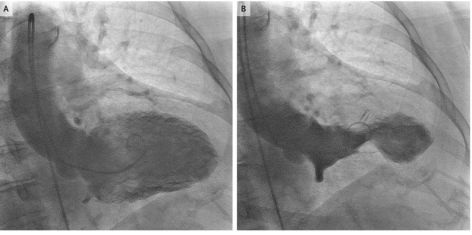
Thanks to Eric for presenting the case of an “late middle-age” woman with chest pressure, found to have ST depressions, troponin elevation, TTE with apical akinesis, and clean coronaries on cardiac cath concerning for Takotsubo cardiomyopathy.


Clinical Pearls

  • Think of heart failure as ischemic vs non-ischemic
  • Most common causes of heart disease are ischemia (CAD), HTN, idiopathic, valvular, infectious (viral), and drugs.
  • MINOCA or myocardial infarction with nonobstructive coronary arteries is MI in the absence of coronary artery disease with >50% vessel occlusion and includes the following etiologies
    • Stress induced cariodmyopathy (Takotsubo)
    • Coronary vasospasm
    • Microvascular dysfunction
  • Takotsubo cardiomyopathy most commonly presents in postmenopausal women and triggered by physical or emotional stress.  The pathogenesis is not well understood and the course is self-limited.  Treatment is largely supportive.  Prognosis to recovery of cardiac function is 1-4 weeks.

Heart failure

  • Ischemic
    • CAD
    • Bridge
  • Non-ischemic
    • HTN
    • Valvular disease
    • Idiopathic
    • Infectious (viral is most common)
    • Infiltrative (sarcoid, amyloid, hemochromatosis)
    • Stress induced cardiomyopathy (Takotsubo)
    • Arrhythmia
    • High output (secondary to anemia, Paget’s disease, pregnancy, AV fistula, beriberi, hyperthyroidism)
    • Post-partum
    • Hypothyroidism
    • OSA
    • Connective tissue disease

MI with non-obstructive coronary arteries (MINOCA)

  • Diagnosis: requires the following
    • Clinical documentation of MI
    • Exclusion of obstructive CAD
    • No overt cause for acute MI present
  • Etiologies: significant overlap with non-ischemic causes of heart failure
    • Non-cardiac
      • Reduced troponin clearance (i.e. renal impairment)
      • Increased right heart pressures (ex PE)
    • Cardiac causes
      • Stress induced cardiomyopathy
      • Inflammation (myocarditis)
      • Coronary artery spasm (vasospastic angina)
      • Microvascular dysfunction (microvascular angina, microvascular spasm, coronary slow flow phenomenon)
      • Thrombophilia
  • Work up
    • MINOCA is a working diagnosis
      • Exclude non-cardiac cause
      • Rule out ischemic etiology
      • TTE
      • Cardiac MRI is often indicated
      • Provocative spasm testing (with acetylcholine etc in the case of coronary vasospasm)

Takotsubo cardiomyopathy

  • First described in Japan in 1990
  • It is the underlying etiology in ~1-2% of patients presenting with ACS
  • More common in post-menopausal women (mean age 66.4)
  • Pathogenesis:
    • Not well understood
  • Clinical manifestations
    • Often triggered by emotional or physical stress but ~30% of the time, no trigger is identified
    • Symptoms
      • Most commonly present with acute substernal chest pain.  Less commonly present with SOB or syncope or heart failure symptoms
    • Exam
      • May have late peaking systolic murmur similar to HOCM
    • EKG changes:
      • ST elevation in anterior leads (43.7%)
      • ST depression (7.7%)
      • QT prolongation, T wave inversion, abnormal Q waves
    • Troponin elevation in most patients (mean initial troponin is ~7-8)
    • Diagnostic criteria
      • Transient LV systolic dysfunction (hypokinesis, akinesis, or dyskinesis), wall motion abnormalities that extend beyond a single epicardial coronary distribution
      • Absence of CAD based on cath
      • New EKG abnormalities
      • Absence of pheochromocytoma or myocarditis
    • Work up
      • Rule out ACS
      • Cardiac MRI to rule out other causes of MINOCA
    • Management
      • Supportive
    • Prognosis
      • Recovery in 1 to 4 weeks

Picture1

Picture above and cool video from NEJM here.


Recurrent Pyogenic Cholangitis 9/3/2018

Paula presented a case of an elderly Mexican woman presenting with 2-4 weeks of non-specific complaints i.e. abdominal pain, nausea, anorexia, and yellow discoloration. Her labs were notable for obstructive pattern LFT abnormalities. US revealed cirrhosis, and CT AP revealed dilated stone-filled intrahepatic and extrahepatic biliary ducts. ERCP later revealed innumerable stones and copious sludge throughout the intrahepatic ducts, common hepatic ducts, and CBD. Her presentation was consistent with recurrent pyogenic cholangitis, also known as…

  • Hong Kong Disease
  • Oriental cholangitis
  • Oriental cholangiohepatitis
  • Oriental infestational cholangitis
  • Biliary obstruction syndrome of the Chinese
  • Cholangiohepatitis

I’m not kidding.

Epidemiology:

  • Found primarily in residents of East and SE Asia, or people who have resided there.
  • Associated with poorer socioeconomic backgrounds

Pathophysiology/Presentation

  • Characterized by recurrent cholangitis, biliary stasis, and innumerable intrabiliary stone formation ) calcium bilirubinate stones) throughout a fibrotic biliary ductal system.
    • Stone formation can occur within the intrahepatic bile ducts unlike the most common presentation of stone formation within the gallbladder.
  • Possibly associated with biliary parasitosis, namely liver flukes like Clonorchis sinensis, Fasciola spp. Ascaris lumbricoides (from prior studies revealing dead parasites within the stones).
  • Leads to recurrent infections due to persistent biliary stasis, stone formation, and bile duct structures.
  • Pts often present with cholangitis, non-spec abd pain, or pancreatitis. Often unrecognized at first, and recurrent attacks leads to progressive biliary and hepatic damage which may lead to abscesses or cirrhosis.

Diagnosis

  • Imaging correlating with clinical history, US first, CT, MRCP (can evaluate extent of biliary involvement), percutaneous transhepatic cholangioscopy
  • Invasive: ERCP
  • Abnormalities commonly found: intra + extrahepatic duct dilatation, periductal fibrosis, missing duct sign (complete obstruction)
  • All pts should have O&P checked

Management

  • Complicated, combination of management of infection and biliary drainage.
  • Severe cases: resection of affected bile duct segments followed by biliary-enteric anastomosis (i.e. hepaticojejunostomy, may require partial hepatectomy)
  • No optimal strategies have been established by large studies.

Big picture

  • Predominantly in Asians
  • Unclear pathophysiology but thought to be somewhat related to parasites
  • Lack of large studies on optimal management.
  • One Taiwanese study: 7% pts develop cirrhosis, 3% with cholangiocarcinoma