Category Archives: Morning Report

WPW Syndrome

Today we went through a case of WPW Syndrome that manifested as a wide complex tachycardia 2/2 to rapid atrial fibrillation in a pre-excited state.

We first went on a tangent and discussed the differential for sinus tachycardia.

DDx for Sinus TAchycardia.PNG

We then discovered that it was a wide complex tachycardia that was irregularly irregular. We emphasized the first step in the pathway.

  1. Check a pulse! 

  2. If unstable with a pulse – SHOCK!

  3. If stable with a pulse – THINK!

  4. If in doubt – it’s probably VT and the ACLS algorithm will work in almost every situation (it is safer to incorrectly assume a ventricular tachycardia than supraventricular tachycardia with abberancy)

    -If you are skilled in EKGs, look at https://litfl.com/vt-versus-svt-ecg-library/ and become comfortable at distinguishing them before prime time. Remember though, these algorithms are not always correct and so when in doubt, it’s VT

  5. If you have strong reason to suspect that it is NOT TRUE VT and the patient is stable, ASK FOR HELP before giving any medication

We then reviewed the differential for wide complex tachycardia

1.VT (80% of patients)

2.SVT with a bundle branch block (15%)

3.SVT with antegrade conduction via an accessory pathway (pre-excited syndrome)

4.Pacemaker

5.Hyperkalemia

6.Anti-arrythmic drugs (class 1C, 1A, digoxin, amiodarone)

We then reviewed the three tachyarrhythmias that can occur in patients with a WPW pattern

  1. Orthodromic AVRT (usually narrow complex, rate usually 200-300)
  2. Antidromic AVRT (wide complex, rate usually 200-300)
  3. Afib/flutter (wide complex, irregular rhythm, QRS complexes change in shape and morphology, and axis remains stable unlike polymorphic VT)

Treatment of Antidromic AVRT or Atrial Fibrillation with Pre-excitation:

  1. If unstable with a pulse, cardioversion
  2. If stable with a pulse, procainamide is readily available in our hospital
  3. Definitive treatment is catheter ablation which has a success rate of 80% at 5 years in the prevention of tachyarrhythmias .

Finally, we emphasized: DO NOT treat with AV nodal blocking agents e.g. adenosine, calcium-channel blockers, beta-blockers as this may increase conduction down the accessory pathway. Per UpToDate: “Amiodarone should generally not be used in patients with AF and accessory pathway.” Remember, ventricular tachycardia (far away and the most common wide complex tachycardia) is often used in wide complex tachycardias that are regular and monomorphic per the ACLS protocol. If you’re thinking it could be pre-excitation (very rare), ask for help before administering a medication!

2010-Integrated_Updated-Circulation-ACLS-Tachycardia-Algorithm

Source: 2015 AHA Algorithm obtained from UpToDate
Lower GI Bleeding

Today we discussed a case of a patient with chronic constipation who presented with abdominal pain and hematochezia. A CT scan revealed a large fecaloma, which led to stercoral ulceration of the rectum, colitis and eventually perforation.

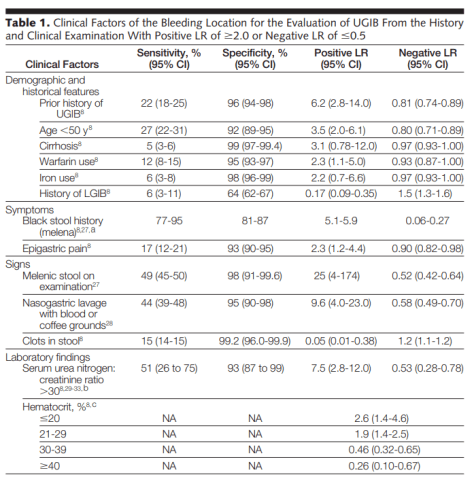
We first reviewed the etiologies of hematochezia, remembering that in up to 15% of cases, a brisk UGI source is the etiology. When this occurs it is typically in patients who have hemodynamic instability. Some aspects to aid in the diagnosis were put together in an excellent Rational Clinical Examination article in JAMA that Dr. Jacobson referenced. Findings that have a high LR of a brisk UGI are melenic stool on examination, an elevated BUN/Cr ratio  30, an NG lavage with blood or CGE . Findings that have a high LR of the etiology being a LGIB is a history of LGIB and clots in stool.

IsItUGI.

https://jamanetwork.com/journals/jama/fullarticle/1105075

We then discussed a framework for LGIB:

LGIBDDx

We discussed the complications of constipation:

  • Decreased quality of life
  • Hemorrhoids
  • Anal Fissures/Tears
  • Diverticulosis
  • Rectal Prolpase
  • Stercoral Ulceration

Stercoral Ulceration/Colitis/Perforation 101

  • most cases have been reported in elderly, psychiatric, bedridden, or narcotic-dependent patients with a history of constipation
  • Fewer than 150 causes of perforation have been described in the literature
  • Severe chronic constipation thought to induce the formation of stone-hard fecalomas and maintain a continuous peressure over the bowel wall leading to pressure necrosis
  • This ulceration sometimes leads to a state of stercoral colitis (localized ischemia due to increased luminal pressure)
  • CT findings of perforation are fecal impaction, colonic dilatation, colonic wall thickening, discontinuity in the enhancement of the bowel wall in relation to focal fecal distension of the colonic lumen, and extraluminar free air
  • A mortality rate of ~30% has been mentioned
  • Treatment is generally surgical

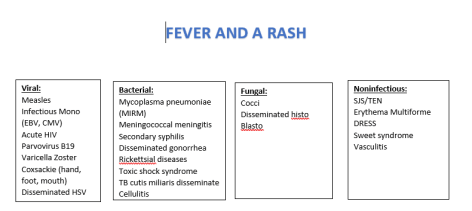
Fever, Rash, and Mucositis: A case of Infectious Mononucleosis and Erythema Multiforme

Capture

Erythema Multiforme: Acute immune-mediated reaction characterized by appearance of target-like lesions on skin often accompanied by bullae involving oral, genital, or ocular mucosa.

-Epidemiology: most common in young adults 20-40

-2 forms: Minor (only mild or no mucosal involvement) or major (severe mucosal involvement and may have systemic symptoms like fever and arthralgias)

-Triggers: 90% infectious (most commonly HSV, but can be viral, bacteria, or fungal)

-Cases have been associated with meds (most commonly NSAIDs), malignancy, autoimmune disease, vaccines, radiation, sarcoidosis, and even menstruation

-Treatment: Usually self-limited within a few weeks

Hemoptysis & Bronchiectasis

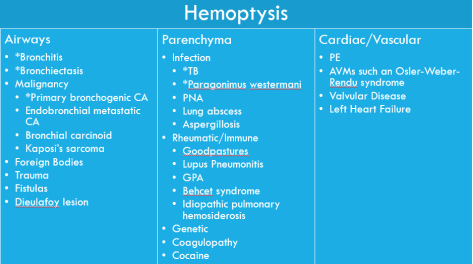
Today we learned about a patient who presented with hemoptysis in the setting of latent TB that was diagnosed as TB Bronchiectasis. We discussed the framework for hemoptysis:

Hemoptysis

We then reviewed the CT and determined it was bronchiectasis:

  • Bronchioectasis is defined as “Irreversible dilation and destruction of larger bronchi caused by chronic infection and inflammation”
  • Development of bronchiectasis always requires two factors
    • An infectious insult
    • Impaired drainage, airway obstruction or a defect in host defense
  • Etiologies
    • Any pulmonary Infections
      • Childhood infections (bacterial, viral or mycoplasma PNA)
      • Mycobacterial infections
    • Cystic Fibrosis
      • up to 7 percent of patients with cystic fibrosis (CF) are diagnosed at age 18 years or older
      • Sinusitis and bronchiectasis are the major respiratory manifestations of CF in adults
    • Airway obstruction
      • FBA or any other intraluminar obstructing lesion (such as a carcinoid tumor) or extraluminal compression
    • Tracheobronchomalacia/tracheobronchomegaly
    • Defective host defenses
      • Local: Ciliary dyskinesia
      • Systemic: hypogammaglobulinemia/prolonged immunosuppression
    • Young Syndrome
      • Bronchiectasis, sinusitis and obstructive azoospermia who have no evidence of cystic fibrosis
    • Rheumatic/Systemic Disease
      • RA/Sjogrens
    • Primary Ciliary Dysfunction
    • Allergic bronchopulmonary aspergillosis
      • should be suspected in patients with a long history of asthma that is resistant to bronchodilator therapy and associated with a cough often productive of sputum that is mucopurulent or contains mucous plugs.
    • Alpha-1 antitrypsin deficiencies
  • Signs and Symptoms
    • cough, mucopurulent sputum production, dyspnea, rhinosinusitis, hemoptysis (27%) and recurrent pleurisy
    • on exam crackles and wheezing are common
  • Radiographic Findings
    • The internal diameter of the bronchus is larger than that of its accompanying vessel
    • the bronchus fails to taper in the periphery of the chest
  • Treatment of Acute Exacerbation
    • Deciding when a patient has an acute exacerbation requires clinical judgement as there is no laboratory features specific for an exacerbation
    • Antibiotics decrease the existing bacterial burden and can decrease systemic inflammatory mediators
    • 10-14 day treatment course is appropriate (though the ERS 2017 guidelines suggest 14)

Complications of Diverticulitis… a pyogenic liver abscess!

Capture

Diverticulitis:

  • Mean age of diagnosis 63 years old, but 16% of cases occur <age 45
  • Most common symptom is abdominal pain: 95% LLQ pain, 5% is RLQ pain (more common in Asian patients)
    • 10-15% of diverticulitis patients have dysuria, urgency, or frequency
  • In an otherwise healthy patients under the age of 70, uncomplicated diverticulitis without sepsis, significant leukocytosis, diffuse peritoneal signs, or fever >102.5 can be treated outpatient as long as the patient has access to close follow-up (3 days)
    • If symptoms and infectious markers have not improved in 3 days, abscess should be suspected and patient should be admitted and reimaged
  • Outpatient treatment of diverticulitis:
    • Antibiotics: Cipro and flagyl first line
    • No evidence for dietary restrictions, but most providers recommend clear liquid diet until symptoms improve
    • Colonoscopy 6-8w after symptoms resolved to screen for colorectal cancer
    • Prevention of recurrences:
      • High-fiber diet
      • No evidence for avoidance of nuts, seeds, or corn as was previously thought
  • Complications of acute diverticulitis: abscess, perforation, obstruction, and fistula (usually colovesicular)

Pyogenic Liver Abscess:

  • usually polymicrobial
    • EColi most common in Western world
    • Klebsiella most common in Asia (beware of hypermucoid variant)
    • Strep milleri group is common (anginosus, constellatus, intermedius)
    • Staph and strep pyogenes can occur after procedures such as embolization
  • Most common symptoms is fever 90%
    • Abdominal pain 50-75%
    • N/v, anorexia, weight loss, malaise
  • LFTs are no necessary elevated
  • Mainstays of treatment are percutaneous drainage vs. surgical drainage and prolonged course of antibiotics (4-6 weeks)

Malignant Pleural Effusion And White-Out!

Today we discussed a case of malignant pleural effusion causing complete opacification of a hemithorax. We learned the framework for subacute-chronic dyspnea, discussed the physical exam finding of clubbing, reviewed Light’s Criteria and discussed transudates and exudates. Here is a recap:

Subacute-Chronic Dyspnea DDx:

  • Pulmonary (malignancy falls into all of these categories)
    • Airway
      • bronchitis
      • COPD
      • Asthma
      • Bronchiectasis
      • Foreign body
    • Parenchyma
      • PNA
      • edema
      • atelectasis
      • ILD
    • Vasculature
      • PE
      • pHTN
      • AVMs (HPS can cause these)
    • Pleura
      • Pleural effusion
      • PTX
  • Cardiac
    • Arrhythmia
    • Ischemia
    • Valvular disease
    • Tamponade
    • Constrictive pericarditis
    • Myocarditis
  • Other
    • Anxiety
    • Anemia
    • Reduced PiO2
    • Hypoventilation
    • compensation for metabolic acidosis
    • pregnancy
    • Thyrotoxicosis

DDx for Clubbing:

  • 80% with underlying respiratory disorders
  • 10-15% with miscellaneous disorders
  • Congenital cyanotic heart disease, liver cirrhosis, chronic diarrhea, subacute endocarditis
  • 5-10% hereditary or idiopathic clubbing

Lights Criteria and Pleural Effusions (see this previous blog post for an excellent review)

AM Report 3/22/17: Pleural Effusion

DDx For Complete Opacification of a Hemithorax

  • Trachea pulled toward opacified side
    • Pneumonectomy
    • Total lung collapse
    • Pulmonary agenesis
    • Pulmonary hypoplasia
  • Trachea pushed away from the opacified side
    • Pleural effusion
    • Diaphragmatic hernia
    • Large pulmonary mass
  • Trachea remains central in position
  • Consolidation
  • ARDS/pulmonary edema
  • Pleural mass
  • Chest wall mass

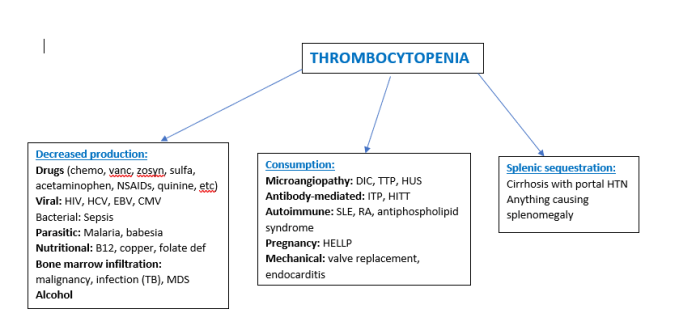
Thrombotic Thrombocytopenic Purpura

Today’s case was a middle-aged man with a history of stage 4 pancreatic adenocarcinoma who presented with somnolence and severe thrombocytopenia.

Capture

Diagnosis:

TTP should be suspected in any patient with thrombocytopenia and microangiopathic hemolytic anemia (MAHA) with schistocytes on peripheral blood smear. The classic pentad of fever, anemia, thrombocytopenia, renal failure, and neurological findings only occurs in 5% of TTP patients so a high index of suspicion is required for prompt treatment. GI symptoms, which are not included in the classic pentad of TTP, are relatively common so we suggest the following mnemonic.

Fever (10% of patients)

Anemia 

Renal involvement

Thrombocytopenia

Involvement of skin (purpura)

Neurological symptoms

GI distress

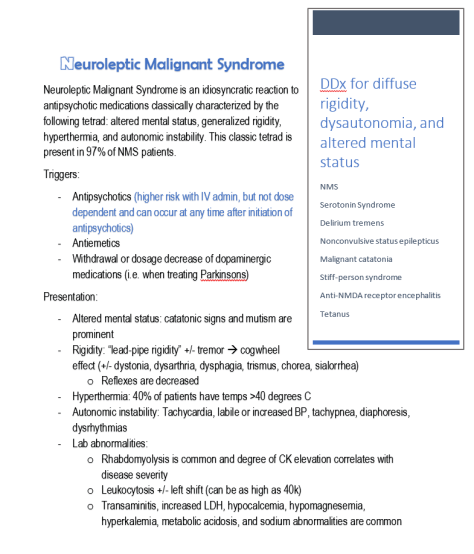
Refractory Delirium Tremens and Anion Gap Metabolic Acidosis

Today’s case was a young man with alcohol use disorder who presented with delirium tremens refractory to high dose benzodiazepines and severe anion gap metabolic acidosis.

In the differential diagnosis for hyperthermia, tachycardia, and hypertension in a patient with alcohol use disorder and psychiatric comorbidities, it is essential to consider serotonin syndrome and neuroleptic malignant syndrome in your differential.

  NMS Serotonin Syndrome DTs
Onset Gradual, days to weeks <24h 72-96h after last drink
Vital signs Hyperthermia, tachycardia, labile or high BP Hyperthermia, tachycardia, hypertension Hyperthermia, tachycardia, hypertension
Neuromuscular Muscle rigidity (lead pipe), hyporeflexia


Tremor, myoclonus, oculoclonus Tremor
Reflexes Hyporeflexia Hyperreflexia Hyperreflexia
Pupils Normal Mydriasis (dilated) Mydriasis (dilated)
Causative agent Dopamine antagonist Serotonin agonists Alcohol cessation
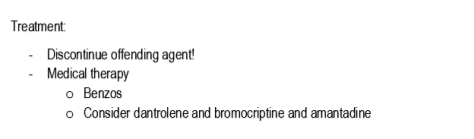
Treatment bromocriptine Benzos, cyproheptadine Benzos
Resolution Days to weeks <24h Variable

The differential diagnosis for anion gap metabolic acidosis in an alcoholic patient is also wide, including alcoholic ketoacidosis, type A lactic acidosis from concurrent shock due to severe alcoholic pancreatitis, hepatitis, or aspiration pneumonia among other infections, type B lactic acidosis from ethanol itself, or coingestion of other toxic alcohols such as methanol or ethylene glycol.

It is important to rule out toxic coingestion in all patients with alcohol use disorder, altered mental status, and severe anion gap metabolic acidosis. Do this by calculating your serum osmolar gap with a formula that includes ethanol.

Serum osm= 2Na + BUN/2.8 + glucose/18 + ethanol/4.7

If the osmolar gap >10, coingestion should be high on your differential.

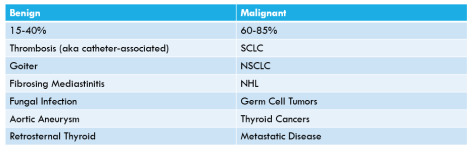
SVC Syndrome with Complete Thrombotic Occlusion

This morning we presented a case of SVC syndrome with complete thrombotic occlusion.

SVC 101

  • What is it?
    • Obstruction of blood flow through the SVC
  • What are the three mechanisms by which this can happen?
    • Thrombosis
    • Invasion
    • Extrinsic Pressure
  • How does the body compensate?
    • Collateral veins develop to return blood to the heart

Causes of SVC Syndrome

CausesofSVCSyndrome.PNG

SVC Symptoms

  • Facial and neck swelling
  • Chest pain
  • Respiratory symptoms
  • Neurological manifestations such as head fullness, which may worsen by bending forward or lying own
  • Headaches, confusion, audiovisual disturbances
  • Cerebral edema can be fatal
  • Arm swelling
  • Onset of symptoms depends on whether collaterals had a chance to form

Physical Examination

  • May see distended chest wall veins
  • Pemberton’s sign may be positive
    • initially discovered in the context of a goiter, it can also be useful to identify other causes of SVC obstruction
    • have the patient raise their arms for two minutes and watch for increasing facial plethora (swelling and redness)

Treatment Options

  • Depends on urgency. If emergent, ABCs then straight to endovascular management with pharmacologic thrombolysis/balloon angioplasty/etc +/- stenting
  • If non-emergent, can obtain imaging and biopsy and plan treatment course with chemotherapy or radiation

Lastly, check out Radiopedia! It’s a great learning tool and really fun too.

https://radiopaedia.org/?lang=us