Category Archives: Morning Report

AM Report 11/30/2016: Hepatorenal Syndrome

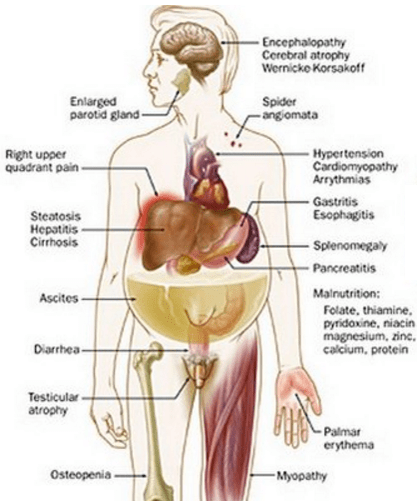
Some common physical exam findings of liver disease:

  • Fetor hepaticus (breath smells like a freshly opened corpse)
  • Spider nevi
  • Gynecomastia
  • Jaundice / Scleral icterus
  • Ascites
  • Caput medusae (dilated abdominal veins)
  • Rectal varices
  • Testicular atrophy
  • Palmar erythema
  • Dupuytren’s contracture

Picture7.png

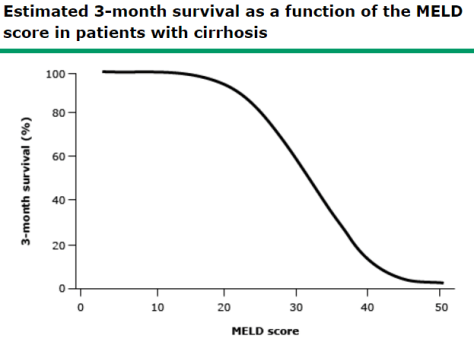
MELD Score:

  • Predicts 3-month survival in patients with cirrhosis.  In cirrhotic patients, an increasing MELD is associated with increasing severity of hepatic dysfunction and increased 3-month mortality.

picture8

Factors that go into MELD: serum bilirubin, serum creatinine, INR, sodium (added 1/2016), +/- hemodialysis > 2 in the past week

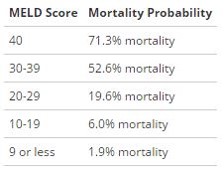
MELD Interpretation:

picture9

Maddrey Discriminant Function:

DF = (4.6 x [prothrombin time] – [control prothrombin time]) + (serum bilirubin)

  • DF > 32 indicates SEVERE alcoholic hepatitis
  • High short term mortality (20-30% within 1 month; 30-40% within 6 months)
  • Patient may benefit from glucocorticoids
  • Prednisone requires hepatic conversion to the active form (prednisolone)
  • Multiple trials have showed a reduced short term mortality in patients with a DF >32 (NNT 3-68); no effect in patients <32

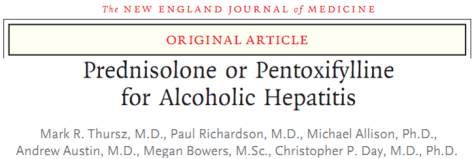
STOPAH Trial:

Picture10.png

  • Multicenter, double blinded, RTC
  • 1103 patients with DF >32 and TBili > 4.7
  • 4 treatment groups: (placebo, pentoxifylline + placebo, prednisolone + placebo, pentoxifylline + prednisolone)
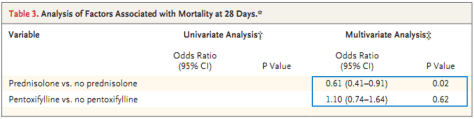
  • Prednisolone had a significant 28 day mortality benefit (after adjusting factors), but the benefit was lost at 90 days and 1 year
  • Pentoxifylline did not improve survival compared to placebo

    Picture11.png

Hepatorenal Syndrome:

Characteristics of HRS:

  • Clinically evidence acute or chronic liver disease
  • Progressive rise in serum creatinine
  • Normal urine sediment
  • Absent/Minimal proteinuria
  • Low urine sodium (often < 10 mEq/L)
  • Oliguria

Types of HRS:

Type 1: more serious; at least a 2 fold increase in serum creatinine to >2.5 mg/dL in less than 2 weeks

Type 2: less severe; major clinical feature is ascites resistant to diuretics

Etiology:

  • Splanchnic vasodilation ⇒ reduced effective circulating volume ⇒ renal failure
  • MAP = CO x SVR; In patients with HRS, SVR is decreased (from splanchnic vasodilation); hence treatment is aimed at improving SVR and MAP.

Diagnosis of HRS is one of exclusion:

  • Normal urinary sediment
  • Absence of nephrotoxic meds
  • No hypotension
  • Urine studies similar to pre-renal AKI

Fluid challenge with albumin: 1 g/kg albumin (max 100 g) daily for 2 days

  • If renal function IMPROVES, suggestive of pre-renal AKI
  • If renal function continues to DECLINES, suggestive of HRS

Treatment of HRS:

  • Liver transplantation – TREATMENT OF CHOICE
  • Medical Management:
    • ICU: treat with norepinephrine and albumin
    • Non-ICU: treat with midodrine, octreotide, and albumin

AM Report 11/28/2016: Gastric Adenocarcinoma

Peritoneal Fluid Analysis:

  • Increased accumulation:
    • Increased capillary permeability
    • Increased venous pressure
    • Decreased protein (oncotic pressure)
  • Decreased clearance:
    • Increased lymphatic obstruction

Causes of ascities:

Transudative (<30 g/L ~ systemic disease)

  • Liver (cirrhosis)
  • Cardiac (RHF, constrictive pericarditis, etc.)
  • Renal failure
  • Hypoalbuminemia (nephrotic syndrome)

Exudative (>30 g/L ~ local disease)

  • Malignancy
  • Venous obstruction (Budd-Chiari)
  • Pancreatitis
  • Lymph obstruction
  • Infection (especially TB)

SBP:

  1. PMNs > 250 cells/mm3
  2. + bacterial culture
  3. Absence of secondary causes (i.e. bowel perforation, abscess, etc.)

SAAG:

  • >1.1 g/dL ~ portal hypertension (97% accurate) => Transudative effusion
  • <1.1 g/dL ~ absence of portal hypertension => Exudative effusion

Lymphocytic Ascities:

  • Peritoneal carcinomatosis (>50% lymphocytes)
  • Peritoneal TB (>70% lymphocytes)

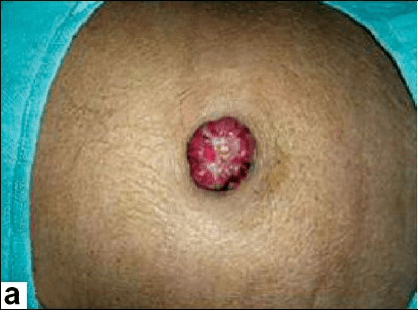
Sister Mary Joseph’s Sign: hard periumbilica nodule ~ indicative of metastatic disease to abdomen – usually pelvic/GI primary.

picture5

Virchow’s Node: enlarged lymph node in the left supraclavicular fossa ~ indicates cancer in the abdomen.

picture6

AM Report 11/22/2016: Tuberous Sclerosis

Remember the 3 large distinctions of anemia types and potential etiologies:
Microcytic (MCV < 80)
Normocytic (MCV 80-100)
Macrocytic (MCV >100)

picture1

Know how to interpret an iron panel in a medically ill patient:

1) Ignore the transferrin saturation

  • Reason: does not discriminate between anemia of inflammation and iron deficiency

2) Assess ferritin

  • <20: Iron deficiency
  • 20-100: Iron deficiency likely if inflammation, chronic viral infection, etc.
  • 100-800: Unlikely iron deficiency (unless hepatitis, chronic HD)
  • >800: Extremely unlikely iron deficient

3)Assess the TIBC (preferred over transferrin level)

  • >400: Iron deficient
  • 300-400: Likely a component of iron deficiency
  • 200-300: Unlikely iron deficient
  • <200: Very unlikely iron deficient, usually inflammation, liver failure

Tuberous Sclerosis:

  • Autosomal dominant genetic disorder due to a mutation in either TSC1 or TSC2 gene.
  • Incidence of 1 in 5000-10000 live births
  • De novo mutations account for ~ 80% of TSC cases
  • TSC is highly variable in expression – thus the severity of disease can vary substantially among affected individuals within the same family
  • TSC is characterized by the development of a variety of benign tumors in multiple organs: brain, heart, skin, kidney, lung, and liver

81-95% of TSC patients have on the characteristic skin lesions:

  • Angiofibromas ~ typically on the malar region of the face
  • Hypopigmented macules AKA ash-leaf spots ~ elliptic in shape
  • Shagreen patches ~ usually over the lower trunk
  • A distinctive brown fibrous plaque on the forehead ~ usually the first and most readily recognized feature of TSC
  • Periungual/subungual fibromas develop during adolescence or adulthood; toenails > fingernails

CNS lesions characteristic of TSC include:

  • Glioneuronal hamartomas (corticol tubers)
  • Subependymal nodules
  • Subependymals giant cell tumors (SGCTs): the characteristic brain tumor of TSC with a prevalence of ~ 5-20%, with 6-9% symptomatic

Neurological complications include:

  • Seizures ~ 79-90% of patients, most often in the 1st year of life
  • Cognitive deficits ~ 44-65%, associated with a history of infantile spasms or refractory seizures
  • Behavioral problems ~ 40-90%; typically hyperactivity, inattention, and self-injury

Cardiovascular complications include:

  • Rhabdomyoma: a benign tumor that often presents as multiple lesions
  • No evidence for malignant transformation; no treatment is necessary for asymptomatic tumors
  • Unlike other lesions of TSC, cardiac rhabdomyomas often disappear in later life spontaneously

Renal complications include:

  • Angiomyolipomas ~ 55-75% (estimated incidence)
  • Benign tumors composed of abnormal vessels, immature smooth-muscle cells, and fat cells
  • Due to the abnormal vasculature and potential for aneurysms, spontaneously life-threatening bleeding is a potential complication

Pulmonary complication of TSC:

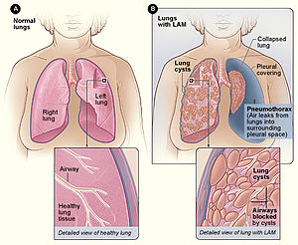
  • Lympangiomyomatosis (LAM); Women (almost exclusively) – Widespread pulmonary proliferation of abnormal smooth-muscle cells and cystic changes within the lung parenchyma
  • Two common intial manifestations of LAM: dyspnea and spontaneous pneumothroax

picture2

Diagnostic criteria for TSC:

Diagnosis is based on either genetic testing results and/or clinical findings

Genetic criteria:

  • Identification of either a TSC1 or TSC2 pathogenic mutation (i.e. a mutation that clearly inactivates the function of TSC1/2 proteins)

Clinical criteria:

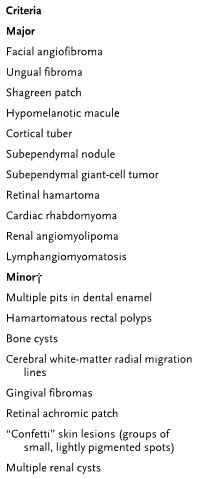
  • 11 major and 6 minor features
  • Definite diagnosis requires 2 major or 1 major/>2 minor features

picture4

Management of TSC:

  • Requires a multidisciplinary approach of specialists including: neurologists, dermatologists, geneticists, and pulmonologists
  • Referral to a TSC clinic is recommended given the complexity of the disease (next slide)
  • Long-term follow-up including monitoring of lesion growth (angiomyolipomas and SGCTs); no conclusive guidelines exist
    • Standard practice: brain/abdominal imaging every 3 years; more frequently with known lesions
    • Genetic counseling for family planning (risk of affected child is 50%)

Therapeutic Options:

  • Sirolimus (mTOR inhibitor) has been identified as a potential option given tumor cells from patients with TSC active mTOR (studies ongoing)

AM Report 11/29/16: PJP Pneumonia

Risk Factors for PJP (Pneumocystis Jiroveci) Pneumonia

-Advanced immunosuppression (esp. HIV with CD4 count <200), hematologic malignancy, s/p BMT
-Previous episodes of PCP
-Oral thrush
-Recurrent bacterial PNA

Timing

SUBACUTE indolent symptoms (on average, ~3 weeks)-not as acute as bacterial PNA!

S&S

-Progressive exertional dyspnea (95 % of patients)
-Fever (90 % of patients)
-Non-productive cough (90 % of patients)
Pearl: make sure you walk your patients with suspected PCP as it will reveal their hypoxemia!


Labs to obtain to suggest diagnosis

-HIV (look for CD4 count <200, off Bactrim prophylaxis)
-ABG to evaluate for A-A gradient and hypoxemia
-LDH (elevated LDH has high specificity/low sensitivity)
-1,3 Beta D Glucan (>80 can support diagnosis, but not specific)

How do you make the diagnosis?

-Must visualize the cystic/trophic form directly, cannot be cultured
-Use a SILVER stain to make the diagnosis

Step 1: Sputum induction (sensitivity 55-90 %, specificity 100 %). If negative, go to step 2!
Step 2: Bronchoalveolar Lavage, 90-100 % sensitivity.

If still negative, lung biopsy has a sensitivity/specificity of 90-100 % but very invasive!

Treatment 

Bactrim 15-20 mg/kg x 21d

When do you add adjunctive steroids?

Only for moderate to severe hypoxemia! 
If PaO2<70, or A/A gradient >35, treat with Prednisone 40 PO BID x 5d, 40 mg PO daily x 5d, 20 mg PO daily x 11d.

See article here by NEJM and Cochrane study on the use of steroids in PCP.


AM Report 11/23/16: GBS

GBS
-There are multiple variants of GBS!

-AIDP (Acute inflammatory demyelinating polyneuropathy)- 85-95 % of GBS
-Miller Fisher Variant (5 % US but up to 25 % in Japan)
-AMAN (Acute motor axonal neuropathy)
-AMSAN (Acute sensorimotor axonal neuropathy)

Timing

Acute (<4 weeks)

Pathophysiology

Due to molecular mimicry from immune response to preceding infection that cross reacts with components of the peripheral nerve.

Most common infectious triggers?
-Campylobacter Jejuni (most common), CMV, EBV, HIV, VZV, Mycoplasma, and even Zika virus

Most sensitive physical exam findings in GBS

-Absent/Depressed DTR (90 %)
-Ascending extremity weakness (90 %)
-Paresthesias (80 %)
-Dysautonomia (70 %)
-Facial weakness or bulbar signs (55 %)
-Back/extremity pain, respiratory failure, oculomotor weakness

What do you see on LP?

Albumino-cytologic dissociation (normal WBC with high protein)

HOWEVER, only 50 % of patients with GBS have it at one week, with >75 % of patients have it at 3 weeks so make sure you interpret it in the right clinical setting

Miller Fisher variant TRIAD (don’t need to see all three)

-Ophthalmoplegia
-Ataxia
-Areflexia
Antibodies against GQ1b (anti-ganglioside) present in 85-90 % of patients- however, this will take a long time to come back and won’t change your initial management.

Treatment

-Supportive treatment
-IVIG 
-Plasma Exchange

Remember that steroids are not effective!


AM Report 11/17/16: Empyema

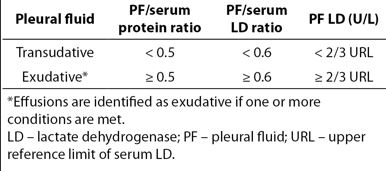
Remember Light’s Criteria is SENSITIVE for picking up EXUDATES but mis-classifies ~25% transudative effusions as exudative!
-You only need to have ONE of Light’s criteria to call it an Exudate!

lights-criteria

TRANSUDATE
Remember the top 3 but there is an extensive list…

CHF (most common)
-Hepatic hydro-thorax from cirrhosis
-Nephrotic syndrome

EXUDATE 
Remember the top 3 but also has an extensive list…

-Malignancy
-Pneumonia
-Tb

What percentage of patients with bacterial PNA get an associated effusion?
>40 % and up to 60 % with pneumococcal PNA, and can be either uncomplicated, complicated, or empyema


Uncomplicated parapneumonic effusion

-Resolves with antibiotic treatment of PNA
-On CXR, must be free-flowing and <10 mm
-Very low risk, does not need drainage 

Complicated parapneumonic effusion

-Small/Mod  in size, >10 mm but <1/2 hemithorax
-Negative gram stain/culture, pH>7.20
-May need drainage based on clinical status

Complicated parapneumonic effusion (second type)

-Large >1/2 hemithorax, LOCULATED, thickened parietal pleura (high risk if thickened parietal pleura, suspect Empyema) 
-Positive culture or gram stain OR
-pH<7.20
-MUST drain effusion, moderate risk

EMPYEMA!

-defined as PURULENT appearance of pleural fluid OR
pH <7.20 (don’t forget to order pH and keep it on ice!)
-If ether of these exist, MUST drain effusion, highest risk, usually with tube thoracostomy (chest tube)

Treatment

-Empiric therapy should cover Gram + (eg: Staph, Strep), and Anaerobes (eg: Fusobacterium, Bacteriodes)
-Empyema is treated with 4-6 weeks of antibiotic treatment

empyema

AM Report 11/15/16: Hypocalcemia

Etiologies of a PROLONGED Qtc (not an exhaustive list) 
Remember that many LOW electrolytes can lead to prolonged Qtc increasing risk of arrhythmias (usually Torsades)

Drugs  (large category, includes anti-psychotics, anti-arrhythmics,TCA, anti-histamines)
-HYPOkalemia
-HYPOmagnesemia
-HYPOcalcemia
-HYPOthermia
-Congenital (eg: long QT syndrome)

What can cause HYPOcalcemia?

-HYPOparathyroidism (PTH controls calcium and phosphorus homeostasis)
-HYPOproteinemia (Pearl: always check albumin with calcium unless you are checking ionized calcium!~0.8 increase in calcium for every 1.0 decrease in albumin from 4.0)
Renal disease (remember that the kidney makes activated Vit D with 1 alpha hydroxylase and Vit D absorbs calcium from the gut)
-Vit D deficiency (cannot absorb calcium)
-Hyperphosphatemia (binds calcium and lowers serum levels, is the etiology of hypocalcemia in Rhabdo and TLS)
-Acute Pancreatitis
-Chelation (eg: after being given Citrate/EDTA/Foscarnet)
-Hypomagnesemia (Mg needed for PTH activity)
-Hungry bone syndrome (seen after parathyroid surgery for elevated PTH where bones start sequestering the calcium levels in the serum)

Clinical manifestations of HYPOcalcemia

Remember CATS mnemonic!

hypocalcemia-signs-and-symptoms-nursing-acronyms

NEUROMUSCULAR IRRITABILITY 

-Parethesias
-Tetany
-Trousseau’s sign-carpopedal spasm seen when inflating BP in upper arm above systolic pressure (highly sensitive and specific!)
-Chvostek’s sign- facial twitching in response to tapping over facial nerve (absent in one third of patients with hypocalcemia, and seen in 10 % of patients with normal calcium levels!)-Bronchospasm/Laryngospasm

CARDIAC

-Prolonged Qtc, Arrhythymia
-Hypotension, HF

NEUROLOGIC

-Seizures
-Extra pyramidal symptoms (eg: Parkinsonism)
-Irritability, depression, personality changes

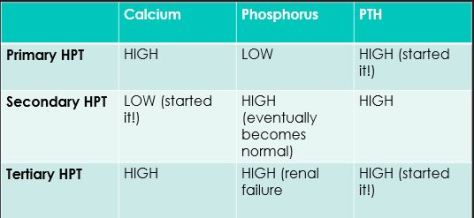
PRIMARY vs. SECONDARY vs. TERTIARY HPT 

Where does the problem start? 

Primary– Elevated PTH is the problem leading to high Ca, low Phos
Secondary-LOW calcium is the problem leading to elevated PTH
Tertiary-PTH is again the problem but it is functioning autonomously due to uncontrolled secondary PTH or post-renal transplant so calcium is elevated but phosphorus still elevated due to renal failure.

pth-table

AM Report 11/16/16: RLQ Pain

NuvaRing:

  • Combined (progestin/estrogen) hormonal contraceptive vaginal ring
  • Works by preventing ovulation and inhibition of sperm penetration (via cervical mucosal changes)
  • Used for a 3 week period followed by a “break week;” reported 91% effective with typical use

Appendicitis:

Epidemiology: Most common indication for emergent abdominal surgery in childhood (<14 years old); Males > Females.

Pathophysiology: Non-specific obstruction of the appendiceal lumen (fecal material, undigested food, enlarged lymphoid follicle, etc.)

Clinical Manifestations: Anorexia, periumbilical pain (early) → migration to RLQ (often within 24 hours), vomiting (after onset of pain), fever (24-48 hours after symptoms)

Diagnosis: Clinical diagnosis; various scoring systems to aid treatment (PAS,    Alvarado score, etc.), CBC (leukocytosis), +/- imaging (US vs. CT)

Treatment: Surgical resection

picture1

Pelvic Inflammatory Disease (PID):

Epidemiology: Sexually active females, younger age (15-25 yo), prior STIs, previous PID are all known risk factors; method of contraception also important (barrier is protective)

Pathophysiology: Two stages: Stage 1) acquisition of a vaginal or cervical infection (often STI); Stage 2) direct ascent of microorganism

Clinical Manifestations: Fever, nausea/vomiting, severe pelvic/abdominal pain, abnormal vaginal discharge (75% of cases), unanticipated vaginal bleeding, tenderness on pelvic exam (adnexal tenderness 95% sensitive)

Diagnosis: History/Physical, pregnancy test, CBC (leukocytosis), saline microscopy of vaginal fluid, ESR/CRP, STI testing, UA, +/- imaging

Treatment: Antibiotics against common organisms:

  • Regimen A: ceftriaxone, doxycycline, metronidazole
  • Regimen B: cefoxitin, doxycycline, metronidazole

picture2

Ectopic Pregnancy:

Epidemiology: Increased incidence (4.5/1000 pregnancies in 1970 vs. 19.7/1000 in 1992) attributed to improved diagnostics; more common in women > 35 years old and non-white ethnic groups.

Pathophysiology: Any pregnancy in which the fertilized ovum implants outside the intrauterine cavity (>95% in the fallopian tubes)

Clinical Manifestations: Abdominal pain with spotting ~ 6-8 weeks after the last menstrual period; physical findings include slightly enlarged uterus, pelvic pain with movement of the cervix, and palpable adnexal mass

Diagnosis: History/Physical, pregnancy test, +/- progesterone, US

Treatment: Depends on patient stability:

  1. Expectant management: 68-77% resolve without intervention
  2. Medical management: methotrexate
  3. Surgical resection: salpingectomy via laparotomy

Ovarian Torsion:

Epidemiology: 5th most common surgical emergency in females; primary risk factor is an ovarian mass (particularly >5cm) or pregnancy (20%), can occur at any age – but most common in early reproductive years (median age 28 years)

Pathophysiology: Ovary rotates around both the suspensory and utero-ovarian ligament; rotation results in compression of the ovarian vessels (vein before artery) leading to ovarian edema and eventually ischemia

Clinical Manifestations: Classic presentation: acute onset of moderate-severe pelvic pain (90%), often with nausea/vomiting (47-70%), in a women with an adnexal mass (86-95%); other symptoms include fever (2-20%) and abnormal vaginal bleeding (4%)

Diagnosis: History/Physical, pregnancy test, CBC, pelvic US with doppler

Treatment: Surgical evaluation with detorsion or resection

Yersina Enterocolitica:

Epidemiology: Most often due to consumption of raw or undercooked pork; young individuals more often (75% are 5-15 years old)

Pathophysiology: Following consumption, invasion and penetration occurs in the ileum (M cell) => multiplication in Peyer patches (underlying lymphoid tissue) => mesenteric lymph => node spread => localized infection => systemic infection (rare)

Clinical Manifestations: Fever, abdominal pain, and diarrhea ~ 4-6 days after exposure; pain often localized to the right-side of the abdomen (pseudoappendicitis)

Diagnosis: History/Physical, stool culture for yersinia

Treatment: Supportive care typicially; aminoglycosides and TMP-SMZ if severe

Pyelonephritis:

Definition:

  • Pyelonephritis is an infection of the upper urinary tract, specifically the renal parenchyma and renal pelvis
  • Cystitis refers to an infection of the lower urinary tract, specifically the bladder

Epidemiology:

  • Women > Men (11.7 vs 2.4 hospitalizations per 10,000 cases)
  • Men > Women (16.5 vs 7.3 deaths per 1000 cases)


PID Cystitis Pyelonephritis
Dysuria + + +
Discharge +
Abdominal Pain + + +
Fever + +
Frequency/Urgency + + +
CMT +
CVA +

Pathogenesis:

  • Most renal parenchymal infections result from bacterial ascent through the urethra and urinary bladder
  • In males – prostatitis and prostate hypertrophy (causing urethral obstruction) predispose to bacteriuria

Uncomplicated Pyelonephritis:

  1. Typical pathogen
  2. Immunocompetent patient
  3. Normal urinary anatomy/renal function

Treatment:

Outpatient:

  • Oral fluoroquinolone (i.e. ciprofloxacin)
  • Recommended given low resistance rates (1-3%), absorbed well from the GI tract, excellent kidney penetration
  • Other acceptable options for susceptible organisms include:
  1. Amoxicillin-clavulanate (preferred for pregnancy)
  2. Cephalosporin
  3. Trimethoprim-sulfamethoxazole

Inpatient:

  • IDSA recommends one of three IV therapies:
  1. Fluoroquinolone (i.e. ciprofloxacin)
  2. Aminoglycoside (i.e gentamycin) +/- ampicillin
  3. Extended-spectrum cephalosporin +/- aminoglycoside
  • 7-14 days is effective; but studies suggest that 5-7 is comparable to longer duration in terms of clinical and bacteriologic outcome
  • Therapy with appropriate empiric antibiotics should produce improvement within 48-72 hours; failure should additional testing for an alternative diagnosis
AM Report 11/08/16 Endocarditis

Risk factors for developing Infective Endocarditis 

-Recent dental/surgical procedure
-Prosthetic valve
-Valvular or congenital heart disease
-IVDU
-Indwelling IV catheter
-Immunosuppression

Signs and Symptoms of Endocarditis

-Fever (90 % of patients!)
-Murmur (85 % of patients)
-Petechiae (20-40 % of patients)
Splinter hemorrhages (~10-15 %)
Splenomegaly
Janeway lesions-Non-tender, erythematous MACULES on palms and soles
Osler nodes- tender, subcutaneous violaceous NODULES, usually on pads of finger and toes
Roth spots– exudative edematous hemorrhages in retina with pale centers

*Remember that peripheral findings are uncommon (<10 %) unless protracted and untreated bacteremia

Indications for surgical repair in endocarditis

-CHF (eg: worsening valvular involvement)
-Perivalvular extension (eg: abscess, development of AV block)
-Systemic embolism
-Prosthetic valve
-CVA
-Persistent sepsis
-Resistant organism (eg: Staph aureus, pseudomonas, fungus)
-Large vegetation (>10-15 mm)

Common organisms implicated in Endocarditis (not an exhaustive list) 

-HACEK organisms (found in oral-pharyngeal region, Haemophilus, Aggregatibacter (previously Actinobacillus), Cardiobacterium, Eikenella, Kingella)
-Staph aureus (most common cause in IVDU)
-Coagulase negative staph
-Strep Gallolyticus (formerly known as Strep Bovis)
-Viridans Strep
-Enterococci


AM Report 11/9/16: Heparin-Induced Thrombocytopenia

Remember the different types of HIT:


Type 1 Type 2
Mechanism Direct effect of heparin (non-immune) Immune (Ab)-mediated IgG against platlet factor 4-heparin complex
Incidence 10-20% 1-3% with UFH; 0-0.8% with LMWH


Onset After 1-4 day of heparin therapy


After 4-10 day; but can occur <24 h if prior exposure w/in 100 days (persistent Ab). Postop highest risk. Can occur after heparin d/c’d


Platelet nadir >100,000/μL


~60,000/μL, ê 50%


Sequelae None Thrombotic events (HITT) in 30-50%; rare hemorrhagic complications


Management Observe Cessation of heparin, alternative non-heparin anticoagulation to prevent thrombosis


Pathophysiology:

5

  1. Autoantibodies (IgG) are formed to platelet factor 4 (PF4) complexed with heparin
  2. Platelet Fc receptors bind the antibody-heparin-PF4 immune complex
  • Thrombocytopenia occurs by two mechanisms:

1) Platelet removal by splenic macrophages
2) Platelet consumption due to thrombus formation

Clinical Variability:

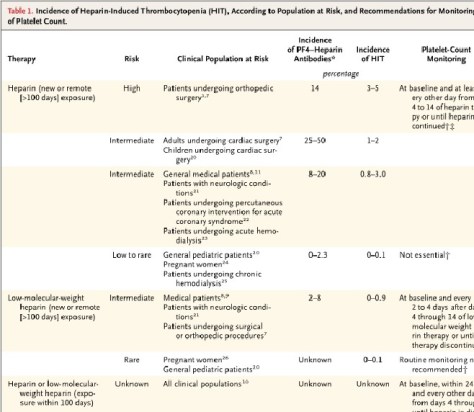
  • 10 times higher incidence with UFH compared with LMWH
  • A metaanalysis of 15 studies (>7000 patients) that evaluated the risk of HIT with prophylactic UFH vs LWM found the following absolute risks of developing HIT
  • UFH – 2.6% (95% CI 1.5 – 3.8%)
  • LMH – 0.2 % (95% CI 0.1 – 0.4%)
  • Surgical > Medical patients; Incidence is particularly high after orthopedic surgery

4.jpg

Risk Factors:

  • There is no dose of heparin that is too low to cause HIT! Patients have developed HIT after exposure to as little as 250 U flush.
  • Female sex appears to be at a higher risk for unclear reasons – this was based on 7 trials comparing UFH vs LWH found approximately twice the risk.

Clinical Manifestations:

  • Thrombocytopenia (<150,000/microL ~ 85-90%)
  • Platelet drop of >50% is typical with mean nadir of 60,000/microL and RARELY <20,000/microL
  • Typical onset is 4-10 days after heparin therapy
  • Patients with exposure to heparin in the previous 100 days can develop a early onset (<24 hours) HIT
  • Thrombosis occurs in up to 50% of HIT patients (venous > arterial); presenting finding in up to 25%
  • Thrombotic sequelae – skin necrosis, limb gangrene, organ ischemia/infarction

4T Score:

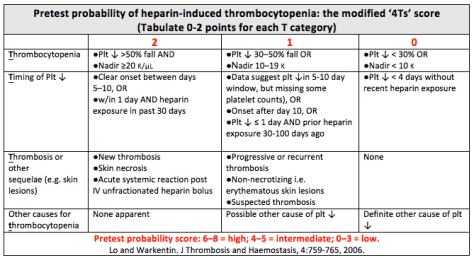
4-1

  • A total score <4 points has a very high negative predictive value (97-99%); additional testing is not necessary

Assuming an intermediate/high risk score – what other labs can aid in the diagnosis:

  • Anti-PF4 heparin antibodies – excellent NPV (98-99%), but low PPV due to presence of clinically insignificant antibodies (IgM, IgA)
  • Our lab restricts the antibodies to only IgG – which increases the specificity
  • Also provides an optical density (magnitude of anti-PF4-heparin reactivity) ~ greater activity (>2.0) correlates to a greater likelihood of HIT
  • Serotonin-release assay – functional assay that measures heparin-dependent platelet activation; a negative result rules out HIT

Treatment:

Step 1: Immediate cessation of heparin

Step 2: : Initiation of an alternative anticoagulant at a therapeutic dose.

  • Vitamin K antagonists should NOT be given until HIT has resolved (i.e. platelets > 150,000 for >2 days) because they increase the risk of venous limb gangrene/limb loss by decreasing levels of protein C.
  • Argatroban (direct thrombin inhibitor) is the only currently FDA approved medication in the US.  Danaparoid (anti-factor Xa) is approved in Canada, EU, and Australia.  Other options include: Lepirudin and Bivalrudin.