All posts by vmcimchiefs

Wernicke’s Encephalopathy in Setting of Hyperemesis Gravidarum and Unexpected Pregnancy! 4/4/2019

Credit goes to Dr. Jon Reitzenstein from Michigan State!

Today we went over a case featured on the Human Diagnosis Project.

A 28yo F with no medical history presents with 1 day history of unsteady gait, with associated “indifference” per her husband and intermittent diplopia. She also has been having significant N/V for the past 3-4 weeks, barely able to keep anything down. She was dehydrated on exam with elevated spec grav and ketones on the UA. Her pregnancy test returned positive (estimated 6 week old fetus). Ultimately she was given thiamine with rapid symptomatic improvement.

The final diagnosis is Wernicke’s Encephalopathy in setting of poor nutritional intake and increased metabolic demands secondary to unexpected/unknown pregnancy.


Wernicke’s Encephalopathy

Epidemiology

  • Most cases are associated with chronic EtOH use but not all the time!
  • Non-alcohol related:
    • Hyperemesis gravidarum
    • Bariatric surgery
    • Long-term TPN
    • HIV
    • Malignancies
    • Extreme poverty, war zones, refugees
  • More common in men
  • Up to 12.5% of pts with chronic EtOH

Pathophysiology

  • Chronic inadequate intake of thiamine (vitamin B1) leading to degeneration of the peripheral nerves, thalamus, mammillary bodies, and cerebellum.

Presentation: triad of

  • Encephalopathy (disorientation, inattentiveness, indifference)
  • Gait ataxia
  • Oculomotor symptoms (nystagmus, lateral rectus palsy, conjugate gaze palsies)
  • Triad only seen in 1/3 of patients, most only have around 2.
  • Other signs: Memory impairment, hypothermia, electrolyte derangements often related to dietary, withdrawal if related to alcohol

Diagnosis: Clinical but there is a proposed Caine Criteria, 2/4 of these meet Caine Criteria for Wernicke encephalopathy. Sensitivity up to 85%

  • Dietary deficiency
  • Oculomotor abnrl
  • Cerebellar dysfunction
  • Encephalopathy or memory impairment.
  • Serum thiamine is rarely tested and takes a while to come back, so when in doubt, start thiamine and don’t wait for levels.
  • MRI might show hyperintensities around the periaqueductal white matter and thalami

Management

  • Always give thiamine first and NOT glucose.
    • Thiamine must be repleted first or else glucose infusions may worsen symptoms.
    • Alcoholics should receive IV thiamine, at least 100mg, before receiving any IV glucose solutions.
  • Thiamine:
    • 500mg IV TID x 3 days, then 250mg IV daily for 3-5 days, then transition to 100mg PO daily.

Prognosis

  • Prompt thiamine treatment leads to improvement in ocular sx within hours to days.
  • Vestibular/gait improves within weeks.
  • 60% will have residual ocular symptoms and gait abnormalities. Up to 80% of patients might have residual memory deficits.

Korsakoff Syndrome: Irreversible. Memory loss (selective anterograde or retrograde amnesia), confabulation, +/- hallucinations

Hyperemesis Gravidarum

Presentation

  • Uncontrollable vomiting during pregnancy that results in dehydration, weight loss, and ketosis.
  • Usually begins at about 5 weeks of gestation, peaks at 9 weeks, and resolves by 16-18.
  • While vomiting in pregnancy (esp in the morning) is common, HG is an extreme form.

Diagnosis: Clinical, laboratory abnormalities

Management: Supportive, antiemetics

  • Doxylamine + Vit B6
  • Promethazine (Phenergan)
  • Metoclopramide (Reglan)
  • Ondansetron (Zofran)
  • Prochlorperazine
  • Corticosteroids (methylprednisolone) can be trialed if initial treatment is ineffective. Generally avoided prior to 6 weeks of gestation (organogenesis)

Severe Metabolic Acidosis Secondary to… Methanol Poisoning 4/3/2019

Credit goes to Eric for informing us about this case!

A 48yo M presents with acute onset encephalopathy. He has a distant history of alcohol abuse, and during the day of presentation he had complained about not being able to see. On presentation, his labs were notable for an anion gap of 35 with bicarb of 4, lactic acid of 11.9,  ABG of 6.56/52/336, and osm gap of 65. Volatile screen ultimately came back positive for methanol level of 145.56 mg/dL (yes this is very high). He was given bicarb pushes, fomepizole, and urgent dialyzed.

It turns out that he might have ingested Klean Strip denatured alcohol, which is 40-60% methanol!


Methanol Toxicity

Pathophysiology

  • Toxic metabolite of methanol poisoning is formic acid, which is formed from formic acid after methanol is metabolized in the liver by alcohol dehydrogenase and aldehyde dehydrogenase
  • Leads to retinal injury and eventual blindness (permanent)
  • Formic acid can also cause ischemic or hemorrhagic injury to the basal ganglia, hence in methanol poisoning you might see changes around the area (putamen is part of the basal ganglia).
  • Ingestion of 1g/kg is fatal, and toxicity has been reported in as little as one teaspoon
  • Ethylene glycol, on the other hand, mainly causes renal damage. (Flank pain, hematuria, oliguria). Buzz words = calcium oxalate crystals in urine.

Picture1.png

Presentation

  • Visual blurring, central scotomata (black spot in center of vision), and blindness are suggestive of methanol poisoning.
  • Eye exam might reveal: mydriasis, retinal edema, hyperemia of the optic disk
  • Co-ingestion of ethanol can delay presentation of toxicity.
  • Labs:
    • Profound AGMA, bicarb often < 8 mEqL
    • High serum lactate
    • Elevated plasma osmo gap
      • Calculated osmolality = 2 x [Na mmol/L] + [glucose mg/dL] / 18 + [BUN mg/dL] / 2.8 + [Ethanol/3.7]
      • OG = Measured osmo – calculated osmo
      • Nrl < 10
    • Typical agents that inc the osmolar gap:
      • Methanol
      • Ethylene Glycol
      • Diuretics (osmotic diuretics i.e. mannitol)
      • Isopropyl alcohol
      • Ethanol
    • Osmo gap takes Into account the quantity of uncharged molecules, hence it will only be elevated in presence of the parent alcohols.
    • In late presentation: most alcohols have been metabolized already into charged active metabolic, hence osmo gap is not very sensitive in late presentation.

Management

  • ABC comes first.
  • Sodium bicarb administration
    • Corrects systemic acidosis, which limits penetration of formic acid by converting it into negatively charged formate, which cannot cross cell membrane to cause damage.
      • Formic Acid <- -> H+  & Formate-, adding bicarb dec H+, hence driving the equilibrium equation to the right. See? College O-chem is still helpful.
    • HCO3 (mEq) required = 0.5 x weight (kg) x [24 – serum HCO3 (mEq/L)], and in general up front give 1-2 mEq/kg via IV bolus for any patients with pH < 7.3 followed by a sodium bicarb D5 gtt, at least 150-250cc/hr to correct acidosis
      • Goal of infusion is to keep pH above 7.35
    • Bicarb can be found in:
      • Most common: 8.4%, 1mEq/mL, 1Amp = 50mEq, you will see these in the crash cart, very helpful to familiarize yourself with setting the syringe up for injection in a code blue situation!
      • Gtt: 100-150 mEq/1000 mL in D5
      • Concentrated gtt: 1mEq/mL, might need pharmacy’s help in formulating this. You can only use this in the ICU!
      • PO tabs: Useful for CKD patients
  • Inhibition of alcohol dehydrogenase in the liver
    • Fomepizole
      • 1st line
      • Loading: 15mg/kg, followed by 10mg/kg Q12hr, continue until blood pH is normalized and serum methanol is less than 20mg/dL
    • Ethanol: ADH has better affinity for ethanol, leading to competitive inhibition.
      • Difficult to dose, sedating effect, cannot be used in cirrhosis patients, pregnant patients.
  • HD indicated if:
    • Severe acid-base derangements, or even high AGMA regardless of drug level
    • Severe levels of methanol
    • End organ damage
    • Interacts with fomepizole, hence if concurrent therapy, fomepizole should be dosed Q4H
  • Co-factor therapy
    • All methanol patients treated with ADH inhibition should also receive:
      • Leucovorin 50mg IV (folinic acid) or folic acid Q6H
      • Thiamine also commonly administered due to unclear nutritional status.
  • GI decontamination: Has no role whatsoever.

Leprosy!

Today, we talked about the case of a middle-aged man from the Philippines who presented with a one year progressive pruritic rash involving the face, arms, and legs as well as a distal symmetric peripheral neuropathy, found to have lepromatous leprosy on skin biopsy!


Clinical Pearls 

  • Mycobacterium leprae and lepromatosis like to grow in cooler areas, so infection often manifests in the skin and the peripheral nerves.
  • Transmission is likely via respiratory route, through broken skin, and by touching armadillos!
  • Early recognition and treatment is important to prevent injury to peripheral nerves.

DDx for rash + neuropathy

  • Lyme (usually cranial nerves, radiculopathy)
  • Celiac
  • Zoster (tends to be painful rather than pruritic and localized to a dermatome)
  • WNV (flaccid paralysis)
  • Sarcoid
  • Amyloid
  • Syphilis
  • Leprosy

Our patient presented with a pruritic rash and largely a distal symmetric peripheral neuropathy.  We generated the following Venn diagram in report to help us with the diagnosis:

Venn diagram

Leprosy

  • AKA Hansen’s disease
  • Infection caused by mycobacterium leprae and mycobacterium lepromatosis, separate species that cause similar clinical disease. They are both obligate intracellular parasites.
  • Involves the skin and peripheral nerves
  • Early treatment is important to prevent involvement of the eyes, hands, and feet due to neuropathy. The neuropathy is often non-reversible.
  • 205 new cases detected in the US in 2010. 75% among immigrants (most commonly India, Brazil, Indonesia, Bangladesh, and Nigeria)

Transmission

  • Unknown but probably respiratory route especially in lepromatous leprosy. Sometimes can transmit through broken skin. Also from armadillos.
  • Most people do NOT develop disease after exposure. Risk factor for disease development include older age, genetic influences, and immunosuppression.
  • Grows in cooler areas

Clinical presentation:

  • Described in categories pertaining to how much bacillary burden of disease is present with tuberculoid being the least amount and lepromatous having the highest disease burden.
  • Clinical features:
    • Hypopigmented or reddish patches on the skin
      • Typically involve the earlobes with nodular thickening and distributed symmetrically on the body in lepromatous leprosy.
    • Diminished sensation or loss of sensation within skin patches
    • Paresthesias of hands/feet
      • Neuropathy occurs early in disease course
    • Painless wounds or burns on the hands or feet
    • Lumps or swelling on the earlobes or face
    • Tender, enlarged peripheral nerves
  • Late findings in disease course:
    • Weakness of the hands with claw fingers, foot drop, facial paralysis, lagophthalmos (can’t close eyes completely due to CN7 palsy), lack of eyebrows/eyelashes, collapsed nose, perforated nasal septum.
    • Intermittent bacteremia can lead to focal lesions in various organs (liver, bone marrow, testicles and larynx)

Diagnosis:

  • Consider it in patients with skin lesions and/or enlarged nerve(s) accompanied by sensory loss.
  • No reliable blood or skin tests available.
  • Usually clinical and skin biopsy

Treatment:

  • Goal: Prevent and/or minimize injury to peripheral nerves!
  • Often times it’s loss of sensation but later can progress to painful neuropathy
  • Dapsone plus rifampin for tuberculoid leprosy. Clofazimine is added for lepromatous leprosy.
  • Duration can be up to 24 months
  • Treat neuritis with steroids for a prolonged course
  • Make sure to screen for G6PD deficiency before prescribing dapsone
  • Monitor liver function with rifampin
  • Clofazimine (causes phototoxicity) is not available in US pharmacies and must be obtained from the NHDP.

Prognosis:

  • May take a few years for skin lesions to resolve completely with treatment
  • Very curable, low relapse rates, typically no drug resistance
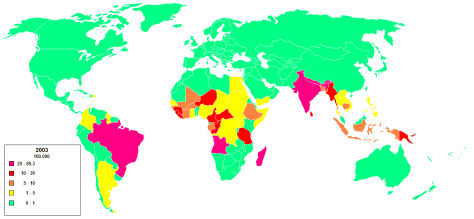
Leprosy epidemiology.png
Distribution of leprosy around the world (source Wikipedia)

Hypercalcemia of malignancy

Thanks to John for presenting the case of a middle-aged woman with metastatic renal cell carcinoma who presented with subacute diffuse weakness and constipation, found to have symptomatic hypercalcemia, treated with IV fluids and zoledronic acid.


Clinical Pearls

  • A third of patients with malignancy develop hypercalcemia in their disease course.  Hypercalcemia of malignancy is associated with very poor prognosis (~50% 30 day mortality).
  • Constipation plus polyuria is the most specific symptom combination for hypercalcemia
  • Denosumab is superior to zoledronic acid in treating hypercalcemia of malignancy and is safe to use in renal failure.
  • One way to quickly determine the etiology of hypercalcemia from your chemistry panel is to look at the chloride to phosphate ratio.  A ratio > 33 is highly suggestive of a PTH or PTHrP mediated process.

Hypercalcemia ddx:

Hypercalcemia algorithm

** Primary hyperPTH is the most common cause of hypercalcemia in the outpatient setting.  Malignancy is the most common cause of hypercalcemia in the inpatient setting.

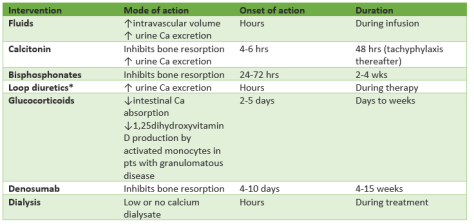
Treatment of hypercalcemia:

Ca <12

  • No treatment if asymptomatic
  • Avoid exacerbating factors

Ca 12-14

  • If chronic/asymptomatic ⇒ same tx as Ca <12
  • If acute/symptomatic ⇒ same tx as Ca 14-18

Ca 14-18

  • IVF – lots!
  • Lasix only if concurrent renal/heart failure
  • Calcitonin
  • Bisphosphonate (zoledronic acid >>pamidronate if malignancy. Denosumab if refractory to ZA or severe renal impairment)

Ca >18

  • Above PLUS
  • Hemodialysis

Hypercalcemia treatment chart

Aspirin toxicity

We discussed the case of a middle aged woman admitted with AMS, found to have AGMA and respiratory alkalosis with work up revealing ASA toxicity, managed with HD!


Clinical Pearls

  • In suspected ASA toxicity, check serum levels every 2 hours until two consecutive levels decrease from peak value
  • The goal in treatment of ASA overdose is to keep ASA in its charged and deprotonated state which has less end organ toxicity.
    • Give bicarb with the goal of maintaining urine pH of 7.5-8 and serum pH <7.60.
    • Treat hypokalemia aggressively (see below).
  • Patients with ASA overdose have a high minute ventilation so avoid intubation if possible to allow them to maintain their minute ventilation.
  • Call renal early for HD if indicated ⇒ AMS, cerebral/pulmonary edema, fluid overload, kidney injury, severe acidemia, ASA level >100 mg/dL, or clinical deterioration in spite of aggressive management

Management of ANY patient with suspected toxic ingestion:

  • ABCs (Airway, Breathing, Circulation)
  • Call Poison Control! (1800 222-1222)
  • Can patient get Activated Charcoal? (usually only within 1 hour of ingestion)
  • Check Utox, Salicylate screen, acetaminophen screen, +- alcohol and volatile screen if suspected. You don’t want to miss a potential co-ingestion! 

ASA overdose

  • Remember that ASA can be found in other compounds like topical salicyclic acid, herbal medications, bismuth subsalicyclate (part of Pepto-Bismol), and Oil of Wintergreen so don’t forget about those topical medications!
  • Most sensitive vital sign abnormality in early ASA overdose is tachypnea with hyperventilation. 
  • Classic acid/base abnormality is anion gap metabolic acidosis with respiratory alkalosis (see below)

How does ASA work?

  • Inhibition of cyclooxygenase results in decreased synthesis of prostaglandins, prostacyclin, and thromboxanes. This contributes to platelet dysfunction and gastric mucosal injury
  • Stimulates the chemoreceptor trigger zone to cause Nausea and Vomiting
  • Activates the respiratory center in the medulla leading to hyperventilation and respiratory alkalosis
  • Interferes with cell metabolism (Krebs cycle and decouples oxidative phosphorylation) leading to metabolic acidosis

Metabolism

  • Reaches peak concentration within 1 hour of ingestion. Takes longer with the enteric coated formulations
  • Detox occurs normally by the liver and then metabolites are excreted by the kidney. In OD, liver is overwhelmed so more of the drug becomes dependent on renal excretion (slow and can take up to 30 hours).

Clinical features

  • Tinnitus
  • Vertigo
  • Nausea and vomiting
  • Diarrhea
  • Hyperpnea (tachypnea and hyperventilation)
  • Hyperthermia (due to disturbances with oxidative phosphorylation)
  • Lethargy and confusion

Making the diagnosis

  • Check salicylate level and if elevated, check levels every two hours until two consecutive levels decrease from peak , value is less <40, and patient is asymptomatic.
    • <30 = therapeutic, >40 = toxic, >100 = absolute indication for HD regardless of symptoms
  • Check serum creatinine– ASA is renally excreted so significant renal failure will change management.
  • Check potassium level-need to treat hypokalemia aggressively (see below)

Other labs that can support diagnosis but not required

  • Coagulation studies (large overdose can cause hepatotoxicity and interfere with Vit K metabolism)
  • Lactate (can be elevated due to uncoupling of oxidative phosphorylation)
  • CXR if concern for pulmonary edema (potential complication of ASA overdose)

Treatment ASA overdose

  • Goal: keep salicylate (weak acid) in its charged and deprotonated form to prevent it from crossing into the blood brain barrier by maintaining alkalemia
  • ABCs
  • Fluids
  • Activated Charcoal if <1 hour from ingestion
  • AVOID intubation if possible (remember that these patients have high minute ventilation (RR x TV) due to ASA effect on the medulla and this can be hard to reproduce on the ventilator without causing significant auto-peep)
  • Volume resuscitation (be careful of pulmonary edema/cerebral edema)
  • Alkalinize urine with sodium bicarbonate
    • Sodium Bicarbonate 1-2 meQ/kg IV bolus followed by 100-150 meQ/D5W and titrated to maintain urine pH of 7.5 to 8.0 and continued until salicyclate level <30. It is OK to continue sodium bicarbonate even with alkalemia as long as pH<7.60Alkalinizing the urine keeps ASA in the non-acidic form (Sal-), thus avoiding a lot of the complications of ASA overdose.
  • Treat hypokalemia aggressively to maintain alkalinization. If hypokalemia is not corrected, the body will reabsorb potassium and acidify the urine, which is the opposite of what we want.
  • Consider giving glucose for neuro-glycopenic symptoms (controversial but patient can have neuro-glycopenic symptoms due to low CNS glucose even with a normal serum glucose)
  • Call renal early if patient may need hemodialysis 
    • Indications
      • AMS
      • Cerebral edema/pulmonary edema
      • Fluid overload
      • Acute or chronic kidney injury
      • Severe acidemia
      • ASA level >100 mg/dL
      • Clinical deterioration despite aggressive care

RCA infarct, bradycardia, & hyperkalemia!

Today, we discussed the case of an elderly woman with significant history of vasculopathy and ESRD who presented with weakness, found to be bradycardic to 30s, hypotensive, and hyperkalemic to 7.2.  Her hyperkalemia was treated with dialysis but she underwent cardiac cath due to up trending troponins, found to have a 100% occlusion of the RCA!


Clinical Pearls

  • First step in managing a patient with bradycardia is ABCs!
  • First medication for symptomatic bradycardia is atropine.  Remember that atropine works at the level of the AV node and higher so if the block is occurring somewhere below the AV node, then atropine will not be effective.
  • Other pharmaceutical agents are dopamine, epi, or isoproterenol
  • Anyone with bradycardia and unstable hemodynamics in spite of above treatments should receive transcutaneous pacing.  This buys you time until you can place a transvenous pacemaker (less painful, more effective)
  • ECG has a low sensitivity but high specificity for hyperkalemia-induced cardiomyocyte instability.
  • ECG changes associated with hyperkalemia in progressive severity:
    • Peaked T waves
    • P wave widening, PR prolongation, P wave disappearance
    • QRS widening, AV block, bradycardia
    • Sine wave
    • VF/asystole/PEA

Bradycardia approach

1. ABCs!

  • Pharmaceutical agents
  • Atropine (0.5 mg – 1 mg q3-5 mins for a total of 0.03 mg/kg)
  • If no improvement, consider dopamine or epi
  • If still symptomatic, then start transcutaneous pacing

2. Find underlying cause and treat it 

  • Meds: BB, CCB, amio, digoxin, clonidine, lithium, acetylcholinesterase inhibitors
  • Ischemia (up to 25% of patient with acute MI present with bradycardia)
  • ↑ vagal tone: if young, athlete
  • Metabolic: hypoxia, sepsis, ↓T4, hypothermia, hypoglycemia, hyperkalemia
  • OSA
  • Elevated ICP
  • Infections: legionella, lyme, Q fever, typhoid, malaria, RMSF, yellow fever, leptospirosis, dengue, Chagas disease
  • Infiltrative processes: sarcoid, amyloid, hemochromatosis

In our patient, the cause was severe hyperkalemia as well as an RCA infarct.  Given her clinical instability, and the potential for worsening hyperkalemia from cardiac catheterization alone, the team normalized her serum potassium before performing cardiac cath which led to the RCA MI diagnosis.

Hyperkalemia

  • ECG changes are not sensitive for hyperkalemia and can miss up to 39% of patients even with a K of 7-9.
  • Sweet spot for potassium appears to be a mean K of 3.5 to 4.5 mEq/L. There is not a well-defined treatment threshold.
  • Bottom line for management: if you have the kidneys available, use the kidneys to excrete as much potassium as possible.
  • Newer agents like sodium zirconium and patiromer. Mix with water. Well tolerated and highly effective.

Agents that reduce serum potassium via transient intracellular shift:

  • Insulin: give with D50 if normoglycemic to avoid hypoglycemia and be sure to check FSG hourly for 4 hours after to ensure no hypoglycemia develops
  • Albuterol (10-20 mg) nebs: this is significantly higher than the dose we give in COPD (2.5 mg) and is equal to ~8 treatments! So make sure to continue the nebs when the patient arrives on the floor from the ER if they are still hyperkalemic.
  • NaHCO3: best for management of chronic hyperkalemia in the outpatient setting.  In the acute management of hyperkalemia, alkalinization of serum with a large bicarb load can lead to a reduction in serum calcium levels.  Lower serum calcium can lead to more cardiac membrane instability and fatal arrhythmias!

Agents that eliminate potassium from the body:

  • Loop diuretics: first choice if a functioning kidney is available!
  • Cation exchange binders: preferred when kidneys are not available
    • Patiramer (available at VMC), much more tolerable than kayexalate and highly effective at lowering serum potassium.  Like kayexalate, it works over hours to days.
    • Sodium zirconium: similar to patiramer but not currently available
    • Kayexalate: not pleasant to take orally. Also carries with it the slight risk of colonic ischemia especially in post renal transplant patients and those with baseline colonic dysfunction (due to infection or inflammation).
  • Dialysis

Indication for using calcium gluconate: when EKG changes are noted.  Repeat doses (maximum 3) until EKG changes have resolved.

EKG Changes in Hyperkalemia:

  • K > 5.5 ⇒ repolarization abnormalities:
    • Peaked T waves are the earliest sign
  • K > 6.5 ⇒ progressive paralysis of the atria:
    • P wave widens and flattens
    • PR segment lengthens
    • P wave eventually disappears
  • K > 7.0 ⇒ conduction abnormalities and bradycardia:
    • QRS widens
    • High-grade AV block, slow junctional and ventricular escape rhythms
    • Any kind of conduction block (bundle branch blocks, fascicular blocks)
    • Sinus bradycardia or slow AF
    • Sine waves
  • K > 9.0 ⇒ cardiac arrest:
    • Asystole
    • Ventricular fibrillation
    • PEA with bizarre, wide complex rhythm

Leukostasis

Thanks to Grace for presenting the case of a middle aged man who presented with chronic weight loss, acute SOB, and splenomegaly on exam, found to have a WBC of 188 on work up and chest imaging concerning for leukostasis.


Clinical Pearls

  • Most common cause of splenomegaly is portal HTN.  But the ddx is broad (see schema below).
  • Most common cause of a WBC 25k-75k is infection (C diff)
  • WBC >100k is leukemia until proven otherwise.
  • Leukostasis is symptomatic hyperleukocytosis, most commonly associated with AML.
  • Management involves lowering the WBC by leukapharesis, hydrea, and TKIs (if CML) and preventing TLS.

Splenomegaly DDx

  • ↑ Water: portal HTN (most common cause)
  • ↑ Cells:
    • RBCs
      • Hemolysis ⇒ Thalassemias, hereditary spherocytosis, malaria, babesia
    • WBCs
      • Infection
        • Mono ⇒ EBV, CMV, HIV
        • Tick-borne ⇒ Rickettsia, anaplasmosis, ehrlichiosis
        • Granuloma ⇒ TB, histo, leishmaniasis
      • Autoimmune
        • Sarcoid
        • Still’s
        • Felty
      • Lymphoma
      • Myeloproliferative d/o
        • Polycythemia vera
        • Essential thrombocythemia
        • CML
  • ↑ Molecules:
    • Amyloidosis
    • Other (lysosomal and glycogen storage diseases)

Leukostasis:

  • Defined as symptomatic hyperleukocytosis and is a hematologic emergency!
  • Mortality rate can be as high as 40% within the first week of presentation.
  • Clinical manifestations of ischemia primarily in CNS, MI, lungs, and kidneys.  Can also see limb ischemia and priapism.
  • Malignancies at highest risk of leukostasis in order of prevalence:
    • AML (WBC >50k)
    • ALL (WBC >100k, though tends to present with TLS and DIC much more commonly than leukostasis)
    • CML (WBC >100k), generally if in myeloid blast crisis
    • CLL (WBC >400k)
  • Treatment:
    • FLUIDS, lots and lots of fluids
    • Cytoreduction: lowers the WBC
      • Leukapharesis: not readily available as it requires a dialysis line and trained nursing staff
      • Hydroxyurea: to lower the WBC
      • Tyrosine kinase inhibitors (especially for CML related leukostasis)
      • Induction chemo (for non-CML related leukostasis)
    • Prevent tumor lysis syndrome:
      • FLUIDS
      • Allopurinol
      • Uric acid lowering therapy
    • In hemodynamically stable patients AVOID TRANSFUSION – it’s like adding fuel to the fire and can worsen ischemia. Platelet transfusion is less dangerous than RBCs and you may have to do it before trialysis line placement.

TLS:

  • ↑K, ↑Phos, ↑uric acid, ↑creatinine, ↓calcium
  • Occurs in bulky or chemosensitive tumors with high proliferative rate (Burkitt’s lymphoma, acute leukemias, small cell lung cancer)
  • Allopurinol takes 1-2 days to show effect and does not reduce preexisting elevated uric acid levels so use rasburicase if uric acid already high or preemptively if TLS risk is high or if there is kidney injury.
  • HD if concern for renal damage

Causes of pseudohyperkalemia

  • Technique of blood drawing (tourniquets and fist pumping)
  • Thrombocytosis
  • Leukocytosis (>120k)


ECG Report #2!

Thanks everyone for yet another high yield report on ECGs with Dr. Zhao!  Here are the main pearls from today:

  • Remember that a negative p wave amplitude in lead I is seen in two diagnoses only: dextrocardia and limb lead reversal.  To distinguish between the two, look at the amplitude of the QRS complexes as you advance through the precordial leads.  In dextrocardia, you should see a loss of amplitude as you go from V1 to V6, because you are getting further away from the heart.  In limb lead reversal, this is not the case.
  • Remember that ST depressions in anterior leads V2 and V3 should raise your suspicion for a posterior MI and prompt further evaluation with a posterior ECG!
  • When dealing with an irregularly irregular wide complex tachycardia, think of these three differential diagnoses:
    • Atrial fibrillation with aberrancy (i.e. with a bundle branch block)
      • QRS waves should largely look similar in morphology
      • Rates should not exceed 170 bpm because all conduction is still going down the AV node
      • Treatment: shock if unstable, AV nodal blocking agents or amiodarone
    • Atrial fibrillation with an accessory pathway (WPW, also known as a preexcitation pathway)
      • QRS waves have varying shapes because they are conducted down the accessory pathway and the AV node
      • Because the accessory pathway has a much shorter refractory period than the AV node, heart rate can be very high and >200 bpm.
      • Treatment: shock if unstable.  Do NOT give AV nodal blocking agents (including amiodarone) because blocking the AV node can force all conduction down the much faster accessory pathway and lead to VF arrest.  The agent of choice is IV procainamide.
    • Polymorphic VT
      • QRS morphology varies (Torsades)
      • Rates should not exceed 170 bpm
      • Treatment: shock if unstable, otherwise amiodarone

ANCA-mediated glomerulonephritis! 03/14/2019

Happy Pi Day!

Thanks to Brayden for presenting a case of a 48yo M with no significant medical or family history presenting with 2-3 months of LE edema, generalized weakness, malaise, myalgias, and arthralgias (general, no particular pattern). He was found to be anemic, and urine studies were notable for nephritic range proteinuria and microscopic hematuria. His complements levels were normal. Ultimately renal biopsy revealed the presence of crescents in the glomeruli, and MPO positivity indicating a P-ANCA related vasculitides. Based on his history, his final diagnosis is RPGN Type 3 secondary to most likely MPA.


Hematuria: First step is to see if there is actually RBC in the urine! 

  • With RBC
    • RBC Casts, proteinuria, AKI
      • Glomerular pathology
    • No casts, no AKI
      • Non-glomerular bleed
        • UTI
        • BPH
        • Renal cysts
        • Sickle Cell
        • Interstitial disease
        • Nephrolithiasis
        • Post exercise
        • Tumors
    • Without RBC
      • Porphyria, Beeturia, Rhabdomyolysis

All About Casts! Presence of certain casts in the urine can provide useful information.

  • Hyaline casts: Nephrotic syndrome, pre-renal azotemia, normal
  • Fatty oval bodies: Nephrotic syndrome
  • RBC casts: GN
  • Granular cast: ATN, interstitial nephritis, note that you can see ATN even without casts!
  • WBC cast: Interstitial nephritis, acute pyelonephritis, acute GN

Glomerulonephritis

  • Presentation
    • Glomerular inflammatory leading to hematuria, variable range proteinuria, HTN, edema, RBC casts or dysmorphic RBC
  • Etiology
    • Immune Complex Deposition GN
      • Typically LOW complement levels
      • Differential
        • SLE GN: ANA, DS-DNA
          • C3 way lower than C4
        • PIGN (post-infectious or strep GN, infection related GN): Streptococcal antibodies i.e. ASO, recent infection
          • Low C3, Low CH50, normal C4
          • Supportive care + antibiotics
          • Typically weeks after an infection but can occur during infection
        • IgA nephropathy: MOST COMMON, recent respiratory or GI infection, kidney biopsy with IgA deposits, normal complements
        • Cryglobulinemic GN: Cryoglobulin, HCV association
          • C4 way lower than C3
        • Membranoproliferative GN (MPGN): Complement activation, immune-staining positivity on biopsy
        • HSP (nrl complements), palpable purpura, abd pain. IgA, IgG, C3 deposition. Closely related to IgA Nephropathy but with systemic/extra-renal involvement.
        • Subacute bacterial endocarditis (Low C3, fever, + cultures)
        • Atheroembolism: + eosinophilia + eosinouria
    • Anti-GBM (Good Pastures) GN
      • NORMAL complement levels
      • Positive anti-GBM
      • Lung and renal involvement, young patients <30 are more likely to have involvement of both and older patients > 50 are more likely to present with isolated GN. Male predominance in younger patients and female predominance in older patients.
    • ANCA related GN aka Pauci-immune GN (PIGN)
      • NORMAL complement levels
      • Absent extra-renal disease: ANCA-associated crescentric GN
      • Systemic necrotizing vasculitis, P-ANCA/MPO: Microscopic polyangiitis (MPA)
      • Respiratory sx, sinusitis, granulomas, C-ANCA/PR3: Granulomatosis with polyangiitis (GPA)
      • Asthma and eosinophilia, P-ANCA/MPO: EGPA
      • Biopsy: None to few immune deposits in the glomeruli in IF and EM. 96% will be positive for ANCA, the other 4% are ANCA-negative pauci-immune GN
        • Focal necrotizing, crescentic glomeruli
    • RPGN: Rapid renal failure with extensive crescent formation that can lead to ESRD within weeks to months. Can present in any age group.
      • Association: Goodpasture, SLE, GPA, idiopathic
      • Complements: Nrl
      • Bx: Crescent formation in > 50-75% of glomeruli
      • IM: Linear IgG
      • Types: 3 types depending on immunofluorescence pattern.
        • Type 1: 20%, anti-GBM
        • Type 2: 25%, immune complex deposition, SLE, GSP, IgA nephropathy, acute proliferative GN
        • Type 3: Aka Pauci-immune GN, 55%, glomeruli damaged in unclear mechanism. Can be idiopathic or related to ANCA associated vasculitis like GPA, MPA, EPGA. Most common.
  • Diagnosis
    • Kidney biopsy for definitive diagnosis but it can be deferred if a diagnosis can be determined via serologies or if pts have fibrotic kidneys, which makes the risks for that diagnostic piece of information outweigh the benefits.
  • Management of GN:
    •  Treat underlying cause if any.
    • Immunosuppression: Usually high dose steroids + cyclophosphamide, rituximab may also be used. Plasmapheresis is also an option.
    • Initial therapy: Methyprednisolone 500-1000mg daily for 3 days
    • No different between use of rituxuimab vs cyclophosphamide (RAVE, RITUXVAS)
    • Cyclophosphamide: Available in PO formulation in a daily dosing, favored by some Nephrologist.
    • Prognosis
      • If left untreated, RPGN progresses to ESRD over weeks to months. Fewer crescents (<50%) is associated with slower progression.

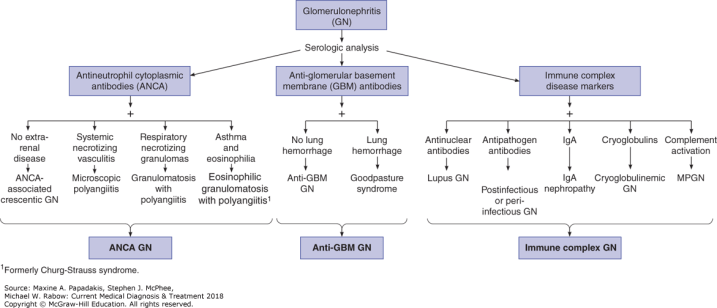
Summary (souce: Grepmed)

GN

FUO for 2 months that turned out to be DLBCL and Cryptococcal pneumonia! 3/13/2019

We worked through a case from the Human Diagnosis Project with a 57 yo M originally form Guatemala (moved to US 25 years ago) with a history of pre-DM and recently diagnosed and treated Lyme disease presenting with 2 months of persistent fever, chills, malaise, and myalgias. He received extensive work up, and everything turned (including TEE, LP, SPEP, rheum, BM biopsy, HIV) were negative. He had splenomegaly on exam, and CT CAP revealed hilar LAD + LLL tree-in-bud along iwth a 20cm spleen. The patient was ultimately diagnosed with DLBCL, AND cryptococcal pneumonia secondary to immunosuppression from his lymphoma!

Credit: Dr. Ron Cho, New York Medical College, Internal Medicine.


Fever of Unknown Origin

  • Classic Definition
    • Fever > 38.3 °C on multiple occasions
    • Duration > 3 weeks
    • Uncertain diagnosis after 3 outpatient visits or 3 days in the hospital (revised, used to be 1 week inpatient investigation) or 1 week of “intelligent and invasive” ambulatory investigation
  • Etiology
    • Infectious
      • TB is the single most common infection in most FUO series, can be extrapulmonary, military, or pulmonary. May occur concurrent in AIDS patient, leading to a more subtle presentation.
      • Abscess
      • Osteomyelitis
      • Bacterial endocarditis (2-5% of these are culture negative bacterial endocarditis, i.e. from Coxiella brunetii and tropheryma whipplei).
        • Super rare causes of endocarditis with difficult to grow culture: Mycoplasma, Legionella, Bartonella, Brucella, HACEK organisms
        • TEE is positive in > 90% of cases of FUO from infective endocarditis.
      • Viral i.e. EBV
    • Malignancy: Most common are lymphoma and leukemia.
      • NH Lymphoma
      • Leukemia
      • RCC
      • HCC
      • Myelodysplastic syndromes
    • Systemic Rheumatic disease
      • Adult onset Still’s disease: young and middle age adults, daily fevers, arthritis, evanescent rash.
      • GCA: Older patients
      • Polyarteritis nodosa, Takayasu, GPA, cryoglobulinemia
    • Others
      • Drugs: Antibiotics, H1 & H2 blocking antihistamines, antiepileptic drugs, NSAIDS, hydralazine, antithyroid drugs, digoxin.
      • Factitious fever: Psych, predominantly affects F and healthcare professionals
      • Disordered heat homeostasis after a stroke or from hyperthyroidism
      • Dental abscess
      • Multiple concurrent infections
      • Alcoholic hepatitis
      • VTE/PE
      • Hematoma
      • Hereditary periodic fever syndromes
    • Unidentified: 19% of cases are unidentified.
  • Management/Diagnostic Principles
    • Get a detailed history, including fever pattern exposure history, sexual history, family history, medications.
    • Do not start empiric therapy unless pt is neutropenic or unstable, or you have a high-suspicions for GCA or culture negative endocarditis.

DLBCL

Epidemiology

  • Most common type of NH Lymphoma, representing 25% of cases
  • Median age: 64, 55% men. Also accounts for 25% of childhood NHL.
  • Caucasians at higher risk and esp patients of Swedish and Danish ancestry
  • Other risk factors: HIV, h/o radiation or chemotherapy

Pathophysiology

  • Heterogenous group of tumors that arise from mature B cells in (90% of cases, the other 10% from T cells)
  • Most common mutations found in DLBCL:
    • BCL6 gene mutation
    • BCL2 activation
    • MYC overexpression

Presentation

  • Nodal and extra-nodal manifestation at time of diagnosis. Most common extra-nodal manifestation is bonemarrow or GI tract.
  • Typically pts present with a mass, most commonly in the neck, abd, or mediastinum but it can manifest anywhere.
  • Painless LAD might be present in 2/3 of cases.
  • Less than 50% will have B-sx.
  • Can present with pancytopenia. Might see elevated LDH, uric acid, and calcium.

Diagnosis

  • Excision LN or tissue biopsy, excisional LN is preferred

Staging

  • Ann Arbor Criteria
  • AnnArbor.jpg
    • Stage I – disease in single lymph node or lymph node region.
    • Stage II – disease in two or more lymph node regions on same side of diaphragm. Note: Stage II contiguous means two or more lymph nodes in close proximity (side by side).
    • Stage III – disease in lymph node regions on both sides of the diaphragm are affected.
    • Stage IV – disease is wide spread, including multiple involvement at one or more extranodal (beyond the lymph node) sites, such as the bone marrow (which is involved commonly), liver, pleura (thin lining of the lungs).
    • Spleen is considered nodal

Management

    • 1st line is RCHOP (3 cycles) and local regional radiation, 6-8 cycles of R-CHOP is an acceptable alternative.
    • Emerging data, DA-EPOCH is better for younger patients < 60 yo and with certain phenotypes
    • Double Hit Lymphoma: Lymphoma resembling DLBCL but has MYC gene translocation AND rearrangement of BCL 2 or BCL 6. RCHOP still first line but overall prognosis is worse. DA-EPOCH-R might work better.