All posts by vmcimchiefs

Pulmonary Hypertension – 11/14/15

Definition: mPAP greater or equal to 25 mmHg at rest
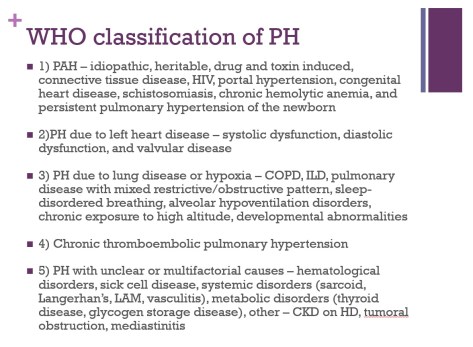
PH

  • Can also classify as pre and post-capillary
    • Pre-capillary is group 1, 3, 4, 5
    • Post-capillary is group 2 and 5
    • Combination can be group 2 and 5
      • If enough volume overload to cause enough right heart strain to cause intrinsic remodeling then group 2 could cause intrinsic PAH
  • Best prognosis is CTEPH if able to surgically remove the clot (usually able to do so in proximal clots)
  • Worst prognosis is PAH
  • Most common form of group 3 is due to COPD

Symptoms
– Most common is dyspnea
– Other symptoms include exertional chest pain due to increased myocardial oxygen demand from enlarged right ventricle and increased pressure, peripheral edema, and anorexia (from hepatic congestion)
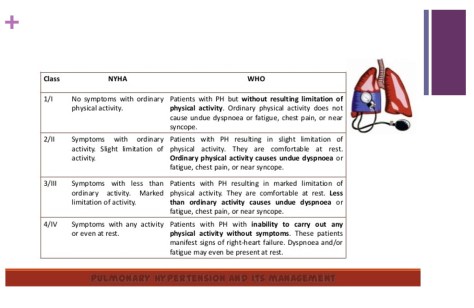
Symptoms

Diagnostic evaluation
– Transthoracic echo as screening and if evidence of heart disease then likely group 2
– If no evidence of left heart disease then check PFTs, overnight oximetry, VQ scan, LFTs, HIV, ANA, etc to rule out other etiologies of PH
– Patients only need a RHC for confirmation or if other cause of possible PH does not fit the extent of PH seen
– Vasoreactivity testing – if positive then patient would benefit from CCB
– Positive vasoreactivity test is a drop in mPAP of at least 10 and less than 40 mmHg overall without hypotension or drop in CO

Treatment
– For group 2-5 treat the underlying cause
– If evidence of PaO2 < 60 in group 3 then start oxygen
– Treat with anticoagulation to prevent further clots in CTEPH but only definitive treatment is thrombectomy
– For group 1 – can use vasodilators, anticoagulation (because high risk of PE in these patients), digoxin for right heart contractility, and diuretics for volume management

Acute Kidney Injury – 11/7/17

Definition of AKI

1) Increase in Cr by greater or equal to 0.3 in 48 hours
2) Increase in Cr 1.5 x baseline within 7 days
3) UOP < 0.5 mL/kg/hr x 6 hours

Causes of elevated Cr without drop in GFR

Medications that block secretion – cimetidine, TMP, and HIV medications
Increased muscle mass

Causes of elevated BUN without drop in GFR

GIB
Albumin infusions
Steroid use
Tetracycline antibiotics

Urine sediment

Pre-renal azotemia = hyaline casts
ATN = muddy brown granular casts
AIN = sterile pyuria (+/- eosinophils)
GN = protein, dysmorphic RBCS, RBC casts

Indications for dialysis

A = acidosis
E = electrolyte abnormalities refractory to medical therapy
I = intoxicants
O = overload refractory to diuretics
U = uremia

Dementia – 10/31/17

Normal aging = no change in independent functioning
Mild cognitive impairment = stage between normal aging and dementia

  • Subjective reports of cognitive decline
  • Objective findings of impairment of cognitive decline
  • Loss of independence in daily functioning
  • No significant impairment in occupational and social functioning

Dementia = deterioration of cognitive function severe enough to impair occupational and social functioning; biggest risk factor = age

Alzheimer’s disease

  • Most common type of dementia
  • Insidious development of recent memory loss
  • Word finding difficulties early
  • Visuospatial dysfunction (getting lost in familiar places)
  • Problems with executive function (problem solving ability)
  • No role for biomarker testing

Lewy Body dementia

  • Dementia precedes Parkinsonian symptoms
  • Visual hallucinations

Parkinsons dementia

  • Parkinsonian features before onset of dementia
  • Symptoms of Parkinsons include = bradykinesis + rigidity, pill-rolling tremor, postural/gait instability

Frontotemporal dementia

  • Can occur in younger people
  • Change in social behaviors
  • Loss of executive functioning and decision making
  • Has a genetic component 40% of the time so genetic counseling is beneficial