Category Archives: Morning Report

Hypersensitivity Pneumonitis Secondary to… Oyster Mushrooms 4/29/2019

Today we went over a case from the HumanDx Project (Credit goes to Dr. Maki Cronin, SSM Health St. Louis University Hospital). A young woman presents with 5 months of cough, dyspnea, and unintentional weight loss over the past 5 months in setting of working at an in-door oyster mushroom farm for the past 8 months. She was tachycardic and febrile on presentation, with crackles and clubbing on exam. CT revealed e/o fibrosis and GGO, and BAL revealed significant lymphocytosis. This presentation is consistent with a diagnosis of hypersensitivity pneumonitis, and more specifically, mushroom worker’s lung!


Hypersensitivity Pneumonitis (HP)

This condition has many faces/names:

  • Bird fancier’s lung (feathers, bird droppings)
  • Cheese-washer’s lung (Cheese Fancier per Sarasa)
  • Coffee worker’s lung
  • Compost lung (aspergillus)
  • Farmer’s lung (moldy hay)
  • Hot tub lung (hot tubs)
  • Mushroom worker’s lungs (mushroom)
  • Sauna worker’s lungs (contaminated sauna water)
  • Wine-grower’s lung (moldy grapes)

Epidemiology

  • 300 known antigens so far, most common (accounting for 75%) are:
    • Farming
    • Birds
    • Water contamination

Pathophysiology

  • Hypersensitivity to an environmental antigen leading to a type IV hypersensitivity reaction (they love asking these questions on tests for some reason) in genetically susceptible patients
    • Type 1: IgE mediated, immediate onset (min to hours)
      • Ex: Food allergies, PCN allergy, insect sting
    • Type 2: Cytotoxic hypersensitivity, Ab-mediated cell destruction
      • Drug induced cytopenias, Graves thyroiditis
    • Type 3: Immune complex formation
      • Ex: serum sickness, Arthus reactions, vasculitis, drug fever
    • Type 4: Cell-mediated delayed hypersensitivity
      • Activation of T-cells
      • Hours or days after antigen exposure
      • Ex: Tuberculin sensitivity, contact dermatitis, HP
  • Interstitial inflammation and infiltration with lymphocytes, later on granulomas and fibrosis develop over time

Presentation

  • Acute:
    • Occurs in sensitized pts with high level antigen exposure
    • Fever, chills, cough, chest tightness, dyspnea, nausea 4-8 hours after exposure
    • Exam: Tachypnea, inspiratory crackles, no wheezing
  • Chronic:
    • Occurs in pts with long-term low-level exposure
    • Months to years onset of exertional dyspnea, cough, fatigue, weight loss
    • Clubbing, fevers are uncommon but can happen
    • Over time: Pulmonary fibrosis, resp failure
  • Subacute:
    • Falls between acute and chronic forms

Diagnosis

  • A combination of clinical suspicions with exposure history, with assistance of imaging
  • CXR: Neither sensitive nor specific, may show reticular or nodular opacities
  • HRCT: typically shows profuse centrilobular nodules, predominantly GGO, more chronic exposure will lead to fibrosis, traction bronchiectasis
    • Mosaic pattern with areas of GGO is classic
    • More chronic picture leads to fibrosis, which can lead to traction bronchiectasis
    • Bronchiectasis is a chronic condition where the walls of the bronchi are thickened from inflammation and infection.
  • PFT: Can be obstructive, restrictive, or mixed. Obstruction more commonly seen in chronic.
  • BAL: Very sensitive but non-specific.
    • BAL lymphocytosis (often greater than 50%) is helpful but non-specific. Can also see lymphocytosis in COP and NIP but not this high.
  • Biopsy: Rarely done
  • Antigen-specific immunoassays: very high false positive rate, role unclear.

Management

  • Corticosteroids, usually pred 60 1-2 weeks, then tapered over 2-4 weeks for acute/subacute cases
  • Chronic: Longer course of prednisone
  • Remove from environmental exposure ASAP

Prognosis

  • Reversible if detected early and antigen exposure is eliminated
  • Chronic: leads to fibrosis, which is NOT reversible.

Crowned Dens Syndrome!

Thanks to Eric and Naina for presenting the fascinating case of an elderly man who presented to the ER with acute, progressive shoulder and neck pain/stiffness that started after a visit to the dentist, found to have Crowned Dens Syndrome (???!!!) on CT imaging!


Clinical Pearls

  • The exam maneuvers we use to determine nuchal rigidity (neck stiffness, Kernig, Brudzinski signs) are not sensitive for meningitis.  Kernig and Brudzinski, when present, are highly specific.  Jolt accentuation is more useful as a screening tool because it is highly sensitive (>90%) but not very specific (~60%).
  • Make sure to check out Beers list when prescribing new meds for our geriatric patients.
  • For patients presenting with traumatic neck pain, consider using NEXUS or Canadian C spine rules to help you determine whether CT imaging is necessary.
  • Crowned Dens Syndrome is a rare finding in patients with CPPD and refers to deposition of calcium pyrophosphate crystals in and around the atlanto-axial articulation, which resembles a crown on CT imaging (image here).
  • The knee accounts for 50% of all acute CPPD flares.

Nexus criteria

  • No indication for CT if all of the following criteria are met
    • Absence of posterior cervical spine tenderness
    • Normal level of alertness
    • No evidence of intoxication
    • No abnormal neurologic findings
    • No painful distracting injuries

Canadian C-spine Rule

  • Step 1: CT indicated if any of the following are present:
    • Age > 65 years
    • Dangerous mechanism of injury
    • Paresthesias in the extremities
  • Step 2: Assess for low risk factors that allow for safe examination of the cervical spine range of motion
    • Simple rear-end mechanism
    • Sitting position in the ED
    • Ambulatory at any time
    • Delayed onset of neck pain
    • Absence of midline cervical spine tenderness
    • If ALL of these are present proceed to step 3
  • Step 3: Examine range of motion
    • Test active range of motion
    • Perform radiography in patients who are not able to rotate their neck actively 45 degrees both left and right. Patients able to rotate their neck, regardless of pain, do not require imaging

CPPD:

  • Umbrella term that covers
    • Pseudogout: acute synovitis/flare
    • Chondrocalcinosis: radiographic calcification in hyaline and/or fibrocartilage
    • Pyrophosphate arthropathy
  • Epi
    • 4-7% of adults
    • ~50% of those with radiographic findings are >84 years of age
  • Clinical manifestations
    • Asymptomatic (majority)
    • Acute CPP crystal arthritis: self limited acute or subacute attacks of arthritis involving one or several extremity joints. Knee is affected in over 50% of all acute attacks followed by wrists, shoulders, ankles, feet, and elbows.
      • Triggers: Trauma, surgery, severe medical illness. Abnormalities in serum calcium, magnesium, bisphosphonates, hemochromatosis.
    • Chronic CPP arthritis
      • Chronic inflammatory arthritis (5% of cases): resembles RA, multiple joints involved
      • Chronic osteoarthritis: Most prevalent form of symptomatic disease.
    • Severe joint degeneration
    • Spinal involvement
      • Crowned dens syndrome: rare, characterized by severe acute or recurrent axial neck pain, neck and shoulder girdle stiffness, and associated fever, elevated inflammatory markers, and CPP or calcium phosphate crystal deposition on CT in and around the atlanto-axial articulation
        • DDx would include PMR, Milwaukee shoulder (deposition of hydroxyapatite crystals, commonly seen in women >70 years of age) less frequently meningitis, cervical discitis, or inflammatory spondyloarthritis
        • Favorable response to NSAIDs and colchicine

Infective endocarditis

Thanks to Dr. Olivia Lee for letting us know of the case of this middle-aged woman with h/o endometrial cancer s/p TAH/BSO who was BIBA on a 5150 for GD after being found living in her yard.  Her medical clearance work up led to the diagnosis of endocarditis with a large abscess on the mitral valve leading to septic emboli to the brain, spleen, and kidneys as well as vitritis and endophthalmitis.  She was also noted to have an indwelling mediport with a vegetation at its tip, showering emboli into her lungs.  She successfully underwent urgent surgical replacement of her infected/destroyed valve.


Clinical Pearls

  • Use Duke’s criteria to help with your pre-test probability of endocarditis.  If patient meets criteria for definite endocarditis, consider going straight to a TEE.
  • TTE is not sensitive but highly specific for endocarditis.  However, in a patient with concerning clinical features (see next bullet point), a TEE is necessary to evaluate valve condition and plan for surgical intervention.  TTE is more useful if pre-test probability of endocarditis is low.
  • Indications for surgery
    • Valve dysfunction causing heart failure
    • Perivalvular extension with development of abscess, fistula, and/or heart block
    • Fungi or other highly resistant organisms that are difficult to treat with abx alone
    • Persistent bacteremia despite maximal treatment
    • Recurrent embolization with persistent vegetations
    • Large vegetations (>1 cm) with severe valvular regurg
    • S aureus prosthetic valve endocarditis
  • Indications for early surgery:
    • Heart failure
    • Uncontrolled infection
    • Prevention of embolic events
  • Most common cause of death in endocarditis is heart failure.

For a thorough review of endocarditis, please see our previous blog post here.

ECG Report

Some pearls from our ECG report today:

  • DDx for ST elevations on ECG:
    • Pericarditis (diffuse)
    • Ischemic heart disease (MI, Prinzmetal angina, ventricular aneurysm) –> tends to present in one vascular territory
    • LBBB
    • Early report variant (AKA J point elevation)
  • A flutter at its fastest (2:1 block) would have a rate of 150 bpm (meaning atrial rate is 300 bpm).  So if you  have a regular, narrow complex tachycardia that is going faster than 150 bpm, then start thinking AVRT or AVNRT.
  • A rough estimate of maximum SA node rate possible in a patient is 220 – age.
  • If you see a slow a fib with QRS waves at regular intervals, think of dig toxicity!  Because dig increases atrial and ventricular ectopy, the atria start to fibrillate. At the same time, the AV node is being blocked.  So what you are actually seeing on ECG is fibrillating atrium with complete heart block causing a slow junctional escape rhythm.  Keep in mind though that the most common abnormality on ECG for dig toxicity is PVCs.

IgG4 related disease!

Thanks to John for presenting the case of a middle aged man from Vietnam with history of smoking who presented to the hospital with painless jaundice with imaging concerning for malignancy, found to have IgG4 related autoimmune pancreatitis!


Clinical Pearls

  • For imaging of the biliary tree:
    • Ultrasound is best for stones
    • CT is better for parenchymal disease
    • ERCP/MRCP is best for intraductal masses or stones
  • IgG4 related disease is more common in men >50 years of age.  It can affect many organs, similar to sarcoid.
  • It is an inflammatory and fibrotic systemic conditions where organs form tumefactive lesions rich in IgG4 plasma cells.
  • Diagnosis requires biopsy.  Serum IgG levels may be normal even in active disease.  However, a significantly elevated level is highly sensitive/specific (>95%) for IgG4 related disease.
  • Treatment involves steroids + immunomodulating therapy.

Approach to high bilis!

conjugated hyperbili

unconjugate hyperbili

DDx for painless jaundice:

  • Cancer (pancreatic, cholangiocarcinoma)
  • Meds/toxins
  • Viral hepatitis
  • ESLD
  • CHF
  • Hemolysis
  • PBC/PSC

IgG4 related disease

  • First described in 2003
  • Majority men (62-83%) and > 50 years of age.
  • Inflammatory and Fibrotic systemic condition where organs have tumefactive (tumor forming) lesions with an infiltrate rich in IgG4 plasma cells and often elevated IgG4 serum levels (but not always!)
  • The pathophys is poorly understood but thought to be a combination of autoimmune and allergic mediated processes.

Clinical features:

  • Subacute onset, typically few systemic signs/symptoms
  • 30% of those with autoimmune pancreatitis also have tubulointerstitial nephritis at presentation.
  • Pancreatic involvement 
    • Manifestations include a uniformly enlarged pancreas (sausage pancreas on imaging), pancreatic mass which can mimic cancer, recurrent pancreatitis, or strictures.
  • Biliary involvement
    • Biliary strictures leading to obstructive jaundice as well as sclerosing cholangitis
  • ANY organ can be affected (eg: thyroiditis, interstitial nephritis, salivary involvement), much like sarcoid

Spectrum of IgG4-related disease

IgG4 spectrum
Source: UpToDate

Diagnosis:

  • Need tissue biopsy for diagnosis.  Serum serologies are only suggestive.

Treatment:

  • Steroids + immunomodulating therapy.  

Chronic pancreatitis

Etiologies of Chronic Pancreatitis (progressive inflammatory changes in the pancreas that result in permanent structural damage and histologic fibrosis)

  • Alcohol abuse(45%) as well as cigarette use
  • Recurrent acute pancreatitis
  • Genetic (eg: CFTR, SPINK mutations)
  • Chronic ductal obstruction
  • Systemic diseases (eg: SLE, hyperparathyroidism, hypertriglyceridemia)
  • Idiopathic
  • Autoimmune: Can be Type 1 (part of IgG4 related disease) or Type 2 (idiopathic) 

Clinical manifestations of chronic pancreatitis

  • Can be ASYMPTOMATIC
  • Epigastric abdominal pain most common symptom however
  • Pancreatic insufficiency (only after 90 %of pancreatic function lost) and manifests as steatorrhea and glucose intolerance/diabetes
  • Remember that chronic pancreatitis puts you at increased risk for PANCREATIC CANCER

Lab/Imaging

  • Amylase/Lipase usually NORMAL so not as helpful
  • 72 hour quantitative fecal fat (steatorrhea alone is non-specific!)
  • Fecal elastasehas high sensitivity and specificity for chronic pancreatitis
  • KUB can show calcificationshinting towards chronic pancreatitis and MRCP/ultrasound can show pancreatic duct obstructions, dilations, strictures or fluid collections

Treatment

  • Alcohol and smoking cessation!
  • Creon supplementation, may also need fat-soluble (A,D,K,E) supplementation
  • Analgesics for abdominal pain which is extremely hard to control. Minimize opioids but may be necessary for refractory pain.
  • Specialized approaches include celiac nerve blocks, endoscopic surgery and surgical resection

Neck mass that turned out to be… Cryptococcus 4/9/2019

A 42yo homeless man with AIDS not on ART with CD4 < 10, VL 440K+, presents with an acutely enlarging right-sided neck mass that was tender and firm, with associated fevers and malaise… Blood CrAg returned positive, and biopsy revealed encapsulated yeast with narrow based buds…

Yep, you’ve guessed it, it’s crypto!


Cryptococcus

Epidemiology

  • Invasive fungal species, primarily C neoformans and C. gattii are seen, found world wide in soil. Associated with infections in immunocompromised hosts.

Risk Factors

  • AIDS (AIDS defining illness)
  • Hematologic malignancies
  • Long term steroids
  • Solid organ transplantation
  • Sarcoidosis

Presentation

  • Most of the population have been exposed to the spores of C. neoformans, and in immunocompetent patients, most cases are asymptomatic to mild symptoms.
  • Typically inhaled and affects the lungs first, and then can disseminate to CNS (most feared), skin, solid organs, bones, etc
  • CNS: Feared, no-specific sx of fever, AMS, headache.
  • Disseminated disease requires at least 2 non-contiguous sites

Diagnosis

  • Culture is definitive
  • GS: Encapsulated budding yeasts with narrow based buds on India Ink = characteristic
  • IF e/o dissemination, get CXR, urine, LP, blood cultures
  • Cryptococcal capsular antigen (CSF or blood) are > 90% sensitive and specific.
  • Cr titers correlate with organism burden and prognosis, but not helpful to follow during treatment and doesn’t correlate with tx response. Titers > 1:512 is associated with poor prognosis.
  • CSF or blood CrAg is diagnostic

Management

  • Mild to moderate in immunocompetent hosts: Fluconazole for 6-12 months.
    • Alternatives are itraconazole, voriconazole, or posaconazole.
  • Immunocompromised hosts with mild-moderate pulmonary disease in the absence of diffused pulm infiltrates, CNS, or disseminated infection, can use fluconazole 6mg/kg (typically 400mg) daily for 6-12 months, with similar alternatives if fluconazole is not available/tolerated.
  • Immunocompromised hosts with severe disease or CNS infection: ARDS occur frequent in IC patients with cryptococcal pneumonia.
    • Induction: Ampho B + flucyotosine for minimum of 2 weeks.
    • Consolidation: Fluconazole 200-400mg daily x 8 weeks
    • Maintenance therapy is continued for at least 1 year.
    • Intracranial pressure control: Cryptococcal meningoencephalitis patients might need daily LPs to relief ICP, might require VP shunt. Do not use mannitol or acetazolamide.
      • Steroids not shown to be helpful.
  • ART: Usually not started with induction therapy due to a risk of IRIS.
    • ART is usually started 2-10 weeks after antifungal therapy has been started to minimize risk.


Pituitary Apoplexy 4/8/2019

Thanks Brandan for presenting an elderly lady who developed sudden onset headache, CN3 palsy, and  bitemporal hemianopia. She had a CTH that was unremarkable the day before, and a repeat CT found a large pituitary “mass,” and MRI was concerning for pituitary apoplexy!

This case demonstrates a few important concepts:


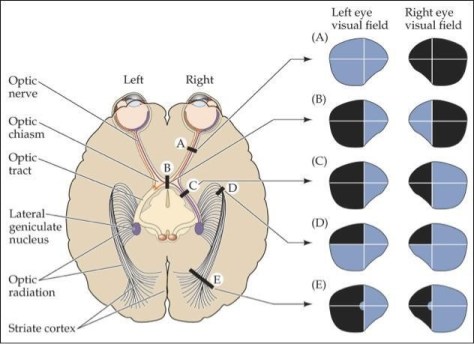
Visual Field Pathology (commonly tested!)

VF

A: Optic Nerve pathology or structural pathology leading to complete blindness in one eye, i.e. trauma, optic nerve neuropathy, optic neuritis (i.e. MS)

B: Bitemporal hemianopsia= optic chiasma pathology until proven otherwise.

C: Homonymous hemianopsia: Optic tract pathology

D: Homonymous quadrantanopsia: Optic radiation, think occipital lobe pathology


Oculomotor nerve palsy (CNIII palsy)

  • Findings: Down and out on the affected eye.
  • Physiology: Lacteral rectus, with CN VI innervation, remains intact and not opposed by the medial rectus which is innerved by CN III. Down because the superior oblique (innerved by CN IV) is unopposed by the paralyzed superior rectus, inferior rectus, and inferior oblique
  • DDx:
    • Ischemic (affects somatic fibers over parasympathetic, typically spares the pupils)
    • Inflammation,
    • Infection
    • Tumors (mass effect so both somatic and parasympathetic fibers are typically affected)
    • Demyelinating disease
    • Autoimmune
    • Cavernous sinus thrombosis (don’t miss this!)

Pituitary apoplexy: A Medical Emergency!

  • Pathophysiology:
    • Hemorrhage or infarction of the pituitary gland usually involving a pituitary adenoma, and occasionally it may be the first manifestation of a pituitary adenoma.
  • Risk factors:
    • HTN, surgeries, coagulopathies, certain meds (i.e. VKA, DOACs, antiplatelets)
  • Presentation:
    • Sudden onset headache, vomiting, encephalopathy, visual field defect, hemodynamic instability (esp with ACTH defects).
    • DI is very common in the immediate setting, but as axons in the pituitary die, ADH is released which can lead to SIADH (but only transient until stores of ADH are used up), followed by recovery but it depends on the extent of the damage.
  • Management: IVF, hydrocortisone (get labs first)
    • Acute secondary adrenal insufficiency is seen in 2/3 of pts, important cause of mortality.
      • Acute hypocortisolemia leads to hemodynamic instability
      • Inc vasopressin release from posterior pit can lead to fluid and lyte disturbances.
      • Any signs of hemodynamic instability: Can do 50-100mg hydrocortisone Q6H or continuous infusion 2-4mg/hr
    • Role of surgical management:
      • Decision to operate based on whether there is deteriorating level of consciousness, severely reduced visual acuity, or presence of visual field defects.
      • Otherwise, medical management with corticosteroids, monitoring, re-evaluation is recommended.
    • Vision outcomes: Conflicting data on medical vs surgical management.
    • Pituitary function outcomes: No difference b/w surgical vs medical management

Please refer to this paper for a detailed read on pituitary apoplexy!

Wernicke’s Encephalopathy in Setting of Hyperemesis Gravidarum and Unexpected Pregnancy! 4/4/2019

Credit goes to Dr. Jon Reitzenstein from Michigan State!

Today we went over a case featured on the Human Diagnosis Project.

A 28yo F with no medical history presents with 1 day history of unsteady gait, with associated “indifference” per her husband and intermittent diplopia. She also has been having significant N/V for the past 3-4 weeks, barely able to keep anything down. She was dehydrated on exam with elevated spec grav and ketones on the UA. Her pregnancy test returned positive (estimated 6 week old fetus). Ultimately she was given thiamine with rapid symptomatic improvement.

The final diagnosis is Wernicke’s Encephalopathy in setting of poor nutritional intake and increased metabolic demands secondary to unexpected/unknown pregnancy.


Wernicke’s Encephalopathy

Epidemiology

  • Most cases are associated with chronic EtOH use but not all the time!
  • Non-alcohol related:
    • Hyperemesis gravidarum
    • Bariatric surgery
    • Long-term TPN
    • HIV
    • Malignancies
    • Extreme poverty, war zones, refugees
  • More common in men
  • Up to 12.5% of pts with chronic EtOH

Pathophysiology

  • Chronic inadequate intake of thiamine (vitamin B1) leading to degeneration of the peripheral nerves, thalamus, mammillary bodies, and cerebellum.

Presentation: triad of

  • Encephalopathy (disorientation, inattentiveness, indifference)
  • Gait ataxia
  • Oculomotor symptoms (nystagmus, lateral rectus palsy, conjugate gaze palsies)
  • Triad only seen in 1/3 of patients, most only have around 2.
  • Other signs: Memory impairment, hypothermia, electrolyte derangements often related to dietary, withdrawal if related to alcohol

Diagnosis: Clinical but there is a proposed Caine Criteria, 2/4 of these meet Caine Criteria for Wernicke encephalopathy. Sensitivity up to 85%

  • Dietary deficiency
  • Oculomotor abnrl
  • Cerebellar dysfunction
  • Encephalopathy or memory impairment.
  • Serum thiamine is rarely tested and takes a while to come back, so when in doubt, start thiamine and don’t wait for levels.
  • MRI might show hyperintensities around the periaqueductal white matter and thalami

Management

  • Always give thiamine first and NOT glucose.
    • Thiamine must be repleted first or else glucose infusions may worsen symptoms.
    • Alcoholics should receive IV thiamine, at least 100mg, before receiving any IV glucose solutions.
  • Thiamine:
    • 500mg IV TID x 3 days, then 250mg IV daily for 3-5 days, then transition to 100mg PO daily.

Prognosis

  • Prompt thiamine treatment leads to improvement in ocular sx within hours to days.
  • Vestibular/gait improves within weeks.
  • 60% will have residual ocular symptoms and gait abnormalities. Up to 80% of patients might have residual memory deficits.

Korsakoff Syndrome: Irreversible. Memory loss (selective anterograde or retrograde amnesia), confabulation, +/- hallucinations

Hyperemesis Gravidarum

Presentation

  • Uncontrollable vomiting during pregnancy that results in dehydration, weight loss, and ketosis.
  • Usually begins at about 5 weeks of gestation, peaks at 9 weeks, and resolves by 16-18.
  • While vomiting in pregnancy (esp in the morning) is common, HG is an extreme form.

Diagnosis: Clinical, laboratory abnormalities

Management: Supportive, antiemetics

  • Doxylamine + Vit B6
  • Promethazine (Phenergan)
  • Metoclopramide (Reglan)
  • Ondansetron (Zofran)
  • Prochlorperazine
  • Corticosteroids (methylprednisolone) can be trialed if initial treatment is ineffective. Generally avoided prior to 6 weeks of gestation (organogenesis)

Severe Metabolic Acidosis Secondary to… Methanol Poisoning 4/3/2019

Credit goes to Eric for informing us about this case!

A 48yo M presents with acute onset encephalopathy. He has a distant history of alcohol abuse, and during the day of presentation he had complained about not being able to see. On presentation, his labs were notable for an anion gap of 35 with bicarb of 4, lactic acid of 11.9,  ABG of 6.56/52/336, and osm gap of 65. Volatile screen ultimately came back positive for methanol level of 145.56 mg/dL (yes this is very high). He was given bicarb pushes, fomepizole, and urgent dialyzed.

It turns out that he might have ingested Klean Strip denatured alcohol, which is 40-60% methanol!


Methanol Toxicity

Pathophysiology

  • Toxic metabolite of methanol poisoning is formic acid, which is formed from formic acid after methanol is metabolized in the liver by alcohol dehydrogenase and aldehyde dehydrogenase
  • Leads to retinal injury and eventual blindness (permanent)
  • Formic acid can also cause ischemic or hemorrhagic injury to the basal ganglia, hence in methanol poisoning you might see changes around the area (putamen is part of the basal ganglia).
  • Ingestion of 1g/kg is fatal, and toxicity has been reported in as little as one teaspoon
  • Ethylene glycol, on the other hand, mainly causes renal damage. (Flank pain, hematuria, oliguria). Buzz words = calcium oxalate crystals in urine.

Picture1.png

Presentation

  • Visual blurring, central scotomata (black spot in center of vision), and blindness are suggestive of methanol poisoning.
  • Eye exam might reveal: mydriasis, retinal edema, hyperemia of the optic disk
  • Co-ingestion of ethanol can delay presentation of toxicity.
  • Labs:
    • Profound AGMA, bicarb often < 8 mEqL
    • High serum lactate
    • Elevated plasma osmo gap
      • Calculated osmolality = 2 x [Na mmol/L] + [glucose mg/dL] / 18 + [BUN mg/dL] / 2.8 + [Ethanol/3.7]
      • OG = Measured osmo – calculated osmo
      • Nrl < 10
    • Typical agents that inc the osmolar gap:
      • Methanol
      • Ethylene Glycol
      • Diuretics (osmotic diuretics i.e. mannitol)
      • Isopropyl alcohol
      • Ethanol
    • Osmo gap takes Into account the quantity of uncharged molecules, hence it will only be elevated in presence of the parent alcohols.
    • In late presentation: most alcohols have been metabolized already into charged active metabolic, hence osmo gap is not very sensitive in late presentation.

Management

  • ABC comes first.
  • Sodium bicarb administration
    • Corrects systemic acidosis, which limits penetration of formic acid by converting it into negatively charged formate, which cannot cross cell membrane to cause damage.
      • Formic Acid <- -> H+  & Formate-, adding bicarb dec H+, hence driving the equilibrium equation to the right. See? College O-chem is still helpful.
    • HCO3 (mEq) required = 0.5 x weight (kg) x [24 – serum HCO3 (mEq/L)], and in general up front give 1-2 mEq/kg via IV bolus for any patients with pH < 7.3 followed by a sodium bicarb D5 gtt, at least 150-250cc/hr to correct acidosis
      • Goal of infusion is to keep pH above 7.35
    • Bicarb can be found in:
      • Most common: 8.4%, 1mEq/mL, 1Amp = 50mEq, you will see these in the crash cart, very helpful to familiarize yourself with setting the syringe up for injection in a code blue situation!
      • Gtt: 100-150 mEq/1000 mL in D5
      • Concentrated gtt: 1mEq/mL, might need pharmacy’s help in formulating this. You can only use this in the ICU!
      • PO tabs: Useful for CKD patients
  • Inhibition of alcohol dehydrogenase in the liver
    • Fomepizole
      • 1st line
      • Loading: 15mg/kg, followed by 10mg/kg Q12hr, continue until blood pH is normalized and serum methanol is less than 20mg/dL
    • Ethanol: ADH has better affinity for ethanol, leading to competitive inhibition.
      • Difficult to dose, sedating effect, cannot be used in cirrhosis patients, pregnant patients.
  • HD indicated if:
    • Severe acid-base derangements, or even high AGMA regardless of drug level
    • Severe levels of methanol
    • End organ damage
    • Interacts with fomepizole, hence if concurrent therapy, fomepizole should be dosed Q4H
  • Co-factor therapy
    • All methanol patients treated with ADH inhibition should also receive:
      • Leucovorin 50mg IV (folinic acid) or folic acid Q6H
      • Thiamine also commonly administered due to unclear nutritional status.
  • GI decontamination: Has no role whatsoever.

Leprosy!

Today, we talked about the case of a middle-aged man from the Philippines who presented with a one year progressive pruritic rash involving the face, arms, and legs as well as a distal symmetric peripheral neuropathy, found to have lepromatous leprosy on skin biopsy!


Clinical Pearls 

  • Mycobacterium leprae and lepromatosis like to grow in cooler areas, so infection often manifests in the skin and the peripheral nerves.
  • Transmission is likely via respiratory route, through broken skin, and by touching armadillos!
  • Early recognition and treatment is important to prevent injury to peripheral nerves.

DDx for rash + neuropathy

  • Lyme (usually cranial nerves, radiculopathy)
  • Celiac
  • Zoster (tends to be painful rather than pruritic and localized to a dermatome)
  • WNV (flaccid paralysis)
  • Sarcoid
  • Amyloid
  • Syphilis
  • Leprosy

Our patient presented with a pruritic rash and largely a distal symmetric peripheral neuropathy.  We generated the following Venn diagram in report to help us with the diagnosis:

Venn diagram

Leprosy

  • AKA Hansen’s disease
  • Infection caused by mycobacterium leprae and mycobacterium lepromatosis, separate species that cause similar clinical disease. They are both obligate intracellular parasites.
  • Involves the skin and peripheral nerves
  • Early treatment is important to prevent involvement of the eyes, hands, and feet due to neuropathy. The neuropathy is often non-reversible.
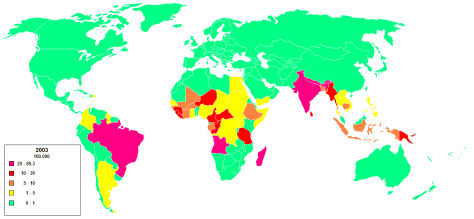
  • 205 new cases detected in the US in 2010. 75% among immigrants (most commonly India, Brazil, Indonesia, Bangladesh, and Nigeria)

Transmission

  • Unknown but probably respiratory route especially in lepromatous leprosy. Sometimes can transmit through broken skin. Also from armadillos.
  • Most people do NOT develop disease after exposure. Risk factor for disease development include older age, genetic influences, and immunosuppression.
  • Grows in cooler areas

Clinical presentation:

  • Described in categories pertaining to how much bacillary burden of disease is present with tuberculoid being the least amount and lepromatous having the highest disease burden.
  • Clinical features:
    • Hypopigmented or reddish patches on the skin
      • Typically involve the earlobes with nodular thickening and distributed symmetrically on the body in lepromatous leprosy.
    • Diminished sensation or loss of sensation within skin patches
    • Paresthesias of hands/feet
      • Neuropathy occurs early in disease course
    • Painless wounds or burns on the hands or feet
    • Lumps or swelling on the earlobes or face
    • Tender, enlarged peripheral nerves
  • Late findings in disease course:
    • Weakness of the hands with claw fingers, foot drop, facial paralysis, lagophthalmos (can’t close eyes completely due to CN7 palsy), lack of eyebrows/eyelashes, collapsed nose, perforated nasal septum.
    • Intermittent bacteremia can lead to focal lesions in various organs (liver, bone marrow, testicles and larynx)

Diagnosis:

  • Consider it in patients with skin lesions and/or enlarged nerve(s) accompanied by sensory loss.
  • No reliable blood or skin tests available.
  • Usually clinical and skin biopsy

Treatment:

  • Goal: Prevent and/or minimize injury to peripheral nerves!
  • Often times it’s loss of sensation but later can progress to painful neuropathy
  • Dapsone plus rifampin for tuberculoid leprosy. Clofazimine is added for lepromatous leprosy.
  • Duration can be up to 24 months
  • Treat neuritis with steroids for a prolonged course
  • Make sure to screen for G6PD deficiency before prescribing dapsone
  • Monitor liver function with rifampin
  • Clofazimine (causes phototoxicity) is not available in US pharmacies and must be obtained from the NHDP.

Prognosis:

  • May take a few years for skin lesions to resolve completely with treatment
  • Very curable, low relapse rates, typically no drug resistance
Leprosy epidemiology.png
Distribution of leprosy around the world (source Wikipedia)