All posts by vmcimchiefs

Angioedema and hyperkalemia management

Thanks to Audris for presenting the case of a middle-aged man with vasculopathy on ACEi who presented with angioedema requiring intubation!  We discussed the  diagnostic work up and management of angioedema as well as hyperkalemia!


Clinical Pearls

  • First order of business when suspecting angioedema is the ABCs!
  • Treat angioedema in the acute setting with H1 blockers and steroids, even if you are suspicious of a non-histaminergic pathway.
  • Always assess for concurrent anaphylaxis (hypotension or bronchospasm in addition to hives or angioedema).  If anaphylaxis is present, then treatment involves IM 0.3-0.5 mg of 1:1000 dilution epinephrine (1mg/mL), repeat every 20 minutes until symptoms resolve (max 3 doses)
  • If you have access to a functioning kidney, favor loop diuretics over cation exchange binders (i.e. kayexalate) to lower serum potassium!
  • Patiramer is much better tolerated than kayexalate and has a more favorable side effect profile.
  • Calcium gluconate has a role in the treatment of hyperkalemia when EKG changes are present. Give a dose and repeat the EKG.  If no improvement, repeat to a maximum of 3 doses until EKG has normalized.

Angioedema 

  • 3 pathophysiologic subtypes:
    • Mast cell/histamine mediated
      • Etiologies:
        • Allergic reactions: food/insect stings, latex, drugs. Can also be idiopathic. IgE type 1 hypersensitivity
        • Direct mast cell release: drugs (opiates, contrast). IgE is not involved.
        • ASA/NSAIDs: via IgE or direct mast cell release
        • Chronic urticaria w/w/o angioedema
      • S/sx affecting organ systems other than the skin? Suspicious for anaphylaxis ⇒ give epi
      • Treatment: H1 blockers, glucocorticoids. 
    • Bradykinin mediated
      • Inhibition of enzymes involved in the degradation of bradykinin, or deficiency/dysfunction of complement C1 inh
      • More prolonged time course, develops over 24-46 hours and resolves within 2-4 days
      • Relationship between trigger and onset of symptom is not as apparent
      • Not associated with other s/sx. More common to have abdominal pain due to bowel wall involvement.
      • Treatment: bradykinin pathway mediators (ecallantide, icatibant), C1 inhibitor concentrate, or plasma replacement.
    • Unknown mechanism
      • Idiopathic angioedema
      • Infections (in children)
      • CCBs
      • Other drugs: sirolimus, everolimus, amiodarone, metoprolol, risperidone, paroxetine, and etanercept, inhaled cocaine.
      • Herbal meds
      • Urticarial vasculitis
      • Hypereosinophilic syndrome and Gleich syndrome


Capture

Hyperkalemia

Agents that reduce serum potassium via transient intracellular shift:

  • Insulin: give with D50 if normoglycemic to avoid hypoglycemia and be sure to check FSG hourly for 4 hours after to ensure no hypoglycemia develops
  • Albuterol (10-20 mg) nebs: this is significantly higher than the dose we give in COPD (2.5 mg) and is equal to ~8 treatments! So make sure to continue the nebs when the patient arrives on the floor from the ER if they are still hyperkalemic.
  • NaHCO3: best for management of chronic hyperkalemia in the outpatient setting.  In the acute management of hyperkalemia, alkalinization of serum with a large bicarb load can lead to a reduction in serum calcium levels.  Lower serum calcium can lead to more cardiac membrane instability and fatal arrhythmias!

Agents that eliminate potassium from the body:

  • Loop diuretics: first choice if a functioning kidney is available!
  • Cation exchange binders: preferred when kidneys are not available
    • Patiramer (available at VMC), much more tolerable than kayexalate and highly effective at lowering serum potassium.  Like kayexalate, it works over hours to days.
    • Sodium zirconium: similar to patiramer but not currently available
    • Kayexalate: not pleasant to take orally. Also carries with it the slight risk of colonic ischemia especially in post renal transplant patients and those with baseline colonic dysfunction (due to infection or inflammation).
  • Dialysis

Indication for using calcium gluconate: when EKG changes are noted.  Repeat doses (maximum 3) until EKG changes have resolved.
Stroke in a 23 year old… secondary to a neck massage 2/13/2019

We have a very bizarre case of a 23 year old woman, with a history of hypertension, presenting as a stroke alert. She has dysarthria and focal right-sided deficits, and she required intubation for airway protection. She has no prior stroke or clotting history, no illicit drug use (other than marijuana), and no significant family history. CT of the head was unremarkable, but CTA revealed a… vertebral artery dissection! We later learned that the patient was in the middle of getting a massage when the stroke occurred!

That’s right, this is a case of cervical artery (more specifically the vertebral artery) dissection secondary to traumatic massage!


Stroke typically is due to atherosclerotic disease in most cases, but if you need a case that occurred in a young patient, and you’ve ruled out everything else that would present similar, consider the following:

Stroke in young patients 

  • Coagulopathy
    • APLS (one of the most common)
    • DIC
    • HIT
    • Hypercoagulable/hyperviscosity states
  • Vascular
    • Vasculitis
      • Primary: Takayasu, GCS, Kawasaki, PAN, ANCA
      • Secondary: TB, HIV, syphilis, fungi, SLE
    • Dissection (most common in young patients)
    • Trauma
    • Structural malformation i.e. AVM, aneurysms
    • Cerebral venous sinus thrombosis
  • Metabolic
    • CADASIL
    • MELAS
    • Fabry’s disease
    • Homocysteinuria
  • Drugs
    • Cocaine
    • Meth
  • Cardiac
    • Congenital defects
    • PFO/ASD leading to paraoxysmal stroke
    • Arrhythmias
    • Endocarditis
    • Rheumatic valve disease

Vertebral artery dissection: 

Epidemiology

  • Can occur at any age and usually infrequent, but vertebral arterial dissection in general is a common cause of stroke in the young.
  • Carotid artery dissection is much more common than vertebral.
  • Incidence: 1-1.5 per 100,000.
  • Spontaneous dissections of the carotid and vertebral artery account for ~ 2% of ischemia strokes but in young and middle age patients, they can account up to 10-25%.
  • Peak incidence at 5th decade of life, occurs earlier in F > M
  • Most of these patients likely have underlying connective tissue pathology leading to weakening of artery structural integrity but this is a theory.

Pathophysiology

  • False lumen expansion leading to cerebral ischemia from hypoperfusion or thromboembolism, also can cause neurological sx from compression of adjacent nerves/vessels leading to CN involvement, Horner syndrome, pain, etc.
  • Main mechanism, as revealed by angiography studies, point toward a thromboembolic mechanism from the dissection leading to stroke.
  • Hemorrhage due to rupture, expanding hematoma can also lead to focal neurological signs.

Risk Factors

  • Connective tissue disorders (i.e. Ehlers Danlos, Marfans, ADPKD, osteogenesis imperfecta, subclinical/unnamed)
  • Yoga
  • Migraine
  • Coughing
  • Painting a ceiling
  • Vomiting
  • Sneezing
  • Sudden neck movement
  • Trauma
  • Chiropractic manipulation, estimated 1 in 20000 spinal manipulations lead to a stroke.

Presentation

  • Most cases have a precipitating event
  • Intracranial dissection
    • 50% of cases result in subarachnoid hemorrhage
  • Extracranial dissection
    • Associated with trauma, vertebral artery is most mobile and vulnerable to mechanical injury at C1 to C2 as it leaves the transverse foramen of the axis vertebra and enters the intracranial space.
    • Severe neck pain, dizziness, vertigo, double vision, ataxis, dysarthria are common symptoms.
    • Lateral medullary and cerebellar infarctions are common
    • Typical: Local pain, HA, ipsilateral Horners, CN palsies, hemiparesis typically ipsilateral
    • Exam: Hematoma, vascular bruit (1/3 in carotid dissections, usually absent on vertebral), Horner’s syndrome, neck tenderness

Diagnosis

  • Catheter angiography used to be the gold standard, nowadays moving toward…
  • MRA
  • CTA

Management

  • Anticoagulation for at least 3-6 months to prevent thromboembolic complications unless there is hemorrhagic transformation of the infarct, an intracranial aneurysm, or intracranial extension.
    • Most ischemic damage is actually due to thromboembolic effect, not hypoperfusion.
  • Surgical: May be required for SAH/intracranial VAD or if the defect fails to heal on its own
    • Endovascular stenting used for extracranial carotid or vertebral artery dissection when medical mgx fails, anticoag or thromboiysis does not exclude subsequent endovascular therapy but ideally endovascular intervention should be done within 6 hours.
  • Thrombolytics: Consider in extracranial dissection, contraindicated in intracranial dissections or aorta involvement.

Prognosis

  • Extracranial VAD: Generally has good prognosis, estimated 50% of patients will recover with no neurological deficit and 25% with moderate to severe deficits.
  • Intracranial VAD: Prognosis is generally pretty poor.

Take Home Points:

  • Cervical (Carotid more common than vertebral) artery dissection is a common cause of strokes among young patients.
  • Chiropractic manipulation, even massages, are risk factors for cervical artery dissection!
  • A good portion of patients with cervical artery dissection might have underlying, sometimes subclinical, connective tissue abnormalities.

Lupus Nephritis

Shout out to Paige for admitting the interesting young woman with no medical history who presented with blurry vision, found to be in hypertensive emergency and nephrotic syndrome.  Her work up revealed diffuse proliferative lupus nephritis (class IV) without any other clinical features of lupus!


Clinical Pearls

  • Proteinuria is primarily caused by three processes: 1) overflow (due to elevated paraprotein levels), 2) glomerular disease, 3) tubular disease (rarely reaches nephrotic range)
  • Renal involvement is noted in ~50% of patients with SLE and can present as nephrotic and/or nephritic syndromes.
  • The most common and severe form is diffuse proliferative lupus nephritis (class IV)
  • Keep in mind that SLE flare is associated with a normal/low WBC, normal/low CRP, and absence of fever.  Infection, which can instigate a lupus nephritis flare, would cause an elevated WBC, elevated CRP, and fever.
  • Lab findings suggestive of SLE flare also include an elevated anti-dsDNA (correlates with disease activity), low complement levels (especially C3), worsening proteinuria, and elevated creatinine.
  • Treatment involves an induction phase with cytoxan or MMF plus solumedrol followed by a maintenance phase with the goal of reducing urine protein excretion to <0.33 g/day.

Hypertension urgency/emergency:

  • Urgency: BP>180/120 without end organ damage
    • Manage with orals, goal to lower (not necessarily correct) over 24-48 hours
  • Emergency: elevated BP + end organ damage (brain, eye, heart, kidney)
    • Manage with IV meds, reduce DBP by 10-15% over the first hour, then by 25% over the next 6-12 hours.
    • Special situations:
      • Lower rapidly in acute aortic dissection (goal SBP <110 ASAP)
      • Recent ischemic stroke: do not lower BP unless > 220/120 (> 185/110 if received reperfusion therapy)

Lupus

  • Female to male prevalence is 9:1
  • Diagnose using Systemic Lupus International Collaborating Clinics (SLICC) criteria.  Must have > 4 (at least 1 clinical and 1 laboratory) OR biopsy proven lupus nephritis with a positive ANA or dsDNA
  • Autoantibodies:
    • dsDNA is 50% sensitive but 97% specific –> can monitor disease activity
    • Smith is 10-20% sensitive but >90% specific
  • Work up of presumed flare:
    • Important to distinguish flare from acute infection but keep in mind that infection can trigger flare
    • SLE flare:
      • Low WBC and normal CRP (except when serositis is present)
      • Fever is unusual
    • Infection:
      • High WBC and high CRP
      • Fever is common 
  • Treatment:
    • Plaquenil for all unless contraindicated
    • Mild/mod:
      • plaquenil, NSAIDs, low dose steroids (pred 5 daily)
    • Severe
      • Acute: high dose steroids
      • Chronic: Immunosuppressive agents (MTX, cyclosporine, cyclophosphamide, azathioprine, mycophenolate, belimumab)
  • Prognosis
    • Worse with pediatric onset, ethnic minority, renal involvement, increased number of diagnostic criteria, low complement, e/o end organ damage
    • High association of CVD and SLE

SLE and renal disease

  • Renal involvement is common and eventually occurs in ~50% of SLE patients
  • 10% progress to ESRD
  • High mortality compared to SLE without nephritis
  • More common and severe in African Americans, Hispanics, Asians
  • Classifications of GN: can evolve from one to another
    • Minimal mesangial lupus nephritis (class I)
      • Earliest and mildest form
      • Rarely diagnosed b/c pts have a normal U/A, no or  minimal proteinuria, and normal Cr
    • Mesangial proliferative lupus nephritis (class II)
      • Microscopic hematuria and/or proteinuria
      • Light microscopy would show mesangial hypercellularity or mesangial matrix expansion
    • Focal lupus nephritis (class III)
      • Hematuria, proteinuria, some HTN, decreased GFR
      • Less than 50% glomeruli affected by light microscopy
      • Segmental glomerulonephritis
        • A: active lesions –> focal proliferative
        • A/C: active and chronic lesions –> focal proliferative and sclerosing
        • C: chronic inactive lesions and scarring –> sclerosing
    • Diffuse lupus nephritis (class IV)
      • Most common and most severe
      • Hematuria, proteinuria, nephrotic syndrome, HTN, reduced GFR
      • Hypocomplementemia (esp C3) and elevated anti-dsDNA during active disease
      • >50% of glomeruli are affected
    • Lupus membranous nephropathy (class V)
      • nephrotic syndrome, Cr normal or slightly elevated
      • Diffuse thickening of the glomerular capillary wall and subepithelial deposits
      • Can present without any other clinical or serologic manifestations of SLE
    • Advanced sclerosing lupus nephritis (class VI)
      • Slow, progressive renal dysfunction with proteinuria and relatively bland urine sediment
      • Global sclerosis >90% of glomeruli
      • Active GN no longer observed
  • Treatment:
    • Best to initiate early
    • Aimed at proliferative lupus nephritis
    • Induction
      • 3 – 12 months: goal is to obtain renal response.
      • Cytoxan or MMF PLUS solumedrol 250-1 g/day x 3 days (former takes 10-14 days to have an effect so the latter is much faster) or prednisone 60 mg/day
    • Maintenance
    • Response:
      • substantial reduction in urine protein excretion to <0.33 g/day
      • improvement or stabilization of serum creatinine
      • improvement of urinary sediment

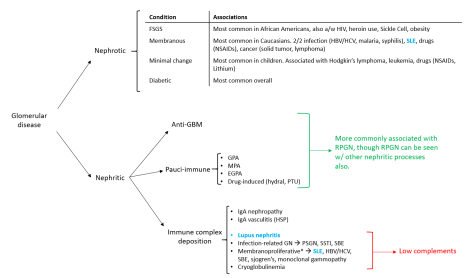
Approach to glomerular disease:

Capture
* can be nephritic or nephrotic

Chronic Chest Pain and This X-ray… 2/11/2019

Gray Medicine had an interesting case of a 80yo F with history of treated TB (60 years ago), thoracic artery aneurysm s/p recent TEVAR, presenting with 3-4 months history of throbbing chest and back pain. She was admitted one month prior to the same complaint, CXR and CT Cx did not reveal significant pathology other than mild distal TEVAR graft dilatation. She presents 1 month later with worsening chronic chest pain, anorexia, weight loss.

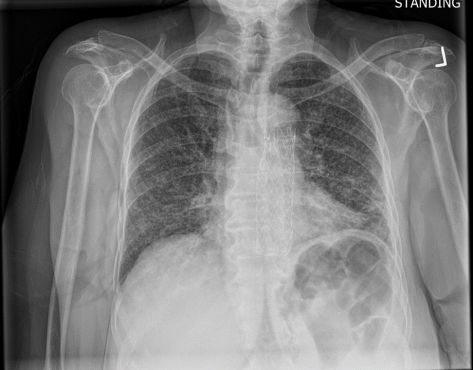
This is the chest X-ray during this current hospitalization…

Miliary.png

Burn this image into your head! This is a classic miliary pattern on a chest radiograph! The term miliary stems from millet seed, a term used to describe a group of small-seeded species of cereal crops or grains

Miliary2.jpg

Subsequent chest CT revealed innumerable bilateral pulmonary nodules, which were not present a month prior.

NewCTScan.gif

Let’s go through possible causes for a miliary pattern on a chest radiograph. In general it can be divided into three categories. The DDx can be quite wide!

Capture.JPG

In our case, given that our patient is an elderly woman with a remote history of treated TB, this presentation is highly concerning for miliary TB leading to reactivation. In general, miliary and disseminated TB are often used interchangeably. Disseminated TB refers to TB that affects at least two organ systems.

The most commonly affects organs are:

  • Lungs
  • Liver/GI
  • Spleen
  • Adrenals
  • CNS

Our patient was placed on airborne, and ultimately her sputum was MTB PCR positive! She has TB!

Presentation of Miliary TB

  • Very common: B-symptoms, FFT, typically subacute to chronic. 80-95% will have a fever.
  • Miliary, unlike typical TB, can present with acute sepsis or respiratory failure.
  • Pain/organ dysfunction based on location of the spread. Basically can affect anywhere. Hepatic TB, 79% of cases are due to miliary TB. Other commonly affected organs are spleen, adrenals, BM, lymphatics, and CNS.
  • Other manifestations: DIC, hyponatremia, pan-cytopenia, 50% cases will have normocytic anemia.

Risk Factors

  • Immunocompromised status
    • HIV
    • Extremes of age (infants, elderly)
    • Immunosuppressives
    • Post transplant
    • Other medical co-morbidities (CKD, cirrhosis, EtOH, etc)

Diagnosis

  • Chest radiograph: Classic faint reticulonodular infiltrate uniformly throughout lungs.
  • CT is more sensitive for miliary TB and usually is recommended. Typical finding might reveal numerous 2-3mm nodules but this is not specific.
  • Tissue, fluid, or lymph node biopsy
  • Gastric aspirate
  • Ultimately combination of clinical diagnosis with support labs/imaging.
  • Gold standard: AFB and culture + MTB PCR
  • All patient should have mycobacterial blood cultures
  • Urine mycobacterial cell wall glycolipid lipoarabinomannan (urine LAM) is a highly specific test with high sensitivity in HIV patients for disseminated TB.

Management

  • Intensive Phase: HREZ (aka RIPE) x 2 months
    • R: Rifampin
    • I: Isoniazid
    • P: Pyrazinamide
    • E: Ethambutol
  • Continuation Phase
    • After, 2 months of HREZ (RIPE), the continuation phase consists of 4 months of isoniazid and Rifampin.
    • Choice of medication and duration will change depending on resistance of the organism and location affected
  • Corticosteroids: Indicated if meninges or pericardium is involved.
  • Make sure to fill out a GOTCH form (not the GOAT form, as someone answered on Kahoot this morning) for Santa Clara County if you have a patient with active TB since a safe dispo will involve multiple disciplines and careful planning!


Amaurosis Fugax 2/5/2019

We presented a case of a 63yo M with 30-pk-yr tobacco use, HTN, HLD, and prior CVD 7 months ago presenting with acute onset vision loss of the left eye, described as “seeing through a black mesh with spots of clear vision.” His symptom lasted for 2 hours before gradually resolving on its own. His cardiovascular and neuro exam were unremarkable, and his fundoscopic exam was normal other some mild AV nicking (a sign found with long standing hypertension). Labs and imaging including CTA did not find any acute etiology. A MR of the orbit was also done without any abnormal findings.

Ultimately pt was diagnosed with transient monocular vision loss (TMVL) most likely secondary to an episode of TIA!


Common things being more common, the most common cause of transient monocular vision loss is ischemia/vascular related!

Ischemic/Vascular Etiology

  • TIA
  • CRVO: Classic painFUL vision loss, flame hemorrhage (blood and thunder descriptor) on fundoscopic exam
    • Acute angle closure glaucoma is the most common factor predisposing to retinal retinal vein occlusion
    • Other risk factors: Sickle cell, HIV, Waldenstrom, sarcoidosis, syphilis
  • CRAO: Classic painLESS vision loss, cherry red spot with retinal pallor is a classic description
  • Carotid artery syndrome (transient retinal hypoperfusion or microemboli)

Neurology Etiology

  • Optic neuritis
  • MS
  • NMO
  • Optic nerve ischemia
  • Increased ICP

Inflammatory Etiology

  • GCA
    • Association with polymyalgia rheumatica
    • Typical patient demographics: Age > 55, F > M (2:1), Scandinavian/Northern European ancestry
    • Other associated sx: Fever, headache, jaw claudication, scalp tenderness
    • ESR and CRP typically elevated but this is NOT always the case!

Other

  • Glaucoma
  • Idiopathic
  • Smart phone use in the dark (I am not kidding), please see this article for more details

Management of TIA

In addition to treating risk factors i.e. HTN, HLD, DM2, a question often came up…

To DAPT or not DAPT?

CHANCE, a multicenter, randomized, placebo-controlled trial published in 2013 (Wang et al.) in the NEJM, revealed that DAPT within 24 hours after a TIA or mild ischemic stroke is beneficial in reducing 90-day stroke risk without an increase in bleeding complications vs aspirin monotherapy. This study was done in China with a patient population with higher incidence of undertreated modifiable risk factors and greater cerebral vascular disease burden, hence its applicability to an American patient population is unclear.

Then the POINT trial came along funded by the NIH, which saw the same benefit in DAPT after TIA/ischemic stroke but with increased bleeding risk compared to aspirin monotherapy.

Bottomline: CHANCE indicates 21 days of DAPT post TIA/ischemic stroke is helpful without increasing bleeding risk, and in POINT, 90 days of DPT is also beneficial but it increases bleeding risk. Per 2018 AHA/ASA guideline:

  • In patients presenting with minor stroke, treatment for 21 days with dual antiplatelet therapy (aspirin and clopidogrel) begun within 24 hours can be beneficial for early secondary stroke prevention for a period of up to 90 days from symptom onset.

Recurrent AIDP vs CIDP vs sensory GBS variant 2/4/2019

Thank you Julie for presenting a case of a 27yo F with a history of Guillain Barre syndrome 2 years ago, requiring 1 year of rehab but now with full neurological recovery, presenting with numbness and tingling of her lower extremities and her hands. Her symptoms are described as “ants crawling” on her skin, which started at her feet but became progressively more superior. Also endorses involvement of her hands as well later on. She has no recent illnesses and she has no illicit drug use. Her first episode of GBS started out very similarly, hence she was concerned.

EMG revealed a primarily demyelinating polyneuropathy affecting motor > sensory nerves predominantly in the lower extremities… but wait, does it even fit her symptoms, which are primarily sensory (although mild subjective weakness)???


We will use this case to illustrate that there is a spectrum of Guillain Barre!

GBS

Epidemiology

  • All age groups affected but risk increases with more advanced age
  • M > F slightly
  • Most commonly associated with after an episode of campylobacter jejuni infection.
  • Other culprits: VMC, EBV, HIV, Zika virus, Mycoplasma.
  • Rare cases of GBS can happen after a triggering event, i.e. immunization, surgery, BMT.

Pathophysiology

  • Immune response to a preceding infection that cross-reacts with peripheral nerve leading to demyelination (a form of molecular mimicry)
  • Note that there are two forms of peripheral neuropathy:
    • Axonal
      • Pathophys: Disruption of the axon itself, typically presents with motor >>> sensory deficits.
      • DDx: HIV, amyloidosis, B12 deficiency, Lyme disease, hypothyroidism, critical illness polyneuropathy, variant of GBS
    • Demyelinating
      • Pathophys: Disruption of the myelin sheath, slowing nerve conduction velocity. Both sensory and motor deficits would be present.
      • DDx: GBS (classic), hereditary, infectious, drugs, certain monoclonal gammopathies.
  • Picture1.jpg

Variants of GBS include but are not limited to…

  • AIDP (Acute Inflammatory Demyelinating Polyradiculoneuropathy)
    • Most common form, (85-90%)
    • Disease activity usually nadirs by 4 weeks
    • Progressive ascending symmetric weakness due to inflammatory demyelination
    • 2-5% may develop CIDP
  • CIDP (Chronic Inflammatory Demyelinating Polyradiculoneuropathy)
    • Disease progression or relapses lasting longer than 8 weeks
    • Most of the time does not have an antecedent/preceding event.
  • Miller Fisher Variant
    • 10-20% of cases
    • Typical presentation: ophthalmoplegia, ataxia, areflexia.
    • 25% will develop some extremity weakness
    • 85-90% of pts with MFS will have GB1b antibodies positivity, strongly associated with involvement of oculomotor nerves.
    • If presence of encephalitis: Bickerstaff encephalitis, possibility a spectrum of anti-GQ1b antibody syndrome.
  • Acute motor axonal neuropathy (AMAN): Axonal form of GBS
    • More rapid progression motor wise but sensory and DTR usually preserved.
    • Most cases preceded by campylobacter infection as well
    • Frequent in Asia and esp in Hong Kong, more prevalent in the summer
    • More severe form is AMSAN (Acute motor and sensory axonal neuropathy)
  • Pharyngeal-cervical-brachial variant
    • “Localized” version of GBS
  • Pure Sensory GBS
    • Primarily sensory deficits with mild motor deficits.

Presentation

  • Timing: Progresses over 2 weeks, most cases start improving by 4 weeks. IF post-infection, sx can develop after days to weeks.
  • Progressive symmetric ascending muscle weakness starting in the lower extremities and then spread upward.
  • 10% of the time, muscle weakness starts in arms or facial muscles.
  • Absent to depressed DTR seen in all cases
  • Respiratory muscle weakness requiring ventilator support in 10-30% of cases
  • 80% of patients will experience paresthesias of the hands and feet accompanying motor weakness.
  • Neuropathic pain.
  • Dysautonomia in 70% of cases (tachycardia, HTN/Hypotension, bradycardia, ileus, urinary retention, arrhythmias, can also see SIADH.

Diagnosis

  • CSF: LP recommended to support dx
    • Elevated protein (45-200 typically but can be as high as >1000 mg/dL) with nrl WBC (albuminocytologic dissociation), seen in 50-66% in the 1st week after onset of sx, >75% of pts in the 3rd
    • CSF cell count typically nrl, < 5 cells/mm3, in a minority of cases can expect to see mild elevation.
  • EMG: Valuable for confirming dx but can be nrl early on the disease course.
  • GQ1b antibody: associated with Miller Fisher variant
  • MRI: Spinal MRI may reveal enhancement of spinal nerve roots and cauda aquina.

Management

  • Secure airway!
    • Predictors of respiratory failure: inability to cough, stand, lift the head, lift the elbows, and liver enzyme elevation.
    • Avoid succinylcholine in intubation, increased risk of hyperkalemia.
  • Supportive care, DVT prophylaxis, bladder/bowel care, PT/OT, pain control
  • Plasma exchange/IVIG is indicated in most cases, speed up recovery.
    • Plasma exchange usually more effective when started within 7 days of sx onset. 4-6 tx over 8 days.
    • IVIG: 0.4g/kg per day x 5 days.
    • IVIG and plasma exchange also recommended for ambulatory patients who are still not seeing improvement of sx after 5 weeks.
  • No role of steroids!

Prognosis

  • Full motor recovery around 60% at 1 year. Recovery can take several years.
  • 2-5% develop CIDP
  • 3-7% mortality rate, 20% of patients who become ventilator dependent die of complications.

Bilateral Panuveitis 1/31/2019

Thanks to Amran for presenting an interesting case of a 84yo M with RA on MTX & Prednisone, and an unspecified self-resolving total body rash 1 month prior to presentation, presenting with pain, redness, and vision in both eyes. Detailed fundoscopic exam was consistent with bilateral anterior granulomatous uveitis as well as retinitis, consistent with a panuveitis picture. Initial work up revealed RPR and EIA positivity, his HLA-B27 also returned positive but he has no other findings suggestive of spondylosing arthropathy. His vitreal centesis returned positive for VZV!

In Summary:

  • Tertiary syphilis without CNS/ocular involvement
  • Panuveitis secondary to VZV
  • Incidental HLA-B27 without e/o ankylosing spondylitis

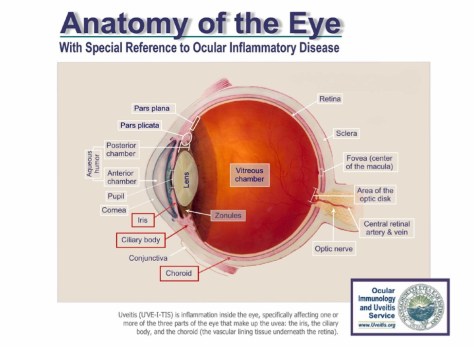
Let’s start off with a basic review of the eye anatomy:

eye

The Uvea consists of the iris, ciliary body, and the choroid. Uveitis is inflammation of any of these structures.

The Standardization of Uveitis Nomenclature (SUN) Working group guidance on uveitis terminology categorizes uveitis anatomically as follows;

  • Anterior uveitis; localized primarily to the anterior segment of the eye, involving iris and pars plicata.
  • Intermediate uveitis; localized to the vitreous cavity and pars plana, presence of WBC in the vitreous.
  • Posterior uveitis; localized to the choroid and retina.
  • Panuveitis; inflammation involving anterior, intermediate and posterior uveal structure

Uveitis can be further classified into granulomatous (presence of macrophages, multinucleated giant cells) vs non-granulomatous. A granulomatous uveitis is typically more likely to be an infectious process (although can still be idiopathic or Sarcoidosis).

Etiology of Uveitis

  • Infectious:
    • HSV:
      • Usually unilateral, might have other clues such as presence of vesicles.
    • Toxoplasmosis:
      • Ocular toxoplasmosis for some reasons occurs more frequently in immunocompetent hosts.
    • Lyme Disease
    • Syphilis:
      • Accounts for less than 1% of cases of uveitis but can affect any part of the eye.
    • TB (Yes ocular TB exists!)
      • Uncommon in North America, suspect in endemic regions and worsening sx with glucocorticoids.
    • CMV:
      • Almost exclusively in immunocompromised hosts i.e. AIDS patients.
      • CD4 < 50 typically.
    • Bartonella (ocular bartonellosis) aka Cat Scratch Disease:
      • Typically unilateral, has a characteristic “macular star” on fundoscopic exam.
    • West Nile virus
    • Ebola (case reports)
    • Zika virus
    • Varicella Zoster Virus: Can affect any part of the eye
  • Non-infectious: Most common = HLA-B27 related arthropathies and reactive arthritis, tends to be unilateral and causes an anterior uveitis picture
    • Sarcoidosis
    • IBD
    • Ankylosing spondylitis
    • Relapsing polychrondritis:
    • Behcets
    • Juvenile idiopathic arthritis
    • Psoriatic arthritis
    • Reactive arthritis
    • TINU (tubulointerstitial nephritis and uveitis) syndrome
      • Uncommon, occurs in adolescent/young F, fever, myalgias, anemia, LFT elevation, chronic uveitis, interstitial nephritis.
    • MS: Optic neuritis
    • Vogt-Koyangi-Harada(VKH)Syndrome:
      • Japanese and Hispanics, bilateral panuveitis, neurological/auditory sx
    • Penetrating trauma
    • Drug-induced:
      • Rifbutin, fluoroquinolone, monoclonal ab
  • Other conditions that might mimic uveitis
    • Retinal tears
    • Ischemia
    • Leukemia
    • Lymphoma
    • Ocular melanoma
    • Pigmentary dispersion syndrome
    • Retinitis pigmentosa
    • Retinoblastoma

Management

  • Treat underlying cause
  • If viral: Anti-virals (acyclovir, valacyclovir), add on topical corticosteroids.
  • Non-infectious uveitis: Management typically with topical steroids. If posterior, some have suggested using difluprednate or periocular glucocorticoid injections. Systemic tx is reserve for pts with bilateral disease, inability to tolerate intraocular injections, or systemic conditions i.e. Behcets.
  • If refractory to steroids in non-infectious causes, can consider MTX, azathioprine, mycophenolate, cyclosporine, or tacrolimus.
  • TNF alpha inhibitors u.e. adalimumab has good evidence in the tx of non-infectious intermediate, posterior, and panuveitis. Can also be considered first line in management of Behcet.
  • Sulfasalazine has been shown in a few small studies to prevent HLA-B27 associated uveitis.

Please refer to this previous blog post for more details on tertiary syphilis!

Cryptogenic Organizing Pneumonia 1/30/2019

Wendy presented a case of a middle age woman presenting with 4-6 weeks history of cough, shortness of breath, subjective fever and chills, non-improving after three courses of antibiotics. She was treated multiple times for presumed atypical CAP (bilateral infiltrates on CXR), and she presented again with worsening respiratory failure. Her infectious work up so far has been negative. CT Cx revealed bilateral infiltrates mainly in the peripheral lower lung zones.


Let’s go over non-resolving pneumonia and “typical pneumonia” for a little bit first.

“Typical” Pneumonia

  • Typically see sx improvement within 3-5 days of appropriate tx.
  • Vitals and O2 requirement expect to improve in 2 days
  • Fatigue and cough may take 2+ weeks to resolve.
  • Radiographic improvement usually takes weeks to months to clear up

If your patient is not improving within an expected time frame, then it’s time to broaden that differential! (The following are just some suggested ddx to consider)

Non-infectious causes (20% of the time)

  • Neoplasm:
    • Bronchogenic carcinoma, endobronchial obstruction secondary to mass effect, lymphoma
  • Inflammatory:
    • Vasculitis: GPA, pulmonary alveolar hemorrhage
    • Eosinophilic pneumonia
    • Acute interstitial pneumonia
    • Bronchiolitis obliterans organizing pneumonia (BOOP) or cryptogenic organizing pneumonia (COP)
      • Subacute, 75% of pts have sx < 2 months prior to diagnosis, flu like presentation initially mimicking an atypical pneumonia, patchy infiltrates also mimics pneumonia on chest radiograph.
    • Sarcoidosis
    • Connective tissue disease
    • Rare: Pulmonary alveolar proteinosis, plastic bronchitis
  • Drug-induced: Amiodarone, nitrofurantoin, chemo
  • PE
  • Pulmonary edema in abnormal lung architecture i.e. severe bullae seen in COPD patients.

Infectious causes

  • Streptococcus pneumoniae PNA: responsible for most cases of non-resolving infectious causes due to complications, i.e. multi-lobar involvement, drug resistance, co-morbidities.
  • Legionella
  • Mycoplasma pneumoniae
  • Chlamydia pneumoniae
    • Risk factors: SNF, military recruits
  • Haemophilus:
    • Risk factors: Elderly, immunocompromised
  • TB: Always on the DDx here.
  • Fungi: Always on the DDx here.
    • Aspergillus
    • Histo
    • Blasto
    • Cocci
    • Crypto
  • Nocardia
  • Actinomyces
  • PJP (HIV history)
  • Löffler’s syndrome
  • Complicated infection
    • Abscess (EtOH, poor dental hygiene at risk for anaerobes), might need prolonged course of abx.
    • Empyema: More likely in younger patients and those with illicit drug use

Diagnostic Approach in non-resolving cases of “pneumonia”

  • Assess for risk factors for delayed resolution, i.e. age, medical co-morbidities, pneumonia severity, and the pathogen involved.
  • If non-resolution, repeat history, assess for clues for atypical pathogen or non-infectious etiology. Ask if you’re treating the right bug if you’re sure that it’s an infectious cause (i.e. fungal?)
  • At this point, consider Chest CT and additional tests as needed. If CT is non-diagnostic, consider:
    • Bronchoscopy with BAL +/- transbronchial biopsy
    • CT-guided FNA if e/o LAD or lesion
    • Last resort: Consider surgical lung biopsy

Cryptogenic Organizing Pneumonia

Pathophysiology

  • Idiopathic diffuse interstitial process affecting distal bronchioles, alveolar ducts + walls leading to alveolar epithelial injury.

Epidemiology

  • Unknown! But pts are typically 40-60s, equally reported in M and F.

Risk Factors

  • Unclear, condition is not that well understood.

Presentation

  • Subacute to chronic cough, dyspnea, fever, malaise, may have an acute flu-like phase followed by a prolonged persistent of milder symptoms.
  • Typically diagnosed as CAP but fail to response to empiric abx.
  • Most common features:
    • Persistent non-productive cough (72%)
    • Dyspnea (66%)
    • Fever (51%)
    • Malaise (48%)
    • Weight loss (57%)
  • Lung exam: Ranging from normal to crackles

Diagnosis

  • Labs: Non specific but 50% of pts p/w leukocytosis, and elevated ESR (>100) and CRP are seen in 70-80%
  • CXR: Bilateral, patchy infiltrates
  • HRCT:
    • Usually reveals patchy air-space consolidations, GGO, small nodular opacities, and bronchial wall thickening. Patchy opacities occur more frequently in the peripheral and lower lung zones.
    • Mediastinal LAD might be present in rare cases
    • Closely resembles chronic eosinophilic pneumonia
  • PFT: Restrictive most commonly. DLCO is reduced in majority of cases, indicating gas exchange abnormalities.
  • Bronchoscopy + BAL:
    • Findings typically non-specific in COP but mainly done to rule out other etiology.
    • BAL: Might see increased lymphocytes, neutrophils, and eosinophils with lymphocytes predominance.
  • Trans-bronchial Lung biopsy: Usually done to ID other disease processes, non-specific findings in COP mimicking ILD.
  • Surgical Lung Biopsy: Will need a large sample

Management

  • No major RCTS so generally tx decisions are based on guidelines, experience, and case series.
  • Mild dz: Observe
  • Persistent symptomatic/worsening:
    • Oral glucocorticoids, usually up to 100mg/day but typically 60mg daily starting, x 4- 8 weeks, then taper over 3-6 months.
    • Serial radiographs
    • Failure to response to steroids:
      • Cyclophosphamide can be considered
      • Cyclosporine
      • Rituximab
    • Long term glucocorticoid dependence:
      • Can consider steroid sparing agents i.e. azathioprine (TPMT level!)
    • Severe, respiratory failure: High dose steroids initially then transition to orals.

Prognosis:

  • 2/3 of pts respond well to glucocorticoids with complete resolution of sx.
  • 1/3 have persistent symptoms and pulmonary abnormalities
  • Overall, better prognosis compared to ILD!

Take Home Points:

  • Typical illness script is a patient (men & women equally) in his/her 40-60s presenting with a chronic pneumonia like clinical picture not improving on antibiotics.
  • Chest radiograph with bilateral patchy infiltrates involving small airways/alveoli wall predominantly seen in the lower peripheral lung zones.
  • Responds well in most cases to corticosteroids, but most cases will need a prolonged course.
  • Check out this article from Chest for more learning!

MS vs NMO!

Thanks to Amran for presenting the case of an elderly woman with history of “transverse myelitis” 10 years ago who presented with b/l leg weakness, numbness, and tingling, found to have several spinal cord enhancements as well as optic chiasm enhacement on T2 FLAIR imaging concerning for MS vs NMO!


Clinical pearls

  • MS and NMO most commonly affect women (2:1 and 10:1 respectively).
  • To meet diagnostic criteria for MS, patients must demonstrate CNS lesions in both space and time via clinical or MRI findings.
  • NMP affects the optic nerve and spinal cord much more so than the brain/brainstem.
  • Presence of AQP4 serum antibodies are specific to NMO.
  • Treatment for acute MS flare or NMO flare involves high dose steroids or plasma exchange.
  • The most effective chronic treatment for relapsing/remitting MS is natalizumab, not effective for NMO and may even be harmful.

Framework for myelopathies:


capture

Demyelinating diseases that present with myelitis:

capture2

Multiple sclerosis:

Epi

  • Most commonly affects young adults
  • Mean age of onset 28-31. Though can present between 15-50
  • Affects women 2:1
  • Life expectance is reduced by ~10 years

Presentation

  • Most common symptoms
    • Sensory disturbances (90%)
      • Numbness, tingling, pins and needles
      • Lhermitte sign (flexion of the neck causes sensation of electric shock that radiates down the spine into the limbs). Can be seen in tumors, cervical disk herniation, and trauma as well.
    • Fatigue and/or sleep disturbance (85%)
      • Unrelated to amount of activity performed
      • Worsened by depression
    • Motor issues and spasticity (80%)
      • Lower extremities most commonly affected
      • Paraparesis, paraplegia
    • Cognitive impairment (70%)
      • Attention, executive function, short term memory
      • Depression (60%) likely contributes
    • Bowel or bladder dysfunction (50-75%)
    • Visual disturbance (25%)
      • Internuclear ophthalmoplegia
        • Lost adduction and horizontal nystagmus of the abducting eye
        • Lesion in the medial longitudinal fasciculus of the brainstem on the side of diminished adduction
        • Convergence is preserved
      • Optic neuritis
        • Unilateral eye pain accentuated by ocular movement
        • Variable degree of visual loss (90% regain normal vision)
  • Characteristic features
    • Different types
      • Clinically isolated syndrome (first attack)
      • Relapsing-remitting
      • Secondary progressive
      • Primary progressive
      • Progressive relapsing
    • Heat sensitivity AKA “Uhthoff phenomenon” (80%)
      • Due to slowing of neuronal conduction with increased body temperature
  • Diagnosis
    • McDonald Criteria (revised in 2017)
    • Clinical or radiographic
    • CSF studies are not indicated unless atypical presentation
  • Treatment
    • Acute episode
      • Glucocorticoids
        • Solumedrol 1 g IV x 3-5 days
      • Plasma exchange
        • If failed glucocortidoids
    • Chronic
      • Disease modifying therapy
        • Good for relapsing-remitting MS

Cavitary lung lesions and SJS/TEN

Today, we discussed the case of a Vietnamese man who presented with chronic cough, 40 pound weight loss, and joint pain, found to have cavitary lesions in his lungs with work up revealing pulmonary TB as well as tophaceous gout on urate-lowering therapy with allopurinol leading to SJS/TEN.


Clinical Pearls: 

  • Cavitary lung lesions have a broad differential (see below) aside from TB.
  • Risk factors for developing SJS/TEN include HIV (100x higher risk), genetics (especially Asians and South Asians), autoimmune diseases, malignancy, and high dose/rapid infusion of offending meds.  Consider genetic testing prior to starting meds associated with this allergy (allopurinol, sulfa drugs, PCNs, AEDs, etc.) in at risk populations.
  • Nikolsky sign can be positive in SJS/TEN, staph scalded skin syndrome, and pemphigus vulgaris
  • Time of onset is 1-3 after starting the offending drug
  • SCORTEN score is useful for determining prognosis
  • Early use of cyclosporine in patients with SJS/TEN has shown significant reduction in mortality.

DDx for cavitary lung lesions

  • Infection
    • Pyogenic (necrotizing pneumonia, septic emboli, lung abscess)
    • Atypical (MTB, fungi)
  • Autoimmune
    • GPA >> RA, sarcoid
  • Malignancy
    • Liquid (lymphoma, KS, lymphomatoid granulomatosis)
    • Solid (squamous, GU>GI)
  • Vascular
    • PE
  • Other
    • Foreign body granulomatosis

SJS/TEN (Steven Johnson vs toxic epidermal necrolysis)

  • < 10% = SJS, > 30% = TEN, in between = Overlap
  • Common causes
    • Sulfa drugs
    • Abx (PCN, quinolones)
    • AEDs
    • Allopurinol
    • Infx: Mycoplasma, graft-vs-host
    • Idiopathic
  • Risk factors
    • HIV (100x higher risk)
    • Genetics
      • There are a lot of them (check on uptodate for specific drugs) but a couple examples are:
        • HLA-B*58:01 (allopurinol)
          • Patients with this positive gene has higher risk for severe cutaneous hypersensitivity reaction to allopurinol including SJS and TEN. High risk Asian populations carrying this gene are Korean, Thai and Han Chinese.
        • HLA-B*15:02 is recommended before starting carbamazepine in Asians and South Asians
        • Cytochrome CYP2C19 polymorphism
    • Autoimmune disease
    • Malignancy
    • High doses and rapid infusion of medications
  • Clinical Presentation
    • 1-3 weeks after offending drug
    • Fever >39
    • Influenza-like symptoms (malaise, myalgias, arthralgias) x 1-3 days
    • Conjunctival itching or burning
    • Odynophagia
    • Cutaneous findings:
      • Acute onset macules over face, trunk, may form flaccid bullae
      • Nikolsky sign:
        • Positive when shear stress on the skin i.e. rubbing results in exfoliation. Indicates a pathology at the dermal/epidermal junction.
        • Positive in
          • SJS/TEN
          • Staphylococcal scalded skin syndrome
          • Pemphigus vulgaris
      • Asboe-Hansen sign (AKA bullae spread sign)
      • Mucous membrane involvement.
        • Eyes, mouth lesions
        • Respiratory sx
  • Prognosis:
    • SCORTEN score
    • Mortality with SJS is 10%, TEN 30%
  • Management
    • Supportive care for skin
    • Pain control
    • IV fluids
    • Prevention of vulvovaginal sequelae
    • Ocular management
      • Evaluate for loss of surface epithelium
      • Opthalmic therapy
        • Saline rinses to remove debris
        • Artificial tears
        • Topical steroids
        • If extensive sloughing, then amniotic membrane transplantation (prokera ring)
    • Adjunctive therapies
      • Steroids: may lead to higher rates of complications
      • IVIG: conflicting data
      • Cyclosporine: one large case series from Spain and two systematic reviews have shown that cyclosporine given at 3 to 5 mg/kg may slow the progression.  Inhibits T cell activation and thus prevents the production and release by cytotoxic T cell and natural killer cells of cytokines that could propagate SJS/TEN.
        • A study on 71 patients of whom 49 were treated with cyclosporine and 22 with other therapies found mortality rates were 10% and 32% respectively.  Expected mortality based on SCORTEN for the cyclosporine group was 24% and 29% in the other group.
        • A 2018 meta-analysis on 255 patients with TEN found that treatment with cyclosporine was associated with a 70% reduction in mortality risk
      • Plasmapharesis
      • Anti-TNF

Bonus info on gout:

  • Acute flare:
    • Steroids
    • NSAIDs
    • Colchicine (avoid in severe renal or hepatic impairment or with meds that inhibit CYP450 system)
  • Indications for urate-lowering therapy for chronic treatment
    • Frequent or disabling gout flares
    • Clinical or radiographic signs of joint damage
    • Tophaceous deposits in soft tissues or subchondral bone
    • Gout with renal insufficiency (CrCl<60)
    • Recurrent uric acid nephrolithiasis
    • Urinary acid excretion >1100 mg/day)
  • Goal uric acid is <6mg/dL
  • Agents for chronic management
    • Xanthine oxidase inhibitors
      • Allopurinol, lower dose for CKD3 or higher renal disease
      • Febuxostat, very expensive, cardiovascular and hepatic side effects
    • Uricosuric drugs: ineffective if CrCl<50. Can worsen kidney injury. Avoid use if GFR <30
      • Probenecid
      • Lesinurad
    • Uricase
      • Pegloticase, fast improvement of symptoms, contraindicated in G6PD deficiency