Category Archives: Morning Report

Endocarditis – 7/17/17

Risk Factors for developing Endocarditis

  • Dental procedure that penetrates the gums
  • Prior endocarditis
  • Prosthetic valves
  • IVDU
  • Immunosuppression

Common Organisms

  • Staph
  • Strep
  • Enterococcus
  • HACEK

Symptoms/Signs

  • Fever (most common)
  • Murmur
  • Splinter hemorrhages
  • Janeway lesions (non-tender erythematous macules on palms and soles)
  • Osler nodes (tender, subcutaneous nodules, on pads of fingers and toes)
  • Roth spots (exudative edematous hemorrhages in the retina)

Indications for surgical repair

  • New heart failure
  • Perivalvular abscess/extension
  • Conduction abnormalities
  • Persistent bacteremia
  • Prosthetic valves
  • Septic emboli
  • Large vegetation > 10-15 mm
  • Resistant organisms


Myasthenia Gravis 07/13/2017

  • Definition
    1. Two clinical forms of myasthenia
      1. Ocular
        • Limited to the eyelids and exraocular muscles
      2. Generalized
        • Affects the ocular muscles and variable combinations of bulbar, limb, and respiratory muscles
  • Pathogenesis
    1. Auto-antibodies directed against acetylcholine receptors (AChR)
      • Autoantibodies are present in 90% of patients
  • Epidemiology
    1. Can happen at any age, but there is a Bimodal distribution
      1. Early peak –> 20-30s
        • Female predominance
      2. Late peak –> 60-80s
        • Male predominance
  • Presenting symptoms
    1. Occular symptoms (Ptosis and/or diplopia) –> 50% of patients
    2. Bulbar Sx (dysarthria, dysphagia, fatigable chewing –> 15% of patients
    3. Muscle weakness that worsens throughout the day
    4. Respiratory muscles
      1. Most feared symptom –> Can lead to respiratory failure (“myasthenic crisis”)
  • Diagnosis
    1. Bedside tests
      1. Ice pack test
        • Bag of ice is placed on the eyelid for 2 minutes then removed. –> Improvement in ptosis is measured
        • 80% sensitivity
      2. Tensilon (Edrophonium) test
        • 2mg doses of edrophonium are given –> improvement in symptoms measured
    2. Lab tests
      1. Two Auto-antibodies:
        • Acetylcholine receptor antibody (AChR-Ab)
          • Present in 85% of patients with generalized disease
        • Muscle specific receptor tyrosine kinase (MuSK)
          • Present in up to 50% of patients who are AChR-Ab negative.
    3. Electrophysiological studies
      1. Repetitive nerve stimulation (RNS)
        • 75% sensitive
        • Most frequently used due to wide availability
      2. Single-fiber EMG
        • Used if RNS is negative because it is 95% sensitive
        • Less widely available
  • Associated conditions
    1. Thymic tumors
      1. 75% of patients with AChR-antibodies have thymic abnormalities (70% hyperplasia vs 10% thymoma)
      2. CT vs MRI to evaluate
    2. Autoimmune disorders
      1. Thyroid disease (5%)
      2. RA
      3. SLE
  • Treatment
    1. Acetylcholinesterase inhibitors
      • Pyridostigmine (mestinon)
        • Some patients only need this
        • Cholinergic side effects
    2. Immunomodulator drugs
      1. Chronic immunomodulators
        • Glucocorticoids
        • Azathioprine, mycophenolate, cyclosporine
      2. Rapid
        • Useful in myasthenic crisis or preoperatively before thymectomy à not useful long term
          • IVIG
          • Plasmapharesis
    3. Thymectomy

Alcoholic Hepatitis 07/11/2017

  • Risk Factors
    • Mean intake of 100g/day for 10-20 years
      • Standard drink of ETOH = 14g pure alcohol
        • 12oz beer
        • 5oz wine
        • 5 oz of 80 proof liquor (“Shot”)
    • Binge drinking
      • Men = 5 drinks in 1 sitting
      • Women = 4 drinks
  • Pathophysiology
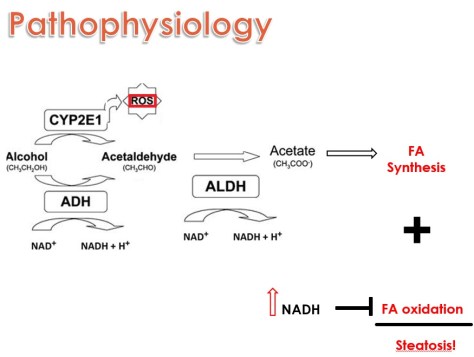
    • Standard alcohol metabolism in cells
      • Alcohol dehydrogenase (ADH) plus cytochrome P-450 2E1 (CYP2E1) convert ethanol into acetaldehyde which is then converted to acetate
      • CYP2E1 releases reactive oxygen species leading to inflammation
      • NAD+ is used as oxidizing agent for ADH and is converted to NADH
        • Excess alcohol creates an imbalance of NAD/NADH
        • Excess NADH decreases oxidation of fatty acid oxidation
      • While acetate increases fatty acid synthesis
        • Both leading to steatosisAlcoholic hepatitis mechanism
  • Presentation
    • Pts often present between 40-50 years of age
    • Classic presenting features
      • Jaundice
      • Scleral icterus
      • Anorexia
      • Fever
      • Tender RUQ
      • Hepatomegaly
      • Abdominal distention due to ascites
      • Hepatic encephalopathy
      • Bruit can be appreciated over the liver due to increased hepatic blood flow

Labs

  • LFTs
    • Moderate elevations of AST and ALT
      • Usually less than 300, rarely higher than 500
      • AST:ALT ratio >2
        • ALT is less due to alcohol induced deficiency of Pyridoxal 5-phosphate, which is a coenzyme of ALT. Thus the ratio reflects the failure to appropriately increase the ALT, rather than an inappropriate increase in AST.
      • Elevated Tbili and Dbili
  • CBC
    • Leukocytosis (usually <20) with a neutrophil predominance
      • Extreme Leukemoid reaction (>50) is associated with a very poor prognosis.
    • Macrocytosis
      • Reflective of poor nutritional status
    • Thrombocytopenia
    • Coags
      • Elevated INR
  • Imaging (show pics!)
    • 1st choice: Abdominal ultrasound
      • It’s quick, easy, and relatively cheap
      • Will help rule out Budd-Chiari, abscess, obstruction, or neoplasm
      • Will show fatty changes in liver vs underlying cirrhosis
  • Maddrey Discriminant Function
    • DF >32 signifies severe alc hep and is associated with high short-term mortality
      • May benefit from glucocorticoid therapy
  • Treatment
    • 3 main things
      • Alcohol cessation
      • Nutritional support
      • Steroids
        • Contraindicated for:
          • GI Bleed
          • Infection
          • Renal failure
          • Pancreatitis
        • Check Lille Score on day 7 to evaluate response
          • >.45 is associated with 6-month survival of 25% –> ok to stop steroids
          • <.45 is associated with 85% survival
    • Pentoxyfilline –> little evidence!
      • The Steroids or Pentoxifylline for Alcoholic Hepatitis (STOPAH) trial was just published in the New England Journal in 2015.
        • They found a significant 28 day mortality benefit for prednisolone with an odds ratio of .61.
          • However, the mortality benefit was lost at 90 days and 1 year
        • On the other hand, pentoxifylline did not improve survival compared to placebo

AM Report 7/10/17 – Falciparum Malaria

  • Most dangerous form of malaria – highest number of deaths
  • Transmitted by the female Anopheles mosquito (females feed on blood, males feed on nectar)
  • Most commonly seen along in Southeast Asia, Latin America, and Africa
  • Two phases – liver and RBC phase
  • Symptoms:
    • Temperature paroxysms (alternating fevers and chills)
    • Headache
    • Diarrhea
    • Jaundice
  • Considered severe infection if evidence of end organ damage (Falciparum is sticky and can cause ischemia and infarcts as the RBCs get more viscous!)
    • Cerebral malaria – ischemia/infarcts in the brain
    • ARDS
    • Nephropathy
    • Hypotension
  • Physical exam findings:
    • Hepatomegaly (from the parasite replicating in the liver)
    • Splenomegaly (from the spleen taking up the damaged RBCs)
    • Pallor
    • Jaundice and scleral icterus
  • Diagnosis:
    • Thick and thin smears
      • Thick smears give a look at the RBCs in an overall sense to figure out if a parasite is present – are there parasites? If yes, look at thin smear.
      • Thin smears give a closer look at the TYPE of parasite – what type of parasite is it?
    • Rapid detection test – blood test which looks at enzymes on the various parasites to determine the type – only available at certain hospitals
  • Treatment:
    • Start immediately!
    • Determined based on the type of plasmodium, whether the malaria is severe or not, and whether the organisms are from an area with high resistance
    • Use 2-3 medications for treatment – consult ID immediately once you have a suspicion!
  • Prophylaxis
    • Given to anyone going to an endemic area – start a few weeks before travel, continue during travel, and continue for some time after returning depending on the medication
    • Wear long sleeves and pants
    • Use DEET

AM report 05/18/17 Chronic pancreatitis, Auto-Immune pancreatitis and IgG4 related disease

Etiologies of Chronic Pancreatitis (progressive inflammatory changes in the pancreas that result in permanent structural damage and histologic fibrosis)

Alcohol abuse (45 %) as well as cigarette use
-Recurrent acute pancreatitis
Genetic (eg: CFTR, SPINK mutations)
-Chronic ductal obstruction
-Systemic diseases (eg: SLE, hyperparathyroidism, hypertriglyceridemia)
-Idiopathic
AUTOIMMUNECan be Type 1 (part of IgG4 disease) vs. Type 2 (idiopathic duct-centric pancreatitis without systemic involvement or IgG4 +) 

Clinical manifestations of chronic pancreatitis

-Can be ASYMPTOMATIC
Epigastric abdominal pain most common symptom however
Pancreatic insufficiency (only after 90 % of pancreatic function lost) and manifests as steatorrhea and glucose intolerance/diabetes
-Remember that chronic pancreatitis puts you at increased risk for PANCREATIC CANCER

Lab/Imaging

-Amylase/Lipase usually NORMAL so not as helpful
72 hour quantitative fecal fat (steatorrhea alone is non-specific!)
Fecal elastase has high sensitivity and specificity for chronic pancreatitis
-KUB can show calcifications hinting towards chronic pancreatitis and MRCP/ultrasound can show pancreatic duct obstructions, dilations, strictures or fluid collections

Treatment

-Alcohol and smoking cessation!
-Creon supplementation, may also need fat-soluble (A,D,K,E) supplementation
-Analgesics for abdominal pain which is extremely hard to control. Minimize opioids but may be necessary for refractory pain.
-Specialized approaches include celiac nerve blocks, endoscopic surgery and surgical resection

IgG4 related disease

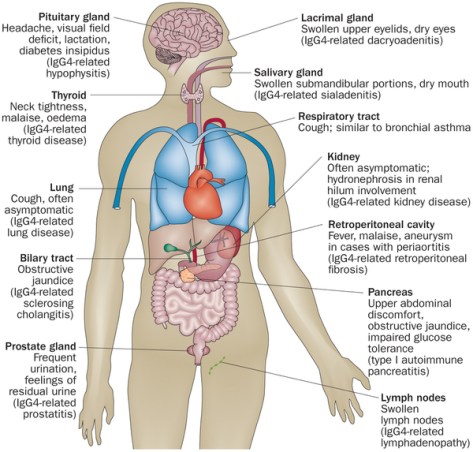
Inflammatory and Fibrotic systemic condition where organs have tumefactive (swelling), IgG4 positive lymphoplasmacytic infiltrate with often elevated IgG4 serum levels but not always

Clinical manifestations of IgG4 related disease

Pancreatic involvement (manifests as pancreatic mass which can mimic CANCER, recurrent pancreatitis, strictures etc.)
Biliary involvement (biliary strictures leading to obstructive jaundice as well as sclerosing cholangitis)
-ANY organ can be affected (eg: thyroiditis, interstitial nephritis, salivary involvement) Diagnosis and Treatment
nrrheum.2013.183-f1

http://www.nature.com/nrrheum/journal/v10/n3/full/nrrheum.2013.183.html

Diagnosis
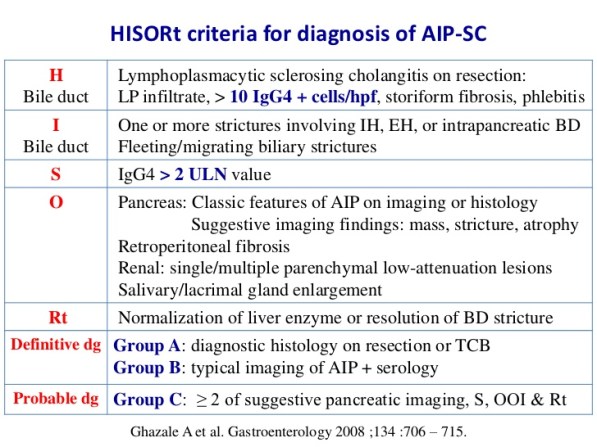
-Diagnosis is made with the HISORt criteria (need at least one criteria)-see below
autoimmune-pancreatitis.jpg

Treatment is with STEROIDS and may need immunomodulating therapy depending on clinical course.

Further reading

NEJM article on IgG4 related disease 
AM Report 05/16/17 Syncope and Long QT syndrome

Syncope

-Defined as ABRUPT and TRANSIENT loss of conscious associated with loss of postural tone followed by complete and RAPID spontaneous recovery
-Before you start working up syncope, make sure it is not a mimic like a seizure!

How do you make the diagnosis?

-Keep in mind that the majority of syncopal episodes are of unknown etiology but the most common known etiology is neurocardiogenic or vasovagal syncope. Despite what you saw on that episode of Scrubs, this type of syncope is not diagnosed with a blood test
-A detailed H&P makes the diagnosis in about 50 % of patients with syncope, especially focusing on whether it was EXERTIONAL, Prodromal symptoms, changes in position during event, FAMILY HISTORY of sudden cardiac death, and any associated cardiac symptoms. 
Check orthostatics and EKG on everyone (still low yield but minimal cost and EKG can help you look for more dangerous etiologies)
Telemetry is reasonable and recommended if you suspect a cardiac etiology for the syncope based on the H&P and EKG

-Do NOT get brain imaging (CT/MRI) in simple syncope as the yield is extremely low unless high suspicion for intracranial mass 
-Echocardiogram and carotid ultrasound are also extremely low yield unless EKG or exam shows concerning features (eg: ejection murmur on exam concerning for AS, young male with severe LVH concerning for HOCM, bilateral carotid bruits)
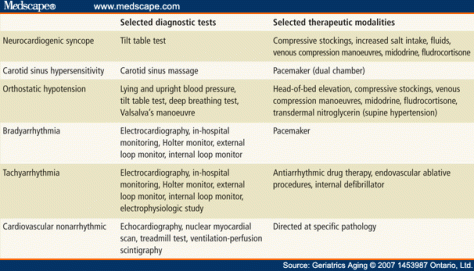
-See below for common causes of syncope, diagnostic testing, and treatment (from Medscape)

syncope
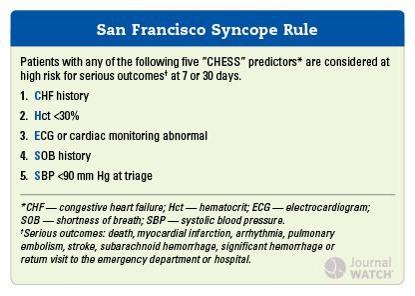
What is the San Francisco Syncope Rule?

-One of the many prognostic rules to look at whether someone is at high risk for serious outcomes and may need to be admitted if they meet ANY of these criteria
-If they meet NONE of the criteria with no other obvious source of syncope (eg: melena on exam),  high NPV for serious outcomes from syncope at 7 or 30 days.

syncope rule

Conditions to look out for on an EKG of a young patient with Syncope

-HOCM
Long QT syndrome (acquired or congenital) as increased risk of Torsades
-Brugada Syndrome
-Arrhythmogenic right ventricular dysplasia (ARVD)
-Arrhythmias
-Tachyarrhythmias (esp. VT but also WPW)
-Bradyarrhythmias (eg: heart block)

Workup of suspected LQTS

-Rule out secondary etiologies of prolonged Qtc (long list but includes many electrolyte abnormalities as well as DRUGS). BRADYCARDIA prolongs the QT interval.
-LQT1-LQT13 genetic testing as determining genotype can affect clinical course
-GXT testing to look for arrhythmias as well as monitor QT interval (normally decreases with increased HR but not always in LQTS)

Treatment

Beta Blockers FIRST LINE but at higher risk for heart block
-Keep Mg and K at normal limits to avoid Qtc prolongation, avoid drugs that can worsen prolongation
-PPM, left cardiac sympathectomy, and AICD may be needed
-Referral to center with radiofrequency catheter ablation.

AM Report 05/02/17 Lupus Nephritis and Review of Glomerulonephritis

Glomerulonephritis (basic breakdown)

-Can be acute, chronic, or due to RPGN

  1. Anti-GBM  disease 
  2. Pauci-immune GN
    1. GPA
    2. EGPA
    3. MPA
  3. Immune Complex GN
    1. Systemic involvement
      1. SLE
      2. Endocarditis
      3. Cryoglobulinemia
      4. HSP
    1. Isolated Renal
      1. IgA Nephropathy
      2. IRGA (Infection Related GN)
      3. MPGN

Clinical presentation of Glomerulonephritis

Hematuria
Dysmorphic RBC or RBC casts
-Sub-nephrotic range usually (but can be nephrotic range) proteinuria often with renal failure
-HTN
-Edema

How do you distinguish the etiology of an immune complex GN? 

                                      Check COMPLEMENT levels!

Diseases with LOW complement

  1. SLE (low C3 and C4 and often + ANA Anti-dsDNA)
  2. Cryoglobulinemia (Low C4 and C4, often associated with HCV with + Cryo)
  3. Endocarditis (Low C3, RF for endocarditis, fever, + BC etc.)
  4. IRGA (usually low C3, now always PSGN and Staph related GN is just as common now)-classic teaching is that PSGN occurs weeks after infection but can occur concurrently with infection with other etiologies such as Staph!)

Diseases with NORMAL complement

  1. HSP (only systemic IC disease with normal complement)
  2. IgA nephropathy (often compared to PSGN which has low complement and usually occurs weeks after infection later than with IgA nephropathy)

Lupus Nephritis

-Making the diagnosis of Lupus is commonly done using the SLICC criteria (see below).

SLICC

-While not part of the criteria, SPLENOMEGALY can be seen with SLE like our patient and should make you suspect SLE!
-There are SIX classes of Lupus Nephritis and biopsy is important to guide therapy
-Nearly everyone with SLE requires a renal biopsy EXCEPT those with

  1. Protein excretion <500 mg/day
  2. Bland urine sediment (no dysmorphic RBC, RBC casts)
  3. Normal creatinine

AM Report 04/11/17 Infectious Mononucleosis

Classic Triad of Infectious Mono

-Fever
-Pharyngitis
-Lymphadenopathy

*Most common symptoms however are MALAISE and SORE THROAT. Less common but if you see Palatal Petechiae, think about Mono!

Epidemiology

-Most common in adolescents aged 10-19 but can be seen in adults as well

Etiology

-EBV (Epstein Barr Virus)-90-95 % people are EBV seropositive but long latency period.
-Spread by Saliva and sexual transmission (not just the kissing disease)

Diagnosis

-Heterophile antibodies (Monospot is using Horse RBC agglutination)
Sensitivity=85 % while Specificity=97-100 % (can be falsely negative up to 25 % in first week so VCA may be more helpful)
-VCA (Viral Capsid Antigen) IgG, IgM
-Peripheral smear may show >50 % lymphocytes with atypical lymphocytes (see below)

atypical lymphocytes
Signs and Symptoms 

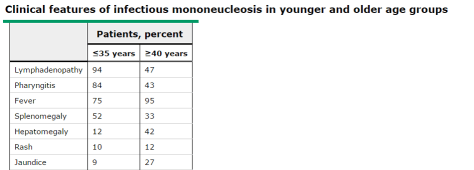
Presentation differs depends on whether young or old as those in older groups have more atypical presentations (see below) including neutropenia and severe infection like our patient had!

ebv
UpToDate

Differential Diagnosis

Always keep Acute HIV infection in mind if you are thinking Mono but also includes Strep pharyngitis, Acute CMV, Toxoplasmosis, and Viral Pharyngitis.

Treatment

-Supportive care, hydration, NSAIDs/APAP use PRN
-No benefit to support routine use of H2 blockers, Acyclovir, or steroids although Acyclovir can decrease shedding time of virus
-4 weeks no contact sports (due to very low risk of splenic rupture) but they do NOT need to be on bed rest.
-Avoid ampicillin/amoxicillin as can classically cause a morbilliform rash

Further reading

NEJM article on Infectious Mononucleosis