Category Archives: Morning Report

Gradenigo Syndrome

Thanks to Amit for presenting the fascinating case of a middle-aged woman with history of DM2 who presented with subacute onset of unilateral periorbital pain, L CN 6 palsy, and L otorrhea, with MRI findings of petrous apicitis consistent with the super rare Gradenigo syndrome!


Clinical Pearls

  • Gradenigo syndrome is a rare and life threatening complication of otitis media and involves inflammation of the medial aspect of the temporal bone, specifically the apex of the petrous bone (a pyramid shaped bone jutting medially from the temporal bone)
  • Gradenigo is clinically characterized by a triad of otorrhea, diplopia (due to CN6 palsy), and hemifacial pain (CN5 palsy).
  • This is a very rare complication since most cases of otitis media are treated with antibiotics early on.
  • Remember that a common cause of an isolated CN 6 palsy in a diabetic patient is diabetic neuropathy/ophthalmoplegia.  A patient who has more cranial nerves affected than CN6 alone, you should be concerned about cavernous sinus thrombosis.

Gradenigo syndrome:

  • First described in 1904 by Guiseppe Gradenigo.
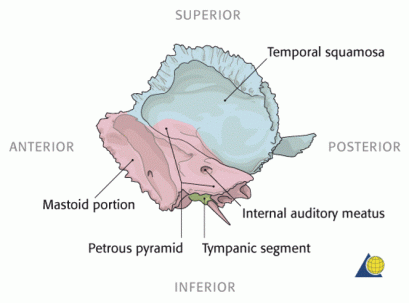
    Petrous pyramid
    Source: AO Surgery Reference
  • A rare and potentially life threatening complication of otitis media involving the inflammation of the apex of petrous pyramid (medial aspect of temporal bone). Occurs any time between 1 week to 3 months after acute otitis media (AOM) and up to 3 years after chronic suppurative otitis media (CSOM).
    • Should suspect this syndrome any time there is CN 6 palsy in the setting of otitis media, whether acute or chronic
  • Clinically, Gradenigo syndrome is characterized by triad of ear discharge, diplopia, and hemifacial pain
    • Suppurative otitis media (ear discharge and pain)
    • Trigeminal neuralgia involvement causes pain in the distribution of the nerve manifested as hemicranial headache and hemi-facial pain
    • Abducens nerve involvement causes ipsilateral lateral rectus palsy and lateral gaze palsy
  • Infection spread from suppurative otitis media to the petrous apex may be via pneumatized air cell tracts, through vascular channels, or as a result of direct extension through fascial planes
  • Organisms are not well studied but the most common one appears to be pseudomonas.  Staph, strep, pneumococcus, and TB have also been reported.
  • If left untreated, it can result in serious complications such as meningitis, intra-cranial abscess, sinus thrombosis
  • Treatment
    • Broad spectrum antibiotics IV for up to 6 weeks (to treat a presumed temporal bone osteomyelitis)
    • Fluoroquinolone ear drops
    • Tight glucose control
  • Differential diagnoses to consider:
    • Cavernous sinus thrombosis
      • Headache
      • cavernous sinus thrombosis
        Source: UpToDate

        Papilledema

      • CN palsies (see picture of what runs through cavernous sinus)
    • Ophthalmoplegic migraine:
      • Rare condition, often manifests in children and young adults
      • Diagnosis of exclusion
      • Most commonly affects CN3 (but can go to CN4 and CN6 as well)
      • Can sometimes precede the headache
      • Review article here
    • Diabetic ophthalmoplegia
      • Common cause of isolated CN6 palsy
    • Neoplasms
      • Nasopharyngeal cancer
      • Plasmacytoma
      • Pituitary adenoma
      • CN6 neuroma
      • Skull base tumors
      • Sohenoid sinus tumors
      • Squamous cell
    • Stroke
    • Demyelinating diseases
    • Vasculitis
    • Idiopathic intracranial hypertension

Complications of acute otitis media

  • Intratemporal
    • Tympanic membrane rupture (leads to hearing loss and pain relief!)
    • Labrynthitis (nausea, vomiting, tinnitus, vertigo)
    • Mastoiditis
    • CN palsies (including Gradenigo syndrome)
  • Extratemporal
    • Epidural, subdural, and brain abscesses
    • Skull base osteo
    • Otitic hydrocephalus (without meningitis or brain abscess)
    • Otitic meningitis
    • Lateral sinus thrombosis
Chylothorax Secondary to Follicular Lymphoma 12/13/2018

Tim presented a young man with no medical history presenting with a chronic cough with intermittent trace hemoptsis. Other than this cough and mild shortness of breath when he exerted himself, this pt had no other symptoms. A CXR revealed bilateral pleural effusion, and upon thoracentesis, milky fluid drained out with an elevated triglyceride content consistent with a chylothorax. Subsequent biopsy of a lymph node revealed a diagnosis of follicular lymphoma!


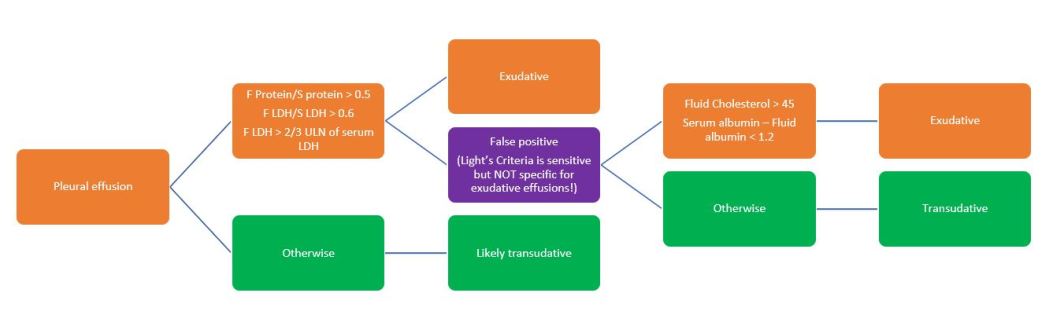
Since we are talking about pleural effusion, Light’s Criteria will inevitably come up. For both real life (and boards!) purposes, know this criteria really well!

Light Criteria:

  • SENSITIVE but NOT SPECIFIC for exudative effusions.

Capture

Any one of these criteria = exudative

  • Fluid protein/Serum protein > 0.5
  • Fluid LDH/Serum LDH > 0.6
  • Fluid LDH > 2/3 upper limit of normal of serum LDH

False positive is possible in certain settings:

  • Chronic diuretic use can falsely elevate fluid LDH (KNOW THIS)
  • Transudative effusion that’s been sitting there chronically can appear exudative like

The following tests can help us distinguish between a falsely positive exudative effusion from a true exudative effusion:

  • Pleural cholesterol > 45 mg/dL has high sensitivity and specificity for exudative effusions.
  • Can also use serum albumin – fluid albumin < 1.2g/dL to confirm exudative effusion

Pleural Fluid Analysis: Clues

Upon performing a thoracentesis, certain characteristics can potentially give us some clues to the etiology of the effusion…

Fluid Color

Capture2.JPG

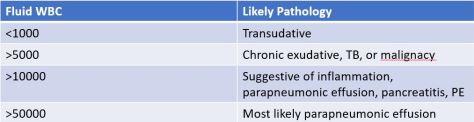
Fluid WBC Count

Capture3.JPG

Fluid Predominant Myelocyte Type

Capture4


Lastly, how do you diagnose a chylothorax and what are some potential causes?

Chylothorax

  • Definition: Triglyceride > 110 mg/dL = slam dunk
    • 50 – 110: Less clear, cannot rule out, obtain liproprotein analysis. If presence of chylomicron is detected, likely chylothorax
    • < 50: Less likely
  • Non-traumatic
    • Malignant: Lymphomatous is most common, can also be other cancers i.e. lung, mediastinal mets, sarcoma, leukemia
    • Non-malignant: Idiopathic, benign tumors, protein losing enteropathy, thoracic aortic aneurysm, TB, Sarcoid, amyloidosis, thyroid goiter, tuberous sclerosis, congestive heart failure, mitral stenosis
  • Traumatic
    • Surgical is most common
    • External trauma
    • Trivial “trauma:” Stretching while yawning, coughing, hiccupping, sneezing (I’m not kidding)

Management of a malignant pleural effusion, as seen in this case, can be potentially challenging. After the patient was discharged, his pleural effusion on the right recurred within 3 days and completely filled up his right lung!

Several options are available for management of malignant pleural effusions. The decision is complicated and will goals of care discussion

  • Indwelling pleural catheter
    • Advantage: Pt managed, can drain at home
    • Disadvantage: Catheter related complications
  • Pleurodesis
    • Talc, slurry or poudrage, is the preferred agent. 60-90% success rate in reducing recurrence at 30 days.
    • Doxycycline can also be used but not as popular any more
    • Advantage: Eliminates the potential space for fluid reaccumulation
    • Disadvantage: Pain, potential for surgical failure, invasive
  • Combination: Talc + IPC
  • Pleurectomy


Leukocytoclastic vasculitis

Today, we talked about the case of a middle-aged man with history of diabetes, HTN, and A fib who presented with acute onset of progressive painful palpable purpura on his extremities, found to be cutaneous small vessel vasculitis on skin biopsy!


Clinical Pearls

  • Purpura implies problem at the level of vessel.  It can be divided into
    • Non-palpable purpura: petechiae (<3mm) or ecchymoses (>3 mm) and are usually associated with disorders of coagulation and platelets.
    • Palpable purpura: suggests inflammation and possible vasculitis.

Nomenclature:

  • Cutaneous small vessel vasculitis: disease limited to skin without any systemic vasculitis or glomerulonephritis
  • LCV: histopathologic term defining vasculitis of small vessels
  • Hypersensitivity vasculitis: small vessel necrotizing vasculitis
  • Immune complex small vessel vasculitis: associated with immune complex and/or complement deposition. If limited to skin, this is identical to cutaneous small vessel vasculitis. If not limited to skin, then other etiologies like cryo, SLE, Sjogren, RA, anti-GBM, IgA, etc.

Approach to purpura

Approach to purpura

  • Hypersensitivity (in the normal complement category of vasculitis) can result from medications/drugs as well as certain conditions such as HIV.
    • Numerous meds can cause LCV including some common ones such penicillins, cephalosporins, sulfonamides (including most loop and thiazide-type diuretics), phenytoin, and allopurinol have been most often implicated

Cutaneous small vessel vasculitis:

Clinical presentation:

  • Palpable purpura
  • + petechiae
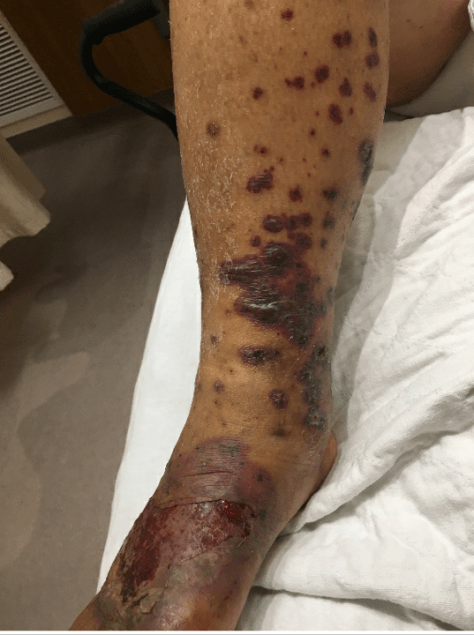
  • Lesions can coalesce, ulcerate or be surrounded by hemorrhagic bullae
  • No visceral organ involvement in CSVV. However, it can occur later in the disease course.

Diagnosis:

  • Start with checking serum complement levels to guide your need for further laboratory work up!
  • Skin biopsy

Management and Prognosis:

  • Usually self limited and resolved within 2-4 weeks
  • If uncomplicated:
    • NSAIDs
    • Antihistamines
    • Rest, elevate, compression stockings
  • If complicated (presence of hemorrhagic blisters, cutaneous necrosis, or ulceration can lead to secondary infections, chronic wounds, and scarring)
    • Systemic glucocorticoids (oral steroids): pred 0.5 mg/kg of ideal body weight until new lesion formation ceases, then taper over 3-6 weeks
    • If relapse with prednisone: then colchicine or dapsone
    • If refractory: then azathioprine, methotrexate, and MMF

Example of palpable purpura with hemorrhagic blisters:

LCV skin example

Hypercalcemia

Today, we discussed the case of a middle-aged woman with no significant medical history who presented to PCP with a month of nausea, vomiting, weakness, and 30 pound weight loss, found to have severe hypercalcemia likely secondary to a granulomatous disease.  Final diagnosis pending biopsy results.


Clinical Pearls

  • The first step in working up hypercalcemia is correcting for albumin.  Keep in mind that patients with hypoalbuminemia may have a falsely low serum calcium level.  Conversely, patients with multiple myeloma who have a high paraprotein serum concentration may have a falsely elevated total serum calcium level.  When in doubt, check an ionized serum calcium to confirm true hypercalcemia.
  • Think of hypercalcemia in two broad categories of PTH dependent disorders and PTH independent disorders (see below).
  • 25-OH vitamin D has a long half life and is the best laboratory test to determine adequate nutritional intake of vitamin D.  In contrast, 1,25OH vitamin D has a short half life.

Calcium homeostasis:

  • Remember that bone is the largest reservoir of calcium in the body.

calcium homeostasis

Source: this NEJM case

Work up of hypercalcemia

  • Remember to confirm true hypercalcemia by correcting for albumin and/or measuring ionized calcium for people with conditions such as multiple myeloma who may have a falsely elevated total serum calcium due to increased paraprotein binding.
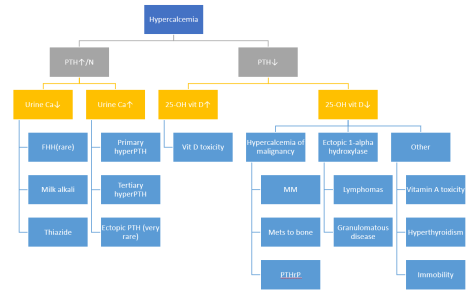
  • Check out this super awesome previous post on hypercalcemia on our blog for more details.  Here is the simplified diagnostic algorithm we went over today:

Hypercalcemia algorithm

Treatment

  • Ca <12
    • No treatment if asymptomatic
    • Avoid exacerbating factors
  • Ca 12-14
    • If chronic/asymptomatic ⇒ same treatment as Ca <12
    • If acute/symptomatic ⇒ same treatment as Ca 14-18
  • Ca 14-18
    • IVF – LOTS!
    • Lasix only if the patient has concurrent renal/heart failure
    • Calcitonin
    • Bisphosphobates
      • Zoledronic acid >> pamidronate for patients with malignancy
      • Do not use in patients with Cr >4.5
    • Denosumab (RANKL) if refractory to zoledronic acid or in patients with severe renal impairment
  • Ca >18
    • Same treatment as Ca 14-18 PLUS
    • Hemodialysis

Treatment options: (table adapted from UpToDate)


Treatment of hypercalcemia

* Only used in patients with renal insufficiency or heart failure, judicious use of loop diuretics may be required to prevent fluid overload during saline hydration.

Vitamin D metabolism

  • Remember the following simplified pathway of vitamin D metabolism

Vitamin D

Source: Hepatitis B Foundation

  • 25-OH vitamin D has a long half-life and the best laboratory test to perform to determine adequacy of nutritional intake
  • In work up of hypercalcemia, it is also important to check 1,25-dihydroxyvitamin D levels.  Why?
    • Remember that 1-alpha hydroxylase is an enzyme in the kidney that converts 25-OH vitamin D into its metabolically active form ⇒ 1,25-dihydroxyvitamin D
    • It turns out that in certain granulomatous diseases and lymphoma, activated monocytes in affected tissues start to express 1-alpha hydroxylase as well, resulting in overproduction of 1,25-dihydroxyvitamin D.
    • So, in work up of hypercalcemia that is PTH-independent, if you notice elevated 1,25-dihydroxyvitamin D with normal 25-OH vitamin D levels, suspect granulomatous disease or lymphoma causing exogenous 1,25-dihydroxyvitamin D  production.

Infected Pancreatic Pseudocyst 12/10/2018

Leah presented a case of a young/early middle age man (45 years old) with a history of NIDDM2 and two prior episodes of pancreatitis (unclear etiology) presenting with worsening abdominal pain for 2 weeks, with associated nausea and vomiting. His appetite has also been poor for the past 3 months, subjectively losing 120lbs over this time period. For the 2-3 days prior to presentation, he started endorsing fever and chills in addition to worsening abdominal symptoms…

CT AP revealed  a necrotizing pancreatitis with large multilocular thick-walled infected pseudocyst with associated phlegmon and serpiginous fluid. Ultimately the patient likely has chronic pancreatitis complicated by development of pseudocyst and walled-off pancreatic necrosis.

Fortunately he is clinically stable, pending endoscopic necrosectomy for definitive management.


Since acute pancreatitis gets all the rage attention, we will actually spend some time on chronic pancreatitis and discuss potential complications from this condition.

Just a quick recap on acute pancreatitis though…

Acute Pancreatitis

Etiology (I GET SMASHED)

  • Idiopathic, IGG4
  • Gallstones (40%)
  • Ethanol (35%)
  • Trauma
  • Steroids
  • Mumps/Malignancy
  • Autoimmune
  • Scorpion stings
  • Hypercalcemia/Hypertriglyceridemia
  • ERCP (4% of pts who undergo ERCP)
  • Drugs (1%, thiazide, Lasix, HIV meds)

Diagnosis: 2/3 required

  • Acute epigastric pain
  • Elevated lipase or amylase 3x ULN, lipase has much better sensitivity and specificity
  • Imaging findings
    • US: 1st line, rule out GS, obstruction
    • CT with con pancreatic protocol: Indicated when suspecting necrotizing pancreatitis or clinical deterioration

General Management Strategies

  • Volume: aggressive fluid resuscitation, 250-500cc/hr
    • LR has improved outcomes vs NS! Check out this and this article.
  • Pain control
  • Nutrition
    • Mild cases: PO within 48 hours, low fat/low residue diet ok
    • Severe cases with organ damage: Start enteral nutrition via NJ or NG if not eating by 3-4 days, early nutrition improves outcome.
      • Consider TPN if unable to tolerate enteral feeding

Chronic Pancreatitis

Definition: Persistent inflammation of the pancreas, resulting in permanent functional and structural damage.

Epidemiology:

  • 50% from alcoholism, M > F, other risk factors include smoking.
  • A type of pancreatitis is more common in kids and young adults patients from tropical regions, known as tropical pancreatitis.
  • Certain genetic disposition

Pathophysiology: Not well understood but there are theories

  • Chronic pancreatic ductal obstruction due to protein plugs from protein-bicarb imbalance, overtime calcifies, overtime leading to fibrosis
  • Necrosis-fibrosis: Repeated attacks of acute pancreatitis with tissue necrosis. Fibrotic tissues gradually replace the necrotic tissue, leading to development of chronic inflammation.

Presentation

  • Might see the classic triad of abdominal pain, diabetes, and malabsorption.
  • Abdominal pain, chronic and often post-prandial, becomes more continuous as disease progresses.
  • Pancreatic insufficiency: steatorrhea, flatulence, distension, weight loss, fatigue, malnutrition

Complications

  • Pseudocyst (can occur 4 weeks after an acute episode or any time with chronic pancreatitis)
  • Bile duct or duodenal obstruction
  • Pancreatic ascites or pleural effusion due to disruption of the pancreatic duct
  • Splenic vein thrombosis, which can lead to gastric varices (which this patient actually has!)
  • Pseudoaneurysms of arteries
  • Inc risk of pancreatic adenocarcinoma. Those with hereditary or tropical forms are at high risk.

Diagnosis

  • XR: May see calcifications but only in 30% of cases
  • CT: also not sensitive, may be normal early on
  • MRCP is better than CT with IV Secretin
  • EUS: High sensitivity, low spec (low rate of false negative, high rates of false positive)
  • Pancreatic function test, usually indirect i.e. serum trypsinogen, 72H fecal fat after a high fat diet (demonstrates steatorrhea but cannot establish cause of the malabsorption), fecal chymotrypsin and elastase concentration)

Treatment

  • Pain control, often difficult, opiates, TCA, SSRI, gabapentin have been used with mixed results
  • Pancreatic enzyme supplements
  • Diabetes management
  • Smoking cessation, alcohol abstinence
  • Low fat diet (<25g/day) to reduce pancreatic enzyme secretion
  • ERCP

Prognosis: Generally prognosis is pretty poor once you have chronic pancreatitis


Pseudocyst

Epidemiology

  • Usually > 4 weeks after onset of acute episode, 5-16% of cases. Starts out as peripancreatic fluid collection, progresses to pseudocyst beyond 4 weeks.
  • Can occur in both acute and chronic pancreatitis
  • Alcohol use related chronic pancreatitis is associated with highest incidence of pseudocyst formation.

Pathophysiology

  • Encapsulated fluid collection, pseudo because the cyst wall lacks epithelial or endothelial cells.

Presentation

  • Uncomplicated: Asymptomatic to mild pain, can also lead to early satiety, nausea/vomiting
  • Complicated:
    • Gastric outlet or duodenal obstruction
    • Large vessel compression
    • CBD compression
    • Infected pseudocyst (10%)
    • Hemorrhage, UGIB
    • Pancreatico-pleural fistula

Diagnosis

  • CT: Well circumscribed, usually round or oval, homogeneous, all fluid
  • Transcutaneous or endoscopic US
  • ERCP (diagnostic and therapeutic in some cases)

Routine Management

  • Observe, with serial imaging.
    • Likelihood for resolution dec if persistent for  > 6 weeks, e/o chronic pancreatitis, pancreatic duct anomaly is present, or thicker-walled pseudocyst.
  • Supportive Care
    • Pain control
    • Nutritional support
    • PPI

Complication management

  • Drainage is indicated when:
    • Evidence of infection
    • Mass effect causing ductal or duodenal blockage or pancreatic ductal stricture
    • Perforation
  • Endoscopic drainage: Preferred over percutaneous
    • Criteria (higher chance of success if the following are met):
      • Fluid collection has to be mature with well defined wall and mostly liquid,
      • The wall of the cyst must be adherent to stomach or duodenum
      • Fluid collection must be at least 6 cm in size.
  • Drainage approaches:
    • Transmural: Drain out via the stomach or duodenum
    • Transpapillary: Drain via pancreatic duct
  • Contraindication of endoscopic intervention:
    • Pseudoaneurysm, associated with fatal hemorrhage, due to erosions of the gastroduodenal or splenic artery, suspect if drop in H&H or e/o GIB or sudden expansion.

TACO (As in Transfusion Associated Circulatory Overload) 12/5/2018

Katie presented a case of an elderly man with history of non-anuric ESRD on HD three times a week, NIDDM2, CMML, Klinefelter Syndrome, HTN, chronic anemia, and prior GIB secondary to gastric AVM who presented with shortness of breath. Earlier during the day he was at the transfusion center where he received a unit of PRBC. He was restless after the transfusion but he refused to stay for post-transfusion monitoring. He has been compliant with dietary restrictions and his HD sessions, but that evening after he went home, he started having difficulty breathing and hence he came to the ED. He was significantly hypertensive on presentation, and he went into respiratory failure requiring NIPPV. CXR revealed significant bibasilar pulmonary infiltrates c/w pulmonary edema. After diuresis and dialysis, his symptoms resolved. This presentation is consistent with transfusion associated circulatory overload, or TACO!


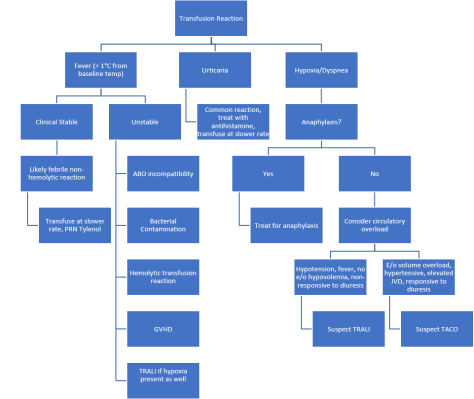
Let’s use this case to go over different types of transfusion reaction since you:

  • Will encounter this during your career
  • Will definitely get paged about this on nights
  • Might encounter the more rare but potentially life-threatening reactions

Graph.png

Transfusion Reaction

  • Common presentation
    • Fever (defined as > 1 degree Celsius from baseline)
      • Stable: Likely febrile non-hemolytic transfusion reaction
        • Tylenol, slow rate of infusion, observe
      • Unstable
        • ABO incompatibility
        • Bacterial contamination
        • Hemolytic transfusion reaction
        • TA Graft vs Host Disease (4-30 days after, delayed rxn, attack by immunocompetent donor lymphocytes on an immunocompromised recipient’s antigen presenting tissues. In immunocompetent recipients, reaction can occur if recipient is heterozygous for an HLA for which the donor is homozygous)
      • Urticaria:
        • Mild allergic reaction to plasma protein, common, resume transfusion at slower rate, anti-histamine PRN.
      • Dyspnea or hypoxia
        • Assess for anaphylaxis
          • Yes: Treat for anaphylactic allergic reaction
          • No: Consider circulatory overload
            • E/O vol overload, diuretic responsive: TACO (transfusion related circulatory overload)
            • Signs of instability, diuretic non-responsive: Suspect TRALI
          • Hemolysis 1-4 weeks after transfusion: Delayed hemolytic transfusion reaction, usually very mild


TACO

Epidemiology: 1% of transfusions in general, higher in the ICU.

Pathophysiology: Circulatory overload leading to pulmonary edema

Risk Factors

  • Preexisting renal or cardiac dysfunction
  • Higher transfusion volume
  • Small stature
  • Low body weight
  • Extremes of age
  • Female
  • White
  • Hypoalbuminemia

Presentation

  • Development of respiratory distress or hypertension during or within 6 hours of completing a transfusion.
  • May see concurrent headache
  • Hypoxia, HTN, tachycardia, wide-pulse pressure, JVD, S3, crackles/wheezing

Diagnosis

  • Clinical
  • Nt-proBNP elevated but non-specific

Management

  • Stop transfusion
  • Oxygen
  • Diuresis
  • Report to transfusion service or blood bank. Get consultation for future transfusions i.e. smaller units, lower volume, or only during dialysis


TRALI

Epidemiology

  • Rare, estimated 1 in 12000, leading cause of transfusion related mortality in the US
  • Seen in all age groups and both sexes

Pathophysiology

  • Not completely understood, but thought to be a neutrophil mediated reaction in setting pre-existing endothelial injury in the lungs, or antibodies to HLA

Risk Factors

  • ICU patients
  • Multiparous female donors (OR 4.5)
  • Heme malignancies
  • Chronic EtOH
  • Liver dysfunction
  • Tobacco use
  • Positive fluid balance
  • Mechanical ventilation
  • Note: Transfusion of older blood products was once thought to be a risk factor, but disproved by multiple RCTs around 2010-2012.

Presentation

  • During or within 6 hours after blood product transfusion
  • Hypoxia, pulmonary infiltrates on exam, fever, hypotension
  • May see elevated peak/plateau airway pressures in vented patients
  • Non-responsive to diuretics
  • ARDS like picture, sometimes diagnosis can be unclear, recent nomenclature of transfused ARDS.
  • May have coexisting TACO

Diagnosis

  • Clinical

Management

  • Stop transfusion
  • Notify blood bank/transfusion service
  • Oxygen/ventilatory support, ARDS protocol (lower tidal volume) has generally been used
  • Hemodynamic support, pts often hypovolemic, give fluids, pressors if needed.
  • Corticosteroid historically has been used with inconsistent results

Prognosis

  • Mortality as high as 41-67% in ICU population. Non-ICU patients have much lower morality, 5-17%. Almost all will recover their resp function, and they can still safely receive blood transfusions in the future.

Prevention

  • Identify implicated donor
  • Irradiate blood products for immunocompromised recipients
  • Avoid transfusion of blood product from a relative
  • Blood donated by men has lower incidence for unclear reasons

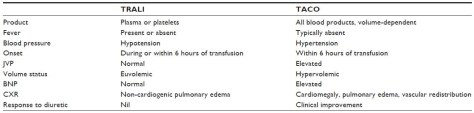
Comparison

Mirizzi Syndrome

Thanks to Richard for presenting the case of a middle-aged man who presented with acute onset of lower back pain, intermittent abdominal pain, and emesis, found to be septic, work up revealing Mirizzi syndrome causing acute cholangitis which led to klebsiella bacteremia and L spine osteomyelitis! Whoosh!


Clinical Pearls

  • Klebsiella is found along the GI tract and can cause UTIs, pneumonias, osteomyelitis, GI infections, and surgical site wound infections.
  • Charcot triad of pain, fever, and RUQ pain is found in only ~50% of patients who present with acute cholangitis.  So do not rule out the diagnosis if someone doesn’t have all three.
  • Mirizzi syndrome is rare and can be accompanied by acute chonagitis, acute cholecystitis, or acute pancreatitis.  Management involves antibiotics to treat a concurrent infection in the biliary tree as well as surgical resection of the gallbladder and impacted stone.

Differential for hyperbilirubinemia:

Hyperbilirubinemia breakdown

Remember that the most common reasons for conjugated hyperbilirubinemia are extrahepatic causes and include the following:

  • Stones (30-70%)
  • Malignancy (10-50%)
  • Benign biliary strictures (5-30%)
  • Biliary stent obstruction (~20%)

Cholangitis

Most common bacteria:

  • E coli (25-50%)
  • Klebsiella (15-20%)
  • Enterococcus (10-20%)
  • Enterobacter (5-10%)

Clinical manifestations

  • Charcot’s triad (~50% have all 3)
    • Fever
    • Abdominal pain
    • Jaundice
  • Reynold’s pentad: (rare, ~5%)
    • Above PLUS
    • Hypotension
    • AMS
  • Cholestatic LFT pattern ⇒ can progress to hepatocellular LFT pattern

Assessment of disease severity

  • Severe (suppurative) cholangitis — Acute cholangitis is considered severe if it is associated with the onset of dysfunction in at least any one of the following organs/systems:
    • Cardiovascular dysfunction – Hypotension requiring pressors
    • AMS
    • Respiratory dysfunction – PaO2/FiO2 ratio <300
    • Renal dysfunction – Oliguria, serum creatinine >2.0 mg/dl
    • Hepatic dysfunction – Prothrombin time-international normalized ratio >1.5
    • Hematological dysfunction – Platelet count <100,000/mm
  • Moderate acute cholangitis — Acute cholangitis is defined as moderate if it is associated with any two of the following:
    • Abnormal WBC count (>12,000/mm3, <4,000/mm3)
    • Fever 39°C (102.2°F)
    • Age (≥75 years)
    • Hyperbilirubinemia (total bilirubin ≥5 mg/dl)
    • Hypoalbuminemia
  • Mild acute cholangitis — Mild acute cholangitis does not meet the criteria for moderate or severe cholangitis at initial diagnosis.

Management

  • For moderate to severe cases, consider admission to the ICU and urgent ERCP/GB decompression.
  • For mild cases, admit to the floor and monitor closely
  • Antibiotics
    • To cover gram negatives, narrow based on sensitivities
    • Duration is typically 7-10 days.
  • Address predisposing cause
    • Elective cholecystectomy after infection has resolved in those with gallstones

Mirizzi syndrome

Obstruction of the common bile duct from extrinsic compression, often from swelling or infection in the cystic duct, which can share a sheath with the CBD.

  • Commonly diagnosed intraoperatively in patients undergoing GB surgery
  • Presentations
    • Pain (54-100%)
    • Jaundice (24-100%)
    • Cholangitis (6-35%)
    • Acute cholecystitis (1/3 of patients)
    • Acute pancreatitis (rare)
  • Labs
    • Elevated bili and ALP
    • Leukocytosis if concurrent cholecystitis, cholangitis, or pancreatitis
  • Diagnosis
    • Imaging
      • Dilatation of the biliary system above the gallbladder neck
      • Presence of impacted stone in GB neck
      • Normal diameter below level of stone
    • US (23-46% sensitive)
    • CT abdomen (can r/o malignancy but sensitivity is 42%, specificity 99%)
    • MRCP (highest sensitivity)
  • Management
    • Surgery
    • Sometimes ERCP can be diagnostic and therapeutic as a temporizing measure to surgery or if patient is too high risk and unsuitable for surgery
    • Antibiotics for treatment of concurrent cholangitis or cholecystitis

mirizzi-syndrome-5-638

Source: https://www.slideshare.net/mohamedfazly31/mirizzi-syndrome-70749345

Nephrotic Syndrome Secondary to Minimal Change Disease (12/3/2018)

Narges presented a case today with a middle age woman with uncontrolled insulin dependent diabetes Type 2, multiple malignancies s/p resection, presenting with acute anasarca and shortness of breath developed over a few days. She was anasarcic up to the mid back on presentation, with an albumin of 0.9 (baseline of 3.8 a month ago). Her UA had 3+ protein and a urine protein/Cr ratio of 23. If you’re thinking nephrotic syndrome, that’s right! Biopsy revealed the diagnosis of minimal change disease (MCD) with concurrent ATN!


Nephrotic Syndrome

Some definitions

  • Nephrotic range proteinuria: > 3.5g proteinuria per day or spot urine protein/cr ratio of > 3.5
  • Nephrotic syndrome: Above + symptoms (edema, HLD, hypoalbuminemia, lipiduria, etc)

Epidemiology

  • Most common primary cause of nephrotic syndrome in adults in the US is FSGS
  • Most common secondary cause of nephrotic syndrome in adults in the US is Diabetic Nephropathy

Presentation

  • AKI (underlying glomerulonephritis vs hypovolemia vs sepsis vs ATN)
  • Hypercoagulability (loss of anticoagulant proteins namely antithrombin III, C, S)
  • Hyperlipidemia (reactive hepatic synthesis of proteins due to hypoproteinuria)
  • Malnutrition (gut edema, dec body weight, edema) leading to anemia, osteomalacia, vitamin D deficiency
  • Immunocompromise (inc risk for infection due to hypoimmunogammopathy)
  • Edema (low oncotic pressure due to hypoalbuminemia)

Diagnosis

  • 24 urine protein > 3.5g is diagnostic
  • Spot urine protein/cr ratio > 3.5 is also diagnostic
  • Exactly cause will require additional work up, to be discussed below in differential

General Management Strategies

  • Proteinuria control (ACEi, ARB)
  • BP Control
  • Volume Control (Diuretics, low salt)
  • HLD: usually resolves with disease control, can use statins
  • Immunosuppresion for primary causes
  • Treat underlying secondary causes

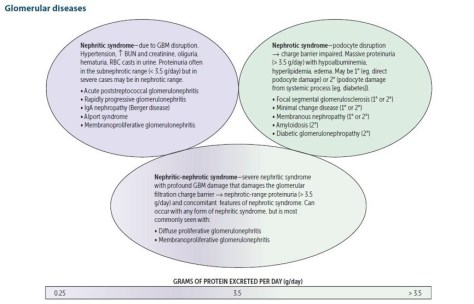
Differential Diagnosis

Picture1

Source: Grepmed

The three most commonly encountered causes, besides diabetic nephropathy, are:

Capture


Minimal Change Disease

As seen in this patient, is typically seen in pediatric population and it is the most common cause of nephrotic syndrome in kids < 8-10 years old. It only accounts for 10% of cases of nephrotic syndrome in adults.

Presentation

  • Acute onset edema
  • Higher incidences of thrombotic events in adults
  • AKI common, at higher risk for ATN

Diagnosis

  • Biopsy, electron microscopy with podocyte effacement

Management

  • Corticosteroids: initial course of 6-8 weeks in adults, 1.5mg/kg/day
  • Cyclosporine for non-responders
  • Other options: mycophenolate (Cellcept), azathioprine (but pt is already on this, Imuran!)

Prognosis

  • 80-90% of patients respond to initial corticosteroid therapy
  • Up to 50% can recur

Focal Segmental Glomerulosclerosis (FSGS)

Epidemiology

  • Higher incidence among African Americans (5 times more likely than White)
  • Associated with HIV (collapsing variant), heroin (30x risk)

Diagnosis

  • Biopsy: focal and segmental hyalinization of the glomeruli, often with immunostaining showing IgM and complement (C3) deposits in a nodular and coarse granular patter

Management

  • Primary: Immunosuppression, corticosteroids +/- cyclosporine, tacrolimus + plasma exchange
  • Secondary: Treat underlying cause

Prognosis: Poor

  • > 50% develop renal failure within 10 years of diagnosis, and 20% develop ESRD within 2 years despite treatment
  • May recur after kidney transplantation.
  • Heroin addicts with FSGS: can experience complete remission if they STOP EARLY.

Membranous Nephropathy

Epidemiology

  • Associated with malignancy i.e. lymphoma, colon cancer, lung cancer
  • Most cases are idiopathic

Diagnosis

  • Biopsy
  • Microscopy: Thickened capillary loops
  • Immunoassay: Granular IgG & C3 depositions in the subepithelial layer

Management

  • Immunosuppression similar to above, treat any secondary causes

Prognosis

  • Generally pretty god, 30-40% treated go into complete remission, 30-50% go into partial remission. Treatment can be prolonged.
  • Treating secondary causes also can induce remission.

Note that there are some other causes that can present with both nephrotic and nephritc features, i.e. membranoproliferative glomerulonephritis. Complement levels are NORMAL in MCD, FSGS, and MN, while complement levels are low in MPGN.

Primary anticoagulation for patients with nephrotic syndrome can be considered in some cases but not routinely done. Please refer to this article for reference.


Hemorrhagic shock secondary to GI bleed with recent PCI for NSTEMI on DAPT… Did I mention severe aortic stenosis as well? How about all of these in one patient at the same time? 11/29/2018

Narges presented a very complicated patient, who presents with 2 days of abdominal pain and melena. He had a PCI 4 days prior with a drug-eluting stent deployed at the LAD, and he was discharged on aspirin and ticagrelor (PLATO trial, superior to clopidogrel). On presentation he was in hemorrhagic shock, with notable hematochezia on exam, encephalopathy, and a 4/6 systolic murmur with carotid radiation which turned out to be an undiagnosed severe aortic stenosis.

To briefly summarize his main problem list:

  1. Hemorrhagic shock secondary to UGIB
  2. CAD with recent NSTEMI s/p DES to LAD x1 on DAPT
  3. Severe aortic stenosis, newly diagnosed

Question is, what to do if you see a patient like this? Let’s break it down.


Antiplatelet and PCI

  • Drug eluting stents (DES) are designed to have lower rates of late re-stenosis than bare metal stents (BMS), but they are at higher risk for in-stent thrombosis due to delayed endothelialization.
  • Some terminology:
    • Stent re-stenosis:
      • Gradual narrowing of the stent segment, usually occurs 3-12 months after stent placement.
      • Can present as recurrent angina vs full blown MI
    • Stent thrombosis
      • Abrupt thrombotic occlusion of a previously patent stent, usually catastrophic MI
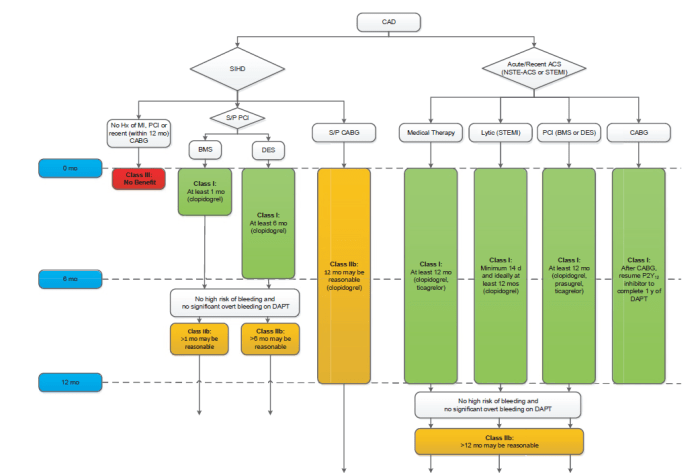
  • Duration of DAPT? It depends! Per the 2016 ACC/AHA guidelineDAPT.png

In a nut shell:

Elective PCI in stable CAD:

  • BMS: At least 1 month of DAPT
  • DES: At least 6 months of DAPT

Exact duration is yet to be determined; there is some evidence of decreased stent restenosis (DAPT trial) with longer duration of DAPT but at the expense of all cause mortality and bleeding complications. There are also newer studies (i.e. ARCTIC Interruption) that found no benefits with longer duration of DAPT.

For PCI in setting of ACS, however, the guideline is different:

Anti-platelet duration in setting of ACS

  • Medical Therapy: At least 12 months of DAPT
  • PCI (BMS or DES, doens’t matter): At least 12 months of DAPT
  • CABG: Also at least 12 months of DAPT

In patients with high bleeding risk or personal history of bleeding and/or long term NSAID use, preemptive prophylaxis with a PPI can be considered. If bleeding risk is significant, you can potentially decrease DAPT duration to at least 6 months, on a case-to-case basis.

Now keep in mind our patient has a DES deployed 4 days ago and he’s now bleeding…


GI Bleed

Risk Factors

  • Alcohol
  • NSAID
  • Anticoagulation
  • Cirrhosis
  • Cancer

Presentation

  • UGIB: BUN/Cr ratio > 30 usually (not sensitive but specific), melena (gut transit of blood)
  • LGIB: bright red hematochezia, lower BUN/Cr ratio, but do not be fooled, can be seen in brisk UGIB (especially in this patient).

Management

  • Airway protection
  • Large bore IVs (18 G), Cordis, IO (they work wonders in a pinch!)
  • Fluid resuscitation
  • Anti-acid (i.e. Protonix)
  • Octreotide if suspecting variceal bleed, if catastrophic variceal bleed, consider deployment of a Blakemore/Minnesota tube
  • Antibiotics for primary SBP prophylaxis if cirrhotic
  • Blood product administration
  • GI consultation, urgency depending on clinical status, EGD

High risk features on Endoscopy

The patient underwent EGD and a duodenal ulcer that was actively bleeding was found. There are certain features of an ulcer that we can use to risk stratify and determine how likely intervention will be successful, and how likely the ulcer will rebleed. This is the Forrest Classification, first published in the Lancet in 1974. Our patient in this case is class 1B, and he ended by rebleeding twice requiring additional endoscopic intervention.

Picture1

Source: Alzoubaidi DLovat LBHaidry R. Management of non-variceal upper gastrointestinal bleeding: where are we in 2018? 

Failure of endoscopic therapy

  • Predictors: active bleeding at time of endoscopy, visible vessel, > 2cm, posterior duodenal ulcers, and gastric ulcers on the lesser curvature are associated with higher risk of treatment failure/rebleeding.
  • First line: 2nd endoscopic intervention
  • If recurrent bleeding persists, surgical options or IR embolization should be considered

The key question here is, when to resume DAPT? The decision will have to be individualized and most would recommend restarting ASAP as soon as patient is clinically stable… At the same time, pt has one other newly diagnosed problem that makes his management tricky…


aorticvalvearea-classification-aorticstenosis-meangradient-cardiology-original

Source: grepmed

Severe Aortic Stenosis

Criteria:

  1. Area < 1cm2
  2. Mean trans valvular gradient > 40 mmHg
  3. Peak velocity > 4m/s

Referral to Cardiology because it is actually more complicated than this, there is also pseudo severe where AVR is not recommended, Low flow AS, low gradient AS, or both LF LG AS.

  • Pseudo-severe: mild to moderate AS, low gradient, underlying myocardial dysfunction leading to poor valve opening. No benefit in AVR
  • LF LG AS:
    • AVA < 1cm2, but gradient < 35mmHg
    • Must distinguish from pseudo severe AS. Do dobutamine stress echo
      • If AVA remains the same, gradient inc, confirms true severe AS
      • If AVA improves while mean gradient remains the same, this is pseudo-severe AS, manage medically.

Epidemiology

  • < 70: Suspect bicuspid aortic valve
  • > 70: Progressive valvular fibrosis/calcification
  • Developing country: Rheumatic fever

Pathophysiology

  • Over time leads to LV hypertrophy (concentric), muscle hypertrophy. Leads to heart failure over time.

Presentation

  • Asx
  • Sx: SAD syncope, angina, dyspnea

Management

  • TAVR (transcatheter) vs SAVR (surgical), TAVR is non-inferior (PARTNER A, PARTNER B, SURTAVI trials) but has other complications to consider,
  • Can think about the transcatheter approach in high surgical risk patients.

In setting of hypotension

  • Patients with critical AS are highly preload dependent:
  • Cardiac Output (CO) = Heart Rate (HR) x Stroke Volume (SV). In patients with severe AS, CO is fixed due to physiologic limitations of a small outlet.
    • Increasing HR can help with CO but you run the risk of increasing myocardial O2 demands…
    • Also in terms of volume, pts with severe AS usually has a degree of diastolic dysfunction (decreased compliance due to a hypertrophied ventricle). As you can imagine, if you push too much fluids into a non-compliant system, back up can occur leading to pulmonary edema thus respiratory failure…
  • Choice Pressors: no absolute contraindication to any but phenylephrine has been suggested in some anesthesia text books as first line
    • Rationale: Pure alpha, increases DBP (diastolic blood pressure), which in turns inc coronary perfusion pressure (CPP = DP – PCWP (LVEDP))
    • Won’t induce tachycardia (if anything induces a mild reflexive bradycardia which decreases myocardial O2 demands).
    • Epi has been associated with higher incidences of arrhythmias

Neutropenia and Acute Diarrhea… It’s not C.diff, it’s Norovirus (11/28/18)

Elise presented a case of a middle age man with recently diagnosed pancreatic adenocarcinoma on chemo presenting with acute loose watery stools (“too many to count”) and abdominal discomfort. He appeared septic on presentation and was found to be neutropenic. Unfortunately (or fortunately) it is not the typical C.diff colitis, but actually norovirus!


Acute Diarrhea

Definition: defined as watery stool 3x in 24 hours, < 14 days duration

Most are infectious in etiology in an acute setting

Other causes: Ingested osmoles, malabsorption

Clues

  • Secretory: High volume, watery, no systemic symptoms, usually due to small intestinal involvement
    • Most common causes are viral (rota and noro), enterotoxin, ETEC, or vibrio chlolarae.
    • Negative fecal WBC
  • Invasive: Smaller volume, bloody/mucoid, tenesmus + LLQ pain, systemic symptoms.
    • Site of involvement is the colon. Common causes are Shigella, Campylobacter, EHEC, Entamoeba histolytica
    • Positive fecal WBC
  • Importance of vomiting: Usually indicates the ingestion of a pre-formed toxin or a viral infection. Examples:
    • Staph aureus
    • B. cereus
    • Norovirus
    • Certain parasites

Non-bloody/Watery

  • Norovirus (very common)
  • Rotavirus, enteric adenovirus, astrovirus (usually in immunocompromised adults)
  • diff (can be bloody/inflammatory)
    • Nosocomial vs community acquired
  • Clostridium perfringens (2nd most common cause of foodborne bacterial infection)
    • Associated with outbreaks in restaurants and catering facilities
    • Usually mild symptoms.
    • Associated with improperly cooked or stored meat.
    • Self-limited, supportive care often suffices
  • Enterotoxigenic E.coli (ETEC): AKA traveler’s diarrhea
    • Cruise ships, foreign countries, fecal contimation or food or water from an infected person.
  • Giardia lamblia:
    • Water & food borne outbreaks
    • Sx: 7-14 days incubation post exposure.
    • Presentation: Foul smelly stools, cramps, bloating.
    • Tx: Supportive + Metronidazole, Tinidazole, albendazole
  • Cryptosporadium
    • One of the most common parasitic foodborne diarrhea
    • Endemic in cattle, usually transmitted via infected animal or person. Food/water borne outbreaks also common.
    • Presentation: Severe, dehydrating watery diarrhea but self-limited in immunocompetent hosts.
    • Immunocompromised: More severe
  • Other bacterial
    • Staph aureus, Bacillus cereus: enterotoxins, acute diarrhea + vomiting
    • Listeria monocytogenes: Can cause systemic symptoms/spread
    • Cyclospora: Associated with sporadic outbreaks due to imported raspberries and basil.
    • Aeromonas: Distributed in watery environments, suspect if contact with fresh or brackish water.
  • Other viral: Hepatitis A

Inflammatory: bloody or mucoid diarrhea, with associated fever, abd pain. Presence of inflammatory cells in the stool. More likely bacterial.

  • Salmonella: Nontyphoidal, leading cause of acute inflammatory diarrhea
    • Association: Poultry, eggs, milk products, animal contacts
    • Incubation: 8 – 72 hours
    • Presentation: diarrhea is usually non-bloody, N/V, fever.
  • Campylobacter
    • Undercooked poultry
    • Watery or hemorrhagic diarrhea, 2-5 days after exposure
    • Association: Guillain-Barre, reactive arthritis
  • Shigella: Dysenteric diarrhea
    • Colonic infection, person to person or fecal oral transmission.
    • Mucoid or bloody diarrhea, 3-7 days after exposure.
  • EHEC: Enterhemorrhagic E.coli
    • Association: HUS
    • Presentation: Watery/progressively bloody diarrhea, 3-4 days post exposure, abd pain + fever.
  • Yersinia
    • Uncommon, can be transmitted via undercooked pork, unpasteurized milk, fecally contaminated water. 1-14 days after exposure
    • Associated with concurrent pharyngitis.
  • Others: Entamoeba histolytica, noncholera vibrios, CMV, HSV
    • CMV & HSV: Dx has to be confirmed by biopsy. Suspect these in immunocompromised patients.

Neutropenia and GI symptoms

Neutropenic enterocolitis (typhilitis), cytotoxic agent-related diarrhea, any viral/bacterial infection, but for typhilitis specifically:

Epidemiology

  • Associated with hematologic malignancies or ingestion of food contaminated with C. perfringens
  • Pre-existing bowel wall abnormalities increases risk (i.e. diverticulitis, tumor, previous surgery).

Pathophysiology

  • Infection of the bowel wall, usually the cecum but can involve ascending colon & ileum, leading to tissue necrosis

Presentation

  • Neutropenic
  • Fever, mean of 3 weeks after cytotoxic chemo
  • Abd pain, distension, N/V, watery/bloody diarrhea
  • Usually RLQ pain, can mimic appendicitis.

Diagnosis

  • CT

Management

  • 4th gen cephalosporins i.e. cefepime + Flagyl, surgery is generally avoid but indicated if e/o perforation

Prognosis

  • 50% mortality

Norovirus

Epidemiology:

  • Most common viral cause of gastroenteritis worldwide, all age range affected
  • 19-21 million cases every year in the US
  • Unclear reason, peak incidence during winter months.
  • Food born outbreaks is common: leafy greens, fruits, shell fish.

Pathophysiology/Transmission

  • Fecal oral transmission, RNA virus
  • Different genotypes exist with further sub-groups, tend to have a preference for certain blood type.
  • Incubation: 24-48 hours, affects the small intestines
  • Very infectious, can cause full blown infection even if exposed to a small amount (< 100 viral particles)
  • Extremely stable in the environment, resists freezing or heating up to 60 degrees C, disinfection requires chlorine or EtOH
  • Viral shedding is max over the first 24-48 hours, and pts can continue to shed for up to weeks

Presentation

  • Duration: 48-72 hours
  • Watery diarrhea, N/V, abd pain.
  • Vomiting usually prominent
  • Usually self-limiting but can be severe in immunocompromised patients

Diagnosis

  • Stool PCR

Management

  • Supportive
  • Contact plus isolation
  • Notify infection control (contact plus isolation)
  • If you have been exposed to someone with norovirus and you are symptomatic, PLEASE CALL IN SICK since this illness is highly contagious. Notify us and employee health. You have to be asymptomatic for at least 48 hours, and you have to be cleared by employee health, prior to returning to work.